
Comprehensive vs. Collision Insurance: Knowing Which Covers What

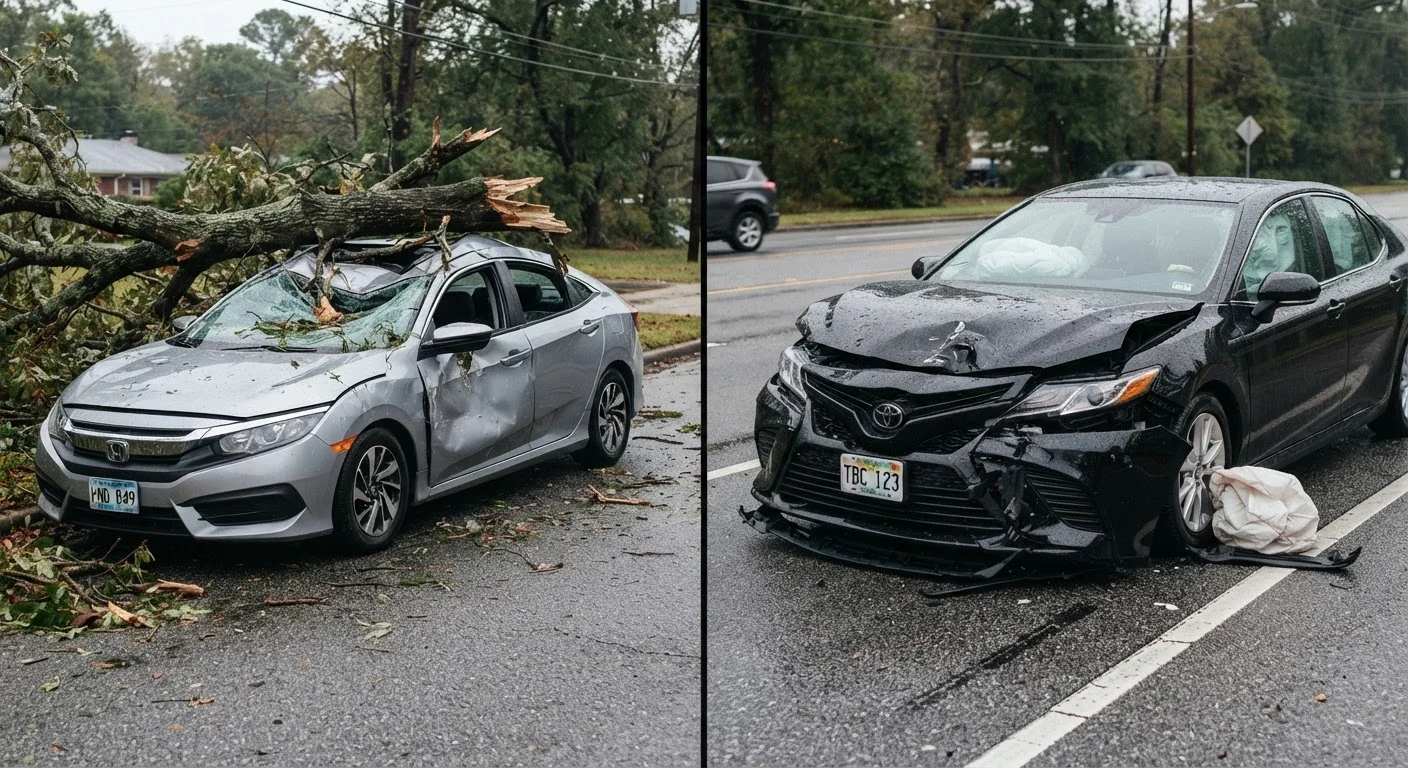
Photo: ResultsExplorer.com | Top Blogs For Everyone editorial
Key Takeaways
- Comprehensive covers non-collision events like theft, fire, flooding, and animal strikes.
- Collision covers damage to your car from impacts with other vehicles or stationary objects.
- Both coverages are optional unless required by a lender or lease agreement.
- Each coverage has its own separate deductible, which you choose when setting up your policy.
- Neither coverage pays for the other driver's vehicle or injuries - that's the role of liability insurance.
The Core Difference: What Triggered the Damage?
The simplest way to tell comprehensive and collision apart is to ask one question: Was the damage caused by your car making contact with something, or did something happen to your car?
If your car rolled into another vehicle, hit a guardrail, or was involved in a multi-car accident - that's a collision scenario. If a hailstorm cracked your windshield, a deer ran into the side of your door, or your car was stolen from a parking lot - that's a comprehensive scenario.
Despite their names implying a hierarchy (comprehensive sounds more complete), neither coverage is inherently superior. They address separate categories of risk. Most drivers who carry one are also encouraged to evaluate whether they need the other. For a broader look at how these fit alongside other coverage types, see our overview of car insurance coverage types.
| Criterion | Comprehensive Insurance | Collision Insurance |
|---|---|---|
| Primary trigger | Non-collision events | Physical vehicle impact |
| Covers theft | Yes | No |
| Covers weather damage | Yes | No |
| Covers at-fault accident | No | Yes |
| Covers hitting a stationary object | No | Yes |
| Covers animal strikes | Yes | No |
| Separate deductible | Yes | Yes |
| Required by lenders/lessors | Typically yes | Typically yes |
| Covers other driver's damages | No | No |
What Comprehensive Insurance Covers
Comprehensive coverage - sometimes called other than collision coverage - applies when your vehicle sustains damage from events outside your direct driving actions. Common covered events include:
- Theft of the vehicle or parts of it
- Vandalism
- Weather events such as hail, floods, tornadoes, and ice storms
- Fire
- Falling objects (e.g., a tree limb)
- Animal contact, such as a deer strike
One common misconception is that comprehensive means complete coverage for anything that could happen. It does not. For example, if you intentionally damage your own vehicle, or if wear and tear causes a mechanical failure, comprehensive won't apply. Our guide to common car insurance myths covers this misunderstanding in detail.
A Note on "Full Coverage"
What Collision Insurance Covers
Collision coverage pays to repair or replace your vehicle when it sustains damage from a physical impact - regardless of who is at fault. Covered scenarios typically include:
- Hitting another vehicle
- Being hit by another vehicle
- Striking a stationary object (a fence, a pole, a curb)
- A single-vehicle rollover
Importantly, collision coverage applies to your vehicle only. If you're at fault in an accident, your liability insurance handles damage to the other driver's vehicle and their injuries. Collision covers the repair bill for your own car - which can easily reach thousands of dollars even in moderate-speed impacts.
New drivers frequently underestimate these costs before purchasing their first vehicle. Our article on what new drivers often overlook walks through the financial realities of car ownership more broadly.
$4,700+
Average collision claim cost
According to Insurance Institute for Highway Safety data, the average collision insurance claim regularly exceeds several thousand dollars, reflecting the real cost of vehicle repairs.
~$1,600
Average comprehensive claim cost
Comprehensive claims, while often lower in cost than collision claims, can vary widely depending on the event - theft claims, for example, can far exceed this average.
Deductibles, Premiums, and When to Reconsider Coverage
Both comprehensive and collision policies carry a deductible - the amount you agree to pay out of pocket before the insurance company covers the remainder of a claim. Deductibles typically range from $250 to $2,000. A higher deductible lowers your premium but increases what you owe at claim time.
When deciding whether to carry one or both coverages, a common rule of thumb is to compare the annual premium cost against the realistic payout you'd receive if your vehicle were totaled. If your car's market value is low, the insurer's maximum payout may not justify the ongoing cost.
Understanding how insurers determine payout amounts is equally important. Whether your policy uses agreed value or market value can significantly affect what you receive after a total loss - a distinction explained in our agreed value vs. market value guide.
This article is for general informational purposes only and does not constitute personalized insurance, financial, or legal advice. Coverage terms, exclusions, and requirements vary by insurer and state. Always review your policy documents and consult a licensed insurance professional before making coverage decisions.
The content provided on our blog site traverses numerous categories, offering readers valuable and practical information. Readers can use the editorial team’s research and data to gain more insights into their topics of interest. However, they are requested not to treat the articles as conclusive. The website team cannot be held responsible for differences in data or inaccuracies found across other platforms. Please also note that the site might also miss out on various schemes and offers available that the readers may find more beneficial than the ones we cover.