
DIY Repairs vs. Hiring a Tradesperson: Where the Line Really Is

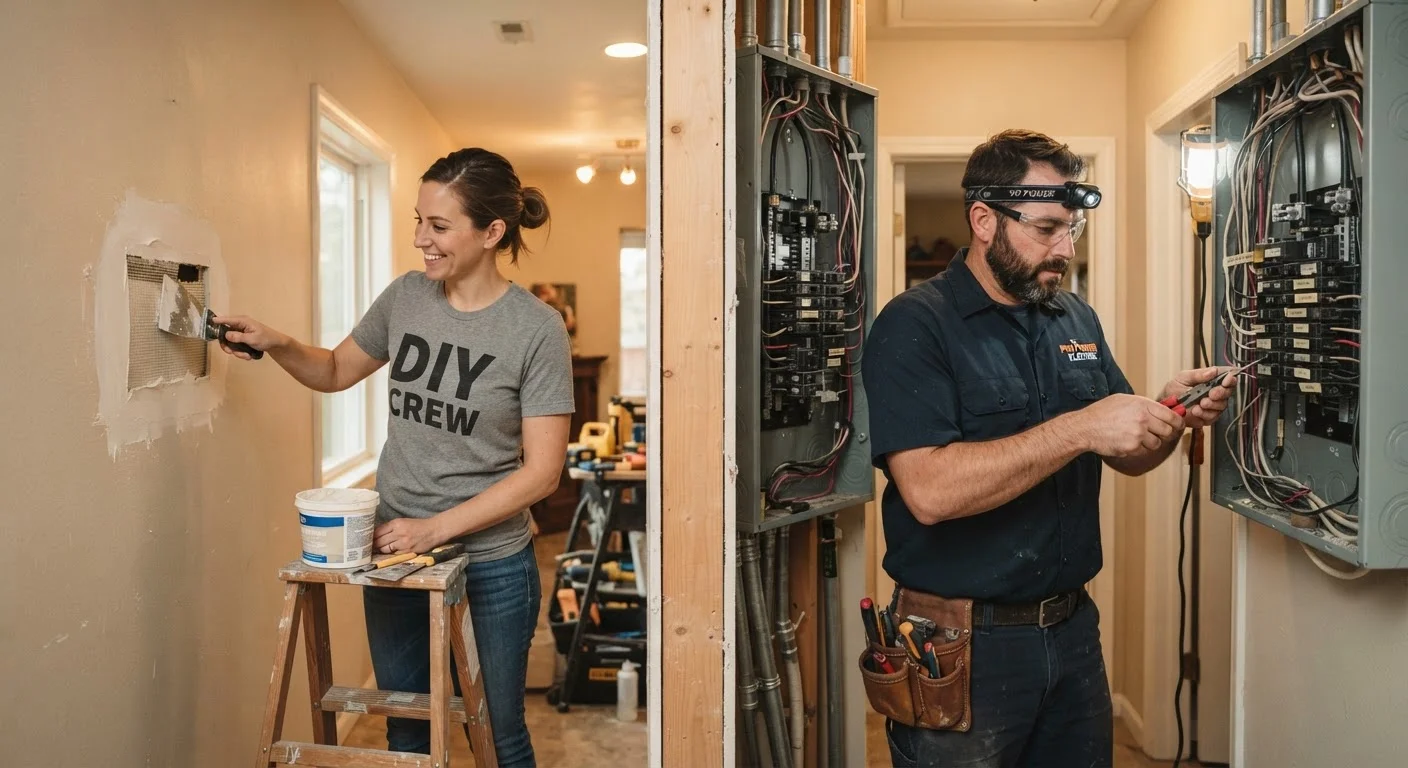
Photo: ResultsExplorer.com | Top Blogs For Everyone editorial
Key Takeaways
- Many cosmetic and routine maintenance tasks are genuinely safe for homeowners to handle themselves.
- Electrical, gas, structural, and permitted work almost always requires a licensed professional.
- Attempting the wrong repair yourself can void insurance, create safety hazards, or lead to costlier fixes.
- Local codes and permit requirements vary - always verify before starting any significant project.
- Knowing your limits isn't a weakness; it's a core part of responsible homeownership.
Why the DIY-vs-Pro Question Matters More Than You Think
Every homeowner eventually faces a repair and asks: can I do this myself? The honest answer depends far less on confidence than on what's actually at stake. Choosing DIY on the wrong job can create safety hazards, trigger insurance disputes, or produce code violations that surface when you sell. Choosing a professional for every minor fix, on the other hand, adds up fast.
The goal isn't to do as much as possible yourself - it's to do the right things yourself. Understanding that distinction is one of the most practical skills a homeowner can develop. For a broader look at where homeowners commonly misjudge their own repairs, see common maintenance mistakes that often make problems worse.
Tasks That Are Genuinely Safe to DIY
A wide range of home repairs carry low risk and don't require permits, licensed trades, or specialized equipment. These are reasonable candidates for a capable, patient homeowner:
- Painting interior walls and trim - preparation matters most; the actual application is learnable
- Replacing interior door hardware - knobs, hinges, and deadbolts on non-fire-rated doors
- Patching small drywall holes - shallow damage from picture hooks or minor dings
- Unclogging drains - using a plunger or hand snake on fixture-level blockages
- Replacing a faucet or showerhead - provided shutoff valves are accessible and functional
- Installing light fixtures or ceiling fans - on existing circuits, with the breaker off and confirmed de-energized
- Caulking and weatherstripping - around windows, doors, and tubs
- Basic garden and landscape work - planting, mulching, pruning, and lawn maintenance
These tasks share a key trait: a mistake is correctable and unlikely to cause injury or structural damage. That said, even low-risk jobs carry some risk if skipped steps are involved - common homeowner myths explore how small misjudgments compound over time.
Start Small to Build Confidence
Where You Should Always Hire a Licensed Professional
Some categories of work exist outside DIY territory - not because they're complicated, but because the consequences of error are severe or because local law requires a licensed contractor.
| Task Type | DIY | Licensed Tradesperson | |
|---|---|---|---|
| Painting & caulking | DIY | Rarely needed | Not typically required |
| Drain clearing (fixture level) | DIY | Appropriate for most | Only for main line issues |
| Electrical panel / wiring | Not recommended | Licensed electrician required | Permit often required |
| Gas line work | Do not attempt | Licensed plumber/gas fitter | Permit required in most states |
| Load-bearing wall removal | Do not attempt | Structural engineer + contractor | Permit required |
| Faucet / showerhead swap | DIY if shutoffs work | Only if complications arise | Usually not required |
| Water heater replacement | Context-dependent | Recommended | Often required |
| Deck construction | Small, low decks only | Recommended for most | Usually required |
Electrical panel and wiring work beyond simple fixture swaps - including adding circuits, replacing breakers, or touching service entrances - carries electrocution and fire risk. In most U.S. jurisdictions, this work requires a licensed electrician and inspection.
Gas lines and appliances - installing, relocating, or repairing gas piping or gas appliances is regulated work in virtually every state. A faulty connection risks carbon monoxide poisoning or explosion.
Structural modifications - removing or altering load-bearing walls, beams, or foundations without engineering review can compromise the integrity of your entire home.
Roofing and attic insulation near electrical - working at height combined with proximity to wiring creates compounding hazards. Many roofing jobs also require permits.
Sewer line and main water line work - anything connecting to municipal systems or requiring excavation typically needs a licensed plumber and may require a permit.
Before starting any significant project, check whether a permit is required. Understanding building permits explains which projects typically require approval and what's at risk if you skip that step.
The Gray Zone: Jobs That Depend on Context
Some repairs sit in the middle, where the right answer depends on your skill level, the home's age, and local code.
- Tile work - replacing a few broken tiles is manageable; retiling a shower floor involves waterproofing that, if done incorrectly, causes hidden water damage
- Water heater replacement - straightforward in concept, but involves gas or high-voltage connections and often requires a permit and inspection
- Window replacement - a full-frame replacement can affect weatherproofing and sometimes structural elements around the opening
- Deck construction - decks above a certain height or square footage almost always require permits and meet specific load requirements
When in doubt about hiring, go in prepared. What to check before hiring a tradesperson covers licenses, quotes, and red flags to watch for.
Unpermitted Work Can Haunt a Home Sale
A Practical Decision Framework
Before picking up a tool or calling a contractor, run through these questions:
- Could a mistake injure someone? If yes, strongly consider a professional.
- Does this work require a permit in my municipality? If yes, you likely need a licensed contractor to pull it.
- Will a bad outcome be hidden inside a wall, floor, or ceiling? Hidden failures - like slow leaks or improper wiring - are expensive and dangerous.
- Does my homeowner's insurance require licensed work for certain repairs? Some policies exclude claims arising from unpermitted or unlicensed DIY work.
- Am I equipped for this - tools, knowledge, and time? An honest skills inventory prevents half-finished projects.
If the answer to any of the first four questions is yes, the professional route is almost always the wiser choice - even when the upfront cost feels hard to justify.
The content provided on our blog site traverses numerous categories, offering readers valuable and practical information. Readers can use the editorial team’s research and data to gain more insights into their topics of interest. However, they are requested not to treat the articles as conclusive. The website team cannot be held responsible for differences in data or inaccuracies found across other platforms. Please also note that the site might also miss out on various schemes and offers available that the readers may find more beneficial than the ones we cover.