
Distracted Driving vs. Impaired Driving: How the Law Treats Each Differently

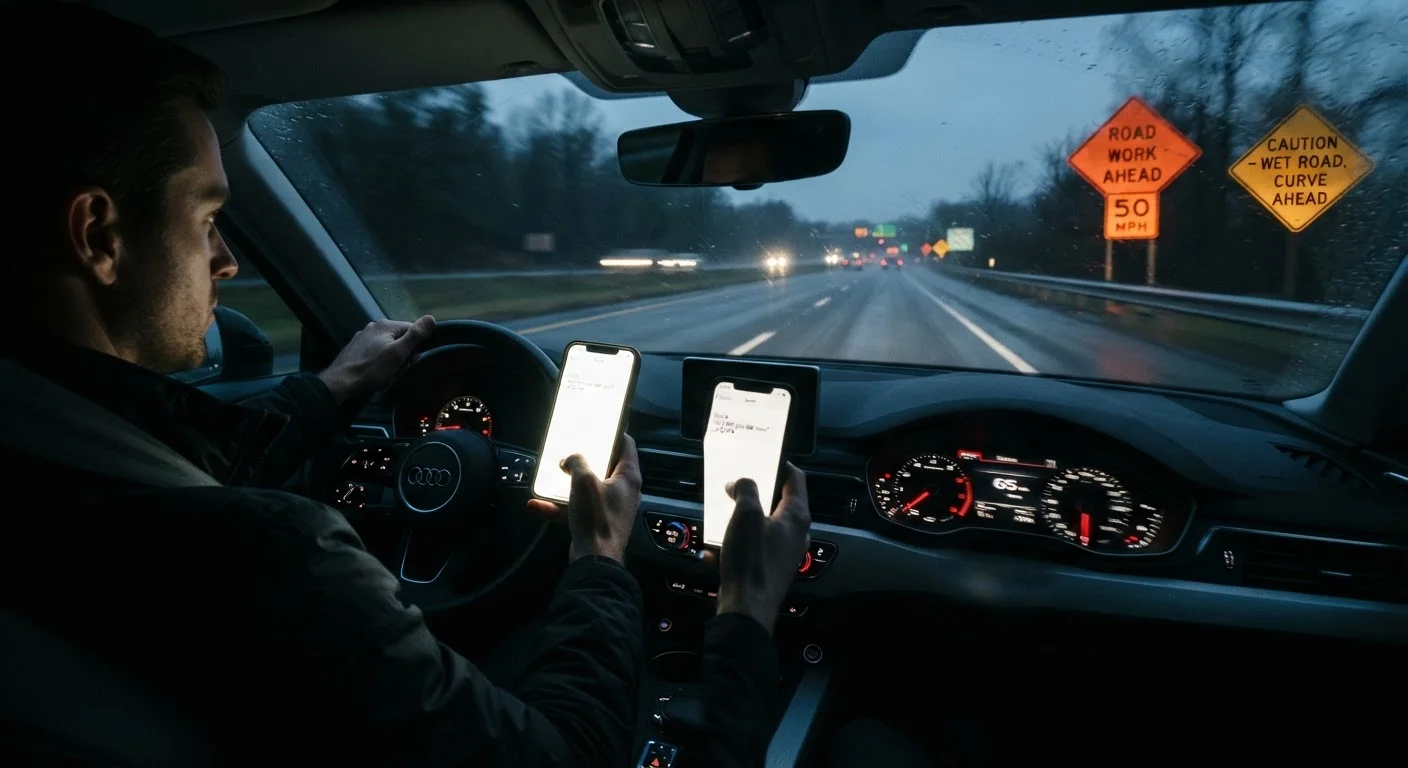
Photo: ResultsExplorer.com | Top Blogs For Everyone editorial
Key Takeaways
- Distracted driving is typically a civil traffic infraction; impaired driving is usually a criminal offense.
- DUI/DWI charges rely on standardized chemical tests; distracted driving evidence is harder to gather.
- Penalties for impaired driving - including license suspension and jail time - are significantly more severe.
- Distracted driving laws vary widely by state, while impaired driving thresholds follow more uniform federal guidance.
- Both violations can elevate insurance premiums and appear on a driver's record for years.
How Each Offense Is Legally Defined
Distracted driving refers to any activity that diverts a driver's attention from the primary task of operating a vehicle. US law commonly breaks distractions into three categories: visual (eyes off the road), manual (hands off the wheel), and cognitive (mind off driving). Texting while driving is considered particularly dangerous because it combines all three. Most states have enacted hand-held device bans or broader hands-free laws, but the specific language, exemptions, and covered devices differ significantly from state to state.
Impaired driving - charged as DUI (Driving Under the Influence) or DWI (Driving While Intoxicated) depending on the state - refers to operating a vehicle while one's ability to do so safely is substantially diminished by alcohol, controlled substances, or certain prescription medications. The legal standard for alcohol impairment is a blood alcohol concentration (BAC) of 0.08% or higher for non-commercial adult drivers in all 50 states, a threshold established through federal highway funding incentives. Drug impairment standards are less uniform and vary considerably by state.
| Criterion | Distracted Driving | Impaired Driving |
|---|---|---|
| Legal classification | Civil traffic infraction (typically) | Criminal offense |
| Primary evidence method | Officer observation, phone records | Chemical tests (breath, blood, urine) |
| National legal threshold | No uniform federal standard | 0.08% BAC (alcohol) for adults |
| Typical first-offense penalty | $50-$500+ fine, possible points | $500-$2,000+ fine, license suspension |
| Jail time possible? | Rarely, only in aggravated cases | Yes, even on first offense in many states |
| Criminal record created? | Generally no | Yes, in most states |
| Law consistency across states | Highly variable | More uniform due to federal guidelines |
Evidence, Detection, and Prosecution
How law enforcement identifies and proves each offense differs sharply - and those differences directly affect how cases are prosecuted.
For distracted driving, officers typically rely on direct observation, dashcam footage, or witness accounts. After a crash, investigators may subpoena phone records to establish whether a device was in use, though this process can be slow and legally contested. Because there is no breathalyzer equivalent for distraction, building a strong case often requires more circumstantial evidence.
For impaired driving, law enforcement has a well-developed toolkit: field sobriety tests (FSTs), preliminary breath tests (PBTs) at roadside, and evidentiary chemical tests - breath, blood, or urine - administered after arrest. Most states have implied consent laws, meaning drivers automatically consent to chemical testing by holding a license. Refusing a test typically triggers an automatic administrative license suspension, separate from any criminal charge.
Drug Impairment: A Growing Legal Gray Area
Penalties: A Clear Disparity
The legal consequences for each offense reflect their classification in the law.
Distracted driving penalties are most commonly civil traffic fines, ranging from roughly $50 to several hundred dollars depending on the state and whether it is a first or repeat offense. Some states assign license demerit points, which can affect insurance rates. In rare cases - such as when distracted driving causes serious injury or death - criminal charges like reckless driving or vehicular manslaughter may apply, but the distraction itself is not usually a criminal act.
Impaired driving is treated as a criminal offense from the first charge in most states. A first-offense DUI typically carries fines of $500-$2,000 or more, mandatory license suspension, possible jail time, required alcohol education programs, and in many states, ignition interlock device (IID) installation. Repeat offenses or crashes involving injury dramatically escalate penalties. A DUI conviction creates a criminal record that can affect employment, housing, and professional licensing.
3,308
Deaths from distracted driving in one year
The NHTSA reported approximately 3,308 fatalities involving distracted drivers in 2022.
13,524
Alcohol-impaired driving fatalities in one year
According to NHTSA data, 13,524 people died in alcohol-impaired-driving crashes in 2022.
0.08%
Legal BAC limit for adult drivers nationwide
All 50 US states have set 0.08% BAC as the per se legal limit for non-commercial adult drivers.
What Drivers Should Know to Stay Legal
Understanding these distinctions is more than academic - it has real consequences for how you drive, how you respond to a traffic stop, and how you handle a legal situation if one arises.
For distracted driving, the clearest protection is to place your phone in a hands-free mount or enable do-not-disturb while driving. Even where hands-free calling is permitted, know that texting - including voice-to-text in some state interpretations - may still be prohibited. Passengers and in-vehicle infotainment systems can also be sources of cognitive distraction even when they are legal to use.
For impaired driving, the legal and safety guidance is unambiguous: do not drive after consuming alcohol or drugs, including some prescription medications that carry driving warnings. If you are stopped on suspicion of impairment, understanding your state's implied consent law before the situation arises helps you make informed decisions. If charged, consulting a licensed attorney experienced in DUI defense is strongly advisable, as the criminal process involves rights and procedures that vary by jurisdiction.
This article is for general informational and educational purposes only and does not constitute legal advice. Laws governing distracted and impaired driving vary by state and may change. Consult a licensed attorney in your jurisdiction for guidance specific to your situation.
The content provided on our blog site traverses numerous categories, offering readers valuable and practical information. Readers can use the editorial team’s research and data to gain more insights into their topics of interest. However, they are requested not to treat the articles as conclusive. The website team cannot be held responsible for differences in data or inaccuracies found across other platforms. Please also note that the site might also miss out on various schemes and offers available that the readers may find more beneficial than the ones we cover.