
Flexibility and Mobility: Similar Words, Very Different Meanings

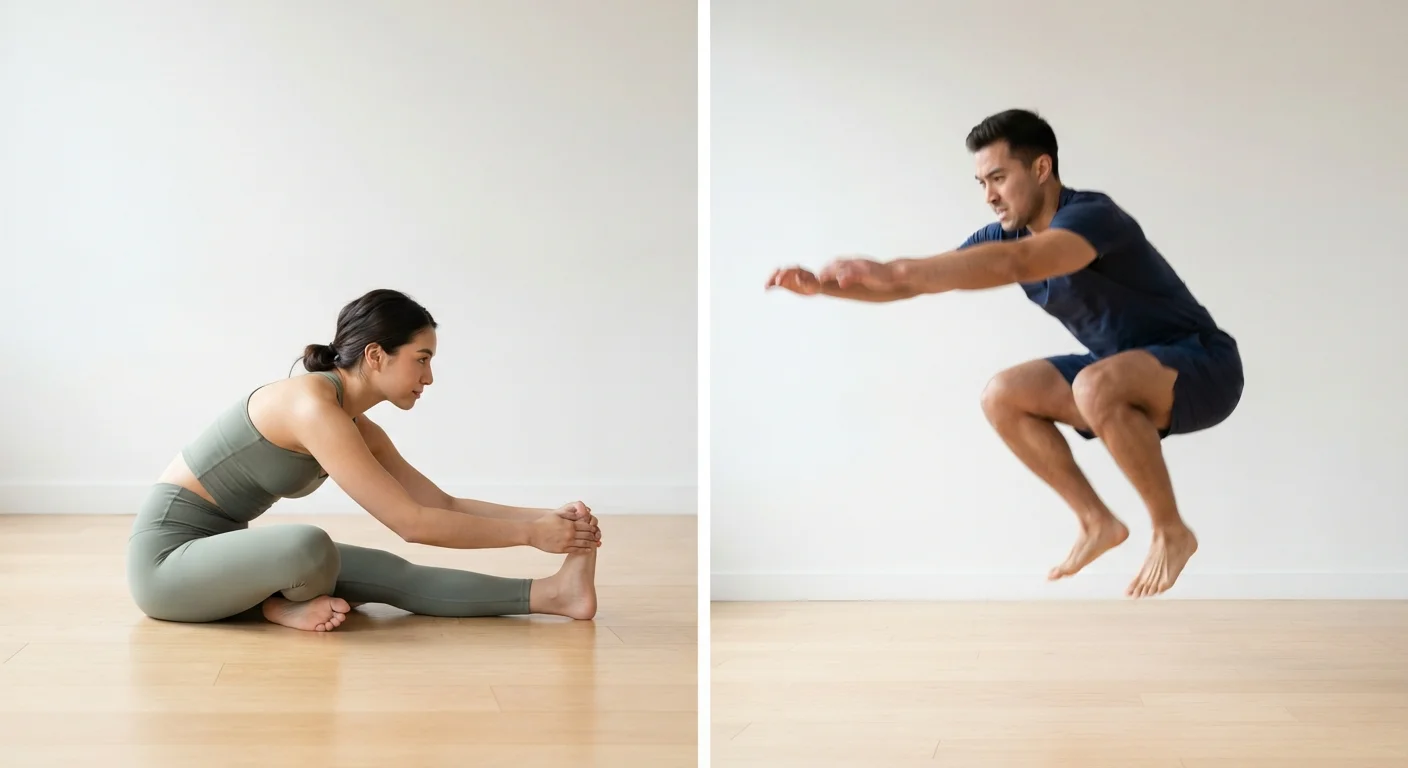
Photo: ResultsExplorer.com | Top Blogs For Everyone editorial
Key Takeaways
- Flexibility refers to how much a muscle can passively lengthen; mobility involves active, controlled joint movement.
- You can be flexible without being mobile - the two qualities require different types of training.
- Both flexibility and mobility contribute to injury resilience and overall physical well-being.
- Sustainable movement habits typically address both qualities rather than focusing on one alone.
- A qualified physical therapist or fitness professional can help tailor movement work to your individual needs.
Defining the Terms
The words flexibility and mobility appear side by side in fitness conversations so often that many people treat them as synonyms. They are related, but they describe meaningfully different physical qualities - and confusing them can lead to training gaps.
Flexibility is the capacity of a muscle or connective tissue to passively lengthen. Think of a static hamstring stretch: you're measuring how far the tissue can extend when an external force - gravity, your hands, a strap - is applied. Flexibility is largely a property of the muscle and its surrounding fascia.
Mobility is the ability to actively move a joint through a functional range of motion under your own muscular control. A deep squat is a mobility demonstration: your hips, knees, and ankles must work together, with strength and coordination, to control that range. Mobility involves not just tissue length but also joint health, neuromuscular coordination, and stability.
| Criterion | Flexibility | Mobility |
|---|---|---|
| Core definition | Passive muscle lengthening capacity | Active joint range under muscular control |
| Primary tissue involved | Muscles and fascia | Joints, muscles, and nervous system |
| Type of movement | Passive - assisted by gravity or tools | Active - generated by your own muscles |
| Common training approach | Static and dynamic stretching | Controlled movement drills and strength work |
| Functional carry-over | Indirect - improves tissue extensibility | Direct - supports everyday and athletic movement |
| Can exist without the other? | Yes - flexible muscles don't ensure joint control | Yes - some mobility gained through strength, not length |
Why the Distinction Matters
Here's where the difference becomes practical: it's entirely possible to be flexible without being mobile. A person might have long, pliable hamstrings but lack the hip control needed to move fluidly through a lunge. Conversely, someone can have reasonable joint mobility despite muscle tightness, relying on strength and motor control to compensate.
Training that targets only flexibility - passive stretching held for time - improves tissue extensibility but does not automatically translate into the active control needed for real-world movement. Research in exercise science suggests that active range of motion, the kind you can control without external assistance, is more predictive of functional movement quality than passive range alone.
~31%
Adults reporting chronic musculoskeletal pain
The CDC has estimated that roughly one in three U.S. adults experiences persistent musculoskeletal pain, a category closely linked to movement quality and joint function.
2 types
Distinct range-of-motion measures assessed clinically
Physical therapists routinely measure both passive range of motion (flexibility) and active range of motion (mobility) as separate assessments to identify functional gaps.
This is why physical therapists and movement specialists often assess both qualities separately. Addressing only one without the other may leave gaps that show up as inefficiency, discomfort, or increased injury risk over time.
Building Both into a Sustainable Routine
A thoughtful movement practice acknowledges that flexibility and mobility are complementary, not competing. Passive stretching can support recovery, reduce perceived muscle tightness, and improve tissue extensibility - all useful goals. Mobility work builds on that foundation by developing strength and coordination throughout the joint's available range.
Some accessible movement formats - yoga, Pilates, functional fitness classes - naturally blend both. Others, like dedicated static stretching routines or targeted joint mobility protocols, emphasize one quality. Neither approach is universally superior; what matters is whether the practice addresses your specific needs and can be maintained consistently over time.
If you're unsure where to focus, a consultation with a qualified physical therapist, certified athletic trainer, or licensed movement specialist is a sensible starting point. They can assess your individual range of motion, identify any mobility limitations tied to joint or tissue health, and guide you toward movement habits appropriate for your circumstances.
This article is for general informational purposes only and does not constitute medical or clinical advice. Always consult a qualified healthcare or fitness professional before beginning any new movement program, especially if you have an existing injury or health condition.
The content provided on our blog site traverses numerous categories, offering readers valuable and practical information. Readers can use the editorial team’s research and data to gain more insights into their topics of interest. However, they are requested not to treat the articles as conclusive. The website team cannot be held responsible for differences in data or inaccuracies found across other platforms. Please also note that the site might also miss out on various schemes and offers available that the readers may find more beneficial than the ones we cover.