
Mental Health Terminology: A Plain-Language Reference

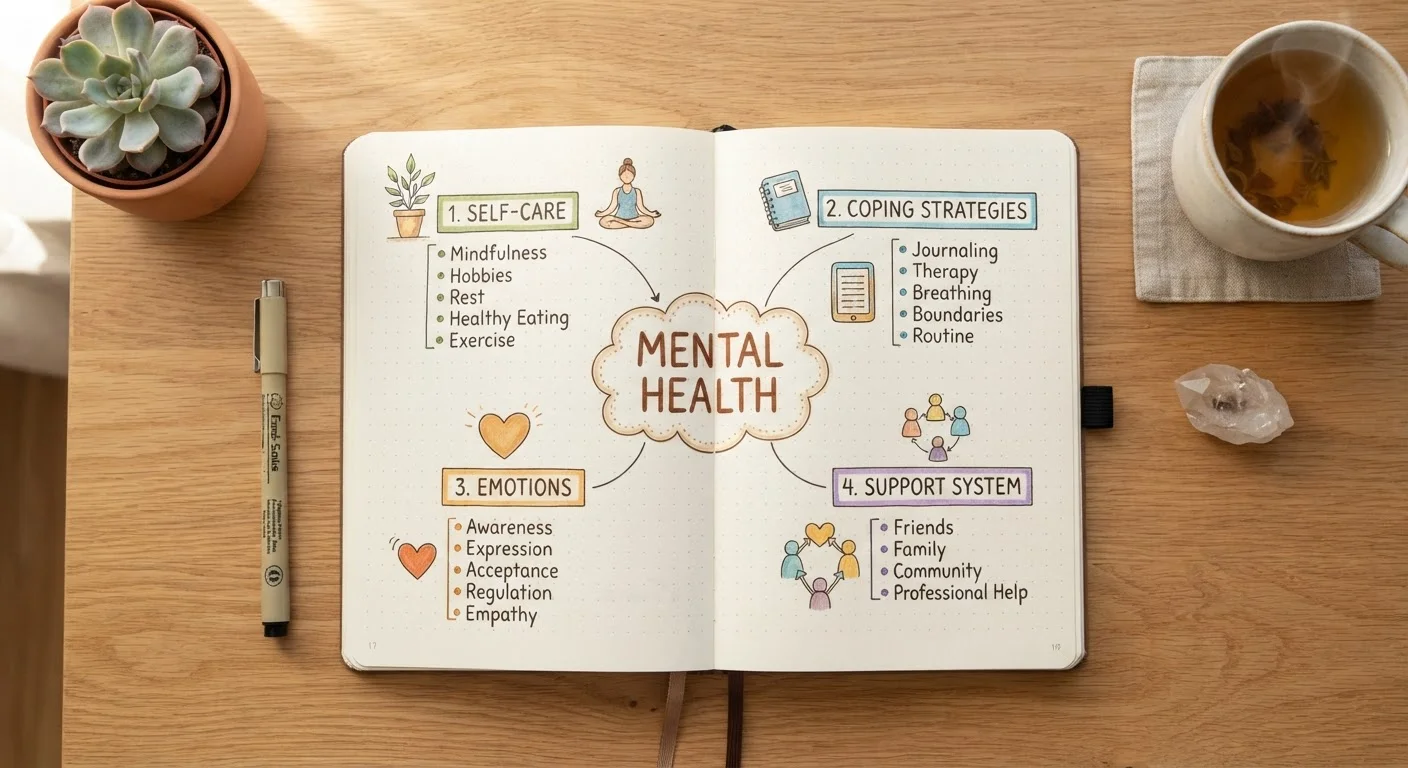
Photo: ResultsExplorer.com | Top Blogs For Everyone editorial
Why Mental Health Language Matters
Mental health vocabulary can feel like a foreign language - clinical, opaque, and sometimes intimidating. Yet these terms show up everywhere: in therapy sessions, news coverage, workplace wellness programs, and everyday conversation. Understanding what they actually mean helps you make sense of your own experiences, communicate more clearly with healthcare providers, and approach mental health topics without fear or stigma.
This reference covers the terms you're most likely to encounter - explained in plain language, without oversimplification. It is general educational information, not a substitute for professional guidance. If you're navigating a mental health concern, a qualified clinician is your best resource.
For a broader look at how emotional needs shift through different life stages, see our guide to mental well-being across the lifespan.
Cognitive Distortion
An inaccurate or exaggerated thinking pattern that negatively influences emotions and behavior. Common examples include catastrophizing, mind-reading, and overgeneralization. Identifying these patterns is a key goal in cognitive behavioral therapy.
Nervous System Regulation
The body's capacity to manage its own stress-response states - shifting from heightened arousal back to a calmer baseline. Practices such as controlled breathing or grounding techniques are often used to support regulation, though effectiveness varies by individual.
Resilience
The ability to adapt and recover from adversity, stress, or difficult life experiences. Resilience is not a fixed trait; research suggests it can be cultivated through social connection, coping skills, and access to support.
Trauma
An emotional response to a deeply distressing or disturbing event that overwhelms an individual's ability to cope. Trauma responses are highly individual - the same event may be traumatic for one person and not another.
Cognitive Behavioral Therapy (CBT)
A structured, evidence-based form of psychotherapy that explores the relationship between thoughts, feelings, and behaviors. CBT is among the most researched therapeutic approaches for conditions such as anxiety and depression.
Somatic Therapy
A body-centered therapeutic approach that addresses how physical sensations relate to emotional and psychological experiences. It is often used in trauma-informed care, though evidence varies across specific modalities.
Comorbidity
The simultaneous presence of two or more medical or mental health conditions in the same person. For example, anxiety and depression frequently co-occur. Clinicians assess comorbidities to develop a complete treatment picture.
Psychoeducation
The process of providing individuals - and sometimes their families - with factual information about a mental health condition and its treatment. It is a standard component of many therapeutic approaches.
Grounding
A set of techniques used to anchor attention to the present moment, often by engaging the senses. Grounding is commonly used to manage dissociation, anxiety, or overwhelming emotions.
Dissociation
A disconnection from thoughts, feelings, surroundings, or identity - ranging from brief episodes of spacing out to more significant disruptions of memory or sense of self. It can occur as a response to stress or trauma.
Attachment Style
A pattern of relating to others in close relationships, shaped largely by early caregiving experiences. Researchers commonly describe four styles: secure, anxious, avoidant, and disorganized. These patterns can influence relationships throughout life.
Mindfulness
The practice of intentionally paying attention to the present moment without judgment. Mindfulness-based interventions have a growing evidence base for supporting stress reduction and emotional regulation.
Core Concepts at a Glance
The terms below represent foundational ideas that mental health professionals use most frequently. Familiarity with them can make conversations with therapists or counselors feel far less daunting.
| Most Common Mental Health Conditions (U.S.) | Anxiety disorders, depression, PTSD (NIMH, National Institute of Mental Health) |
| Adults with a Mental Illness (U.S.) | Approximately 1 in 5 (SAMHSA National Survey on Drug Use and Health) |
| Evidence Base for CBT | One of the most studied psychotherapy approaches (American Psychological Association) |
| Trauma-Informed Care | A framework that acknowledges the widespread impact of trauma (SAMHSA, 2014 concept paper) |
| Mindfulness Research | Studied for stress, anxiety, and mood regulation (NCCIH, National Center for Complementary and Integrative Health) |
Cognitive Terms
Cognitive distortions are inaccurate thinking patterns that reinforce negative emotions - for example, catastrophizing (assuming the worst outcome) or black-and-white thinking (seeing situations as all-or-nothing). Recognizing these patterns is central to cognitive behavioral therapy (CBT), one of the most researched therapeutic approaches available.
Nervous System & Body-Based Terms
Nervous system regulation refers to the body's ability to shift between states of activation (alertness, stress response) and calm. Techniques like diaphragmatic breathing and grounding exercises are widely used to support this process, though individual responses vary. This language appears frequently in trauma-informed care and somatic therapy contexts.
Diagnostic & Clinical Terms
You may encounter terms like comorbidity (when two or more conditions occur simultaneously in the same person) or differential diagnosis (a clinician's process of ruling out alternative explanations for symptoms). These are clinical tools - reading about them here builds awareness, not a self-diagnosis capability.
This article is for informational purposes only and is not a substitute for professional medical or mental health advice. Always consult a qualified healthcare provider for concerns about your own health.
The content provided on our blog site traverses numerous categories, offering readers valuable and practical information. Readers can use the editorial team’s research and data to gain more insights into their topics of interest. However, they are requested not to treat the articles as conclusive. The website team cannot be held responsible for differences in data or inaccuracies found across other platforms. Please also note that the site might also miss out on various schemes and offers available that the readers may find more beneficial than the ones we cover.