
Learning Pathways: A Complete Guide to Modern Educational Choices

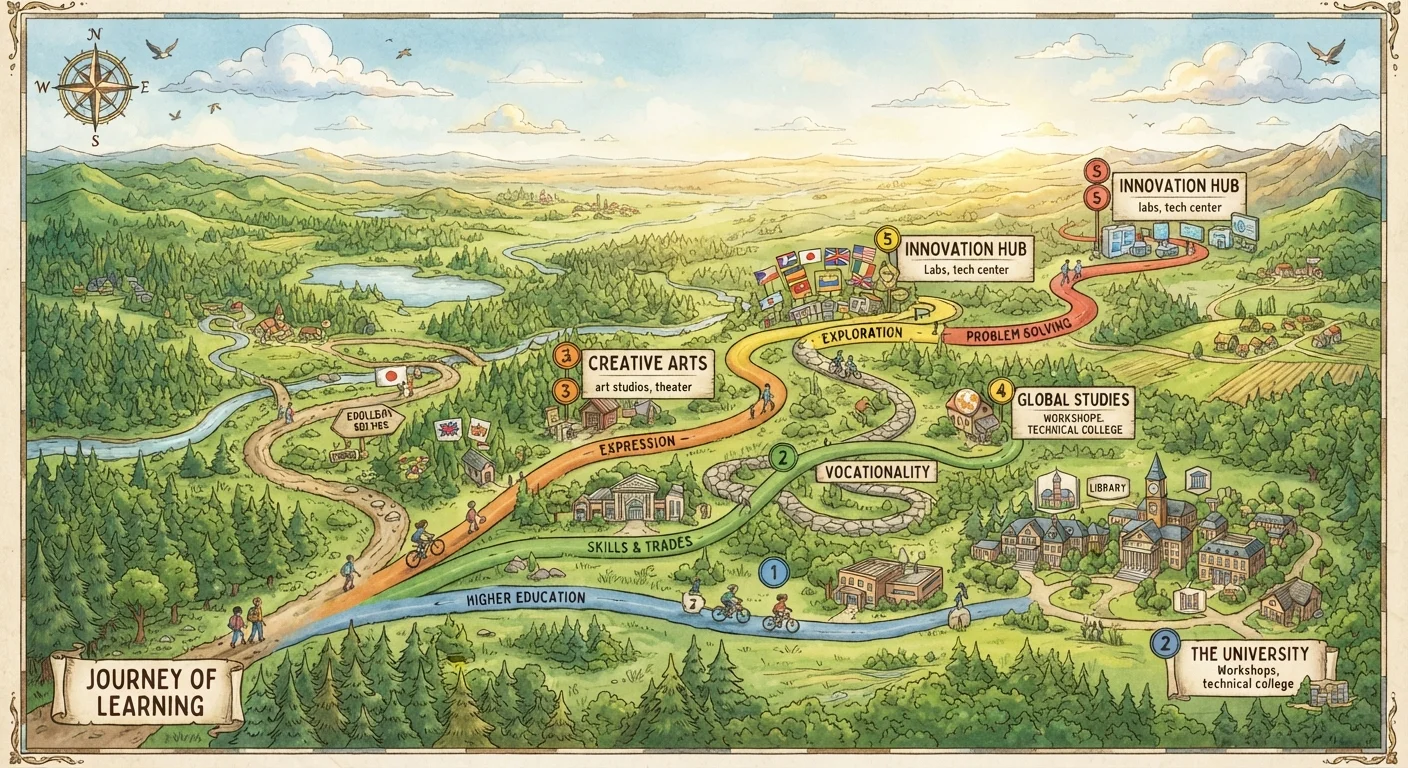
Photo: ResultsExplorer.com | Top Blogs For Everyone editorial
Key Takeaways
- No single educational pathway suits every learner - your goals, schedule, and finances all shape the right fit.
- Formal degrees, vocational programs, and self-directed study each offer distinct advantages and trade-offs.
- Credentials vary widely in recognition; understanding accreditation is essential before enrolling anywhere.
- Pathways can be combined - many learners mix formal coursework with independent skill-building effectively.
- Adult learners face unique considerations, including credit for prior learning and flexible scheduling.
Why Educational Pathways Matter More Than Ever
The landscape of learning has shifted dramatically. Where previous generations largely followed a single route - school, then college, then career - today's learners navigate a sprawling map of options: four-year degrees, community college certificates, online microcredentials, apprenticeships, bootcamps, and fully self-directed study.
This variety is genuinely empowering, but it also introduces complexity. Without a clear framework, the abundance of choice can feel paralyzing rather than freeing. Understanding the major categories of educational pathways - and how they connect - gives you a foundation for making decisions that align with your actual goals, not just the most familiar option.
For a plain-language explanation of terms you'll encounter along the way, see our working reference on educational terminology.
40%
U.S. adults enrolled in some form of post-secondary education
According to the National Center for Education Statistics, roughly 40% of U.S. adults have participated in some form of post-secondary or continuing education.
585,000+
Active registered apprentices in the U.S.
The U.S. Department of Labor reported over 585,000 active registered apprentices as of recent program data, reflecting steady growth in work-based learning.
63%
Online learners seeking career advancement
Research from the Babson Survey Research Group found the majority of online learners cite career advancement or job-related skill development as their primary motivation.
Formal Degree Programs: Structure and Credentials
Degree-granting institutions - including universities and four-year colleges - offer the most widely recognized academic credentials. A bachelor's degree typically requires around 120 credit hours and takes four years of full-time study, though part-time options extend that timeline. Associate degrees, offered primarily through community colleges, generally require two years and can serve as stepping stones to a bachelor's program through transfer agreements.
Formal degree programs provide structured curricula, faculty mentorship, campus resources, and - crucially - regional or national accreditation that employers and graduate schools recognize. The trade-off is cost and time. Tuition at four-year institutions varies enormously, and student loan debt is a real consideration that deserves careful research before committing.
Graduate degrees (master's and doctoral programs) layer on top of a bachelor's and are typically pursued for specialized careers in fields like medicine, law, academia, and advanced engineering. These programs demand significant time and often require demonstrated undergraduate performance or professional experience for admission.
Before applying to any degree program, request the institution's graduation rate and median time-to-completion - these figures reveal far more about program quality than marketing materials.
If your goal is a career change rather than academic advancement, prioritize pathways that result in a portfolio or licensure over those that primarily yield a transcript.
Vocational and Technical Training
Vocational education - also called career and technical education (CTE) - prepares learners for specific trades and skilled occupations. Programs in fields such as electrical work, healthcare support, culinary arts, HVAC, and automotive technology are delivered through community colleges, technical institutes, and apprenticeship programs.
Apprenticeships deserve particular attention. They combine paid on-the-job training with classroom instruction, typically spanning one to five years depending on the trade. In the U.S., registered apprenticeship programs are recognized by the Department of Labor and result in a nationally recognized credential. This pathway offers immediate income during training - a meaningful advantage over unpaid academic study.
Vocational programs are often shorter, less expensive, and highly focused. For learners whose goals are clearly occupational - becoming a licensed electrician, a dental hygienist, or a network technician - these pathways frequently offer a more direct route than a broad academic degree.
Online and Self-Directed Learning
Online learning now spans an enormous range: accredited online degree programs from established universities, massive open online courses (MOOCs) from platforms like Coursera and edX, intensive bootcamps focused on coding or data skills, and entirely self-curated learning using books, videos, podcasts, and community forums.
The appeal of self-directed learning is its flexibility and low barrier to entry. You can explore topics at your own pace, often at little or no cost. The challenge is that motivation, structure, and accountability must come from within - and not every employer treats self-taught credentials with the same weight as formal ones.
Microcredentials and digital badges are a growing middle ground. These shorter, stackable credentials - often issued by universities, professional associations, or established platforms - signal specific competencies to employers. Their recognition varies by industry, so researching how a credential is viewed in your target field before investing time is worthwhile.
For practical strategies on building skills effectively within any of these formats, the Skill Building hub offers actionable frameworks.
Choosing and Combining Pathways
Few learners are locked into a single pathway. In practice, many people combine approaches - completing a community college associate degree, transferring to a university, then supplementing with online professional development throughout their career. Others enter the workforce through a vocational program, then pursue part-time degree study later.
When mapping your own route, three questions provide useful anchors:
- What outcome am I working toward? A specific job, a career change, personal enrichment, or academic progression each point toward different pathways.
- What constraints do I face? Time, finances, geography, and family responsibilities all shape what's realistically viable.
- How does my target field recognize credentials? Some industries require licensed or accredited qualifications; others assess portfolios and demonstrated skills.
If you are considering re-entering education after a gap, our guide on returning to education as an adult addresses the specific challenges and advantages adult learners should expect.
Navigating Credentials and Quality
Not all credentials carry equal weight, and understanding accreditation is one of the most important skills a learner can develop. In the U.S., accreditation is a quality-assurance process in which an independent body evaluates whether an institution or program meets established educational standards. Regional accreditation (granted by bodies like HLC, SACSCOC, or NECHE) is generally the most widely recognized form for academic degrees.
Before enrolling in any program - especially online - verify its accreditation status using the U.S. Department of Education's database or CHEA (Council for Higher Education Accreditation). Programs that are unaccredited or hold only unrecognized accreditation may not transfer credits to other institutions and may not be accepted by employers or licensing boards.
For shorter, non-degree credentials, research how they are regarded within your specific industry. Professional associations in fields like project management, IT, or human resources often issue credentials that carry significant employer recognition, independent of traditional academic accreditation.
Understanding the terminology around credentials - from credit hours to licensure to continuing education units - puts you in a stronger position to evaluate options. Our educational terms reference breaks down these concepts clearly.
This article is for general informational and educational purposes only. Educational requirements, accreditation standards, and program availability vary widely. Always verify details directly with institutions and relevant licensing or credentialing bodies before making enrollment decisions.
The content provided on our blog site traverses numerous categories, offering readers valuable and practical information. Readers can use the editorial team’s research and data to gain more insights into their topics of interest. However, they are requested not to treat the articles as conclusive. The website team cannot be held responsible for differences in data or inaccuracies found across other platforms. Please also note that the site might also miss out on various schemes and offers available that the readers may find more beneficial than the ones we cover.