
The Science of Studying: A Complete Guide to Evidence-Based Learning Methods

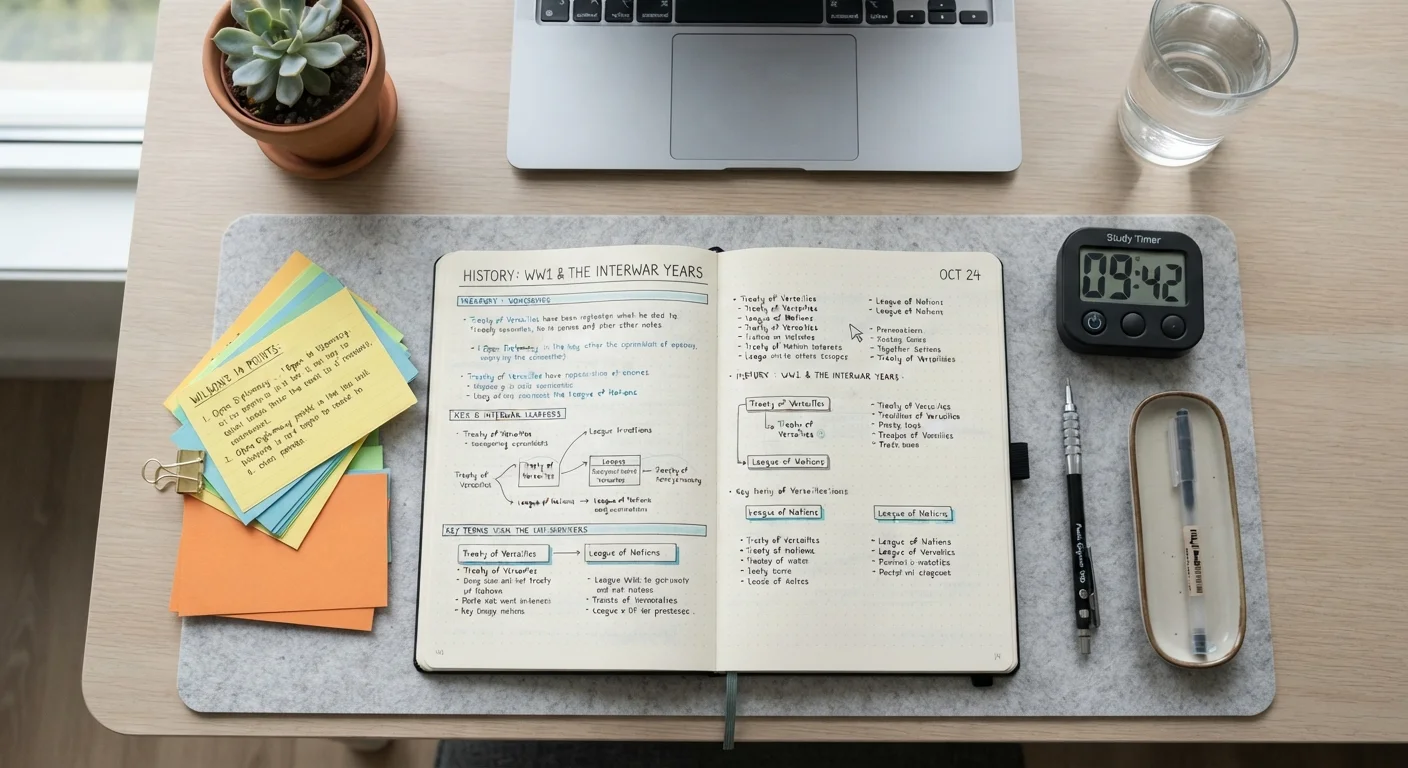
Photo: ResultsExplorer.com | Top Blogs For Everyone editorial
Key Takeaways
- Retrieval practice — actively recalling information — consistently outperforms passive re-reading in research.
- Spaced repetition spreads study sessions over time, exploiting how memory consolidation works during sleep.
- Interleaving different topics in one session feels harder but produces stronger long-term retention.
- Asking 'why' and 'how' questions while studying (elaborative interrogation) deepens understanding.
- Many popular habits like highlighting have weak research support — focus on proven techniques instead.
Why Study Methods Matter More Than Study Time
Hours logged at a desk is not the same as learning. Cognitive scientists have known for decades that how you study determines how much you retain — often more than how long you study. Yet most people default to passive methods like re-reading notes or highlighting text, habits that feel productive but have limited backing in research.
A landmark review published in Psychological Science in the Public Interest by Dunlosky and colleagues evaluated ten widely used study techniques and found dramatic differences in effectiveness. Techniques like practice testing and distributed practice earned the highest ratings; highlighting and re-reading earned the lowest. Understanding this gap is the first step to studying smarter. For a closer look at which habits to leave behind, see what the research doesn't support.
High
Effectiveness rating for practice testing
Dunlosky et al. (2013) in Psychological Science in the Public Interest rated practice testing as one of only two techniques earning the top effectiveness tier across learning conditions.
~50%
Typical memory loss within one hour of learning
Research building on Ebbinghaus's forgetting curve suggests roughly half of new information can be lost within an hour without any review strategy.
Low
Effectiveness rating for highlighting and re-reading
The same Dunlosky et al. review gave highlighting and re-reading the lowest effectiveness ratings, despite being among the most commonly used student strategies.
Retrieval Practice: Testing Yourself to Learn
Retrieval practice — deliberately pulling information out of memory rather than reading it again — is one of the most replicated findings in learning science. The act of retrieving itself strengthens the memory trace, a phenomenon researchers call the testing effect.
Practical forms include: writing everything you remember on a blank page before consulting your notes (a technique called a brain dump), using flashcards without looking at the answer first, completing practice problems without checking worked examples, and answering end-of-chapter questions before reviewing the chapter.
Use the 'closed-book summary' method: after finishing any reading, close the material and write a half-page summary from memory before checking for accuracy.
Set a timer for retrieval attempts. Giving yourself 10 minutes to recall material before consulting notes creates healthy time pressure that mimics real test conditions.
The discomfort of not remembering something immediately is a signal that retrieval is happening — not a reason to abandon the technique. That productive struggle is precisely where learning occurs.
Spaced Repetition: Timing Is Everything
Hermann Ebbinghaus's 19th-century forgetting curve showed that memory decays rapidly after initial learning — but reviewing material at strategic intervals resets and strengthens retention. This principle, called spaced repetition, involves spreading study sessions over days or weeks rather than cramming everything into one long session.
Modern applications use spaced repetition algorithms (found in many flashcard apps) that automatically schedule reviews based on how well you recalled each item. But you don't need an app: simply reviewing your notes after one day, then three days, then a week produces meaningful gains over massed practice. For plain-language definitions of these and other core concepts, see the learning science glossary.
Interleaving: Mixing Topics on Purpose
Most students study one topic until it feels mastered, then move to the next — a method called blocked practice. Research, however, consistently shows that interleaving — switching between related topics within a single session — produces better long-term retention and transfer, even though it feels harder in the moment.
For example, instead of completing 20 algebra problems of the same type, mix algebra, geometry, and statistics problems. The brain must actively identify which strategy applies to each problem, building a more flexible understanding. Studies on motor skills and academic subjects both confirm this advantage, though the benefit is largest when the interleaved topics are related rather than entirely unconnected.
The key insight: if studying feels too easy, it may not be working as well as you think.
Elaborative Interrogation and Self-Explanation
Elaborative interrogation means asking yourself why a fact is true and connecting it to what you already know. Self-explanation means talking through your reasoning as you solve a problem or read new material — essentially teaching yourself out loud.
Both techniques push you beyond memorization into conceptual understanding. Research suggests they are especially effective when you have some prior knowledge in a domain, because you have existing mental frameworks to attach new information to. A simple habit: after reading each paragraph, pause and ask, "Why does this make sense? How does this connect to something I already know?"
When choosing learning programs that promise to teach these skills, apply critical thinking to the marketing claims. Our guide on evaluating educational programs can help you assess quality.
Start With One Technique, Not All of Them
Building Your Evidence-Based Study Routine
Combining these techniques does not require a complete overhaul of your schedule. A practical starting framework:
- Before each session: Do a brief retrieval warm-up — write down everything you remember from the last session without looking at notes.
- During the session: Interleave two or three related topics and ask elaborative questions as you go.
- After the session: Schedule your next review using spaced intervals (next day, then three days later, then a week).
- Weekly: Take a low-stakes practice test covering all material studied that week.
Consistency matters more than perfection. Even applying one of these techniques — replacing a single re-reading session with a retrieval practice session — produces measurable gains. Start where you are, build the habit, and layer in additional strategies as they become automatic.
Learning science is a living field, and ongoing research continues to refine our understanding. The techniques above represent a strong, durable consensus — but remaining curious and adaptable is itself a hallmark of effective learners.
The content provided on our blog site traverses numerous categories, offering readers valuable and practical information. Readers can use the editorial team’s research and data to gain more insights into their topics of interest. However, they are requested not to treat the articles as conclusive. The website team cannot be held responsible for differences in data or inaccuracies found across other platforms. Please also note that the site might also miss out on various schemes and offers available that the readers may find more beneficial than the ones we cover.