
Fixed vs. Variable Expenses: Understanding the Difference

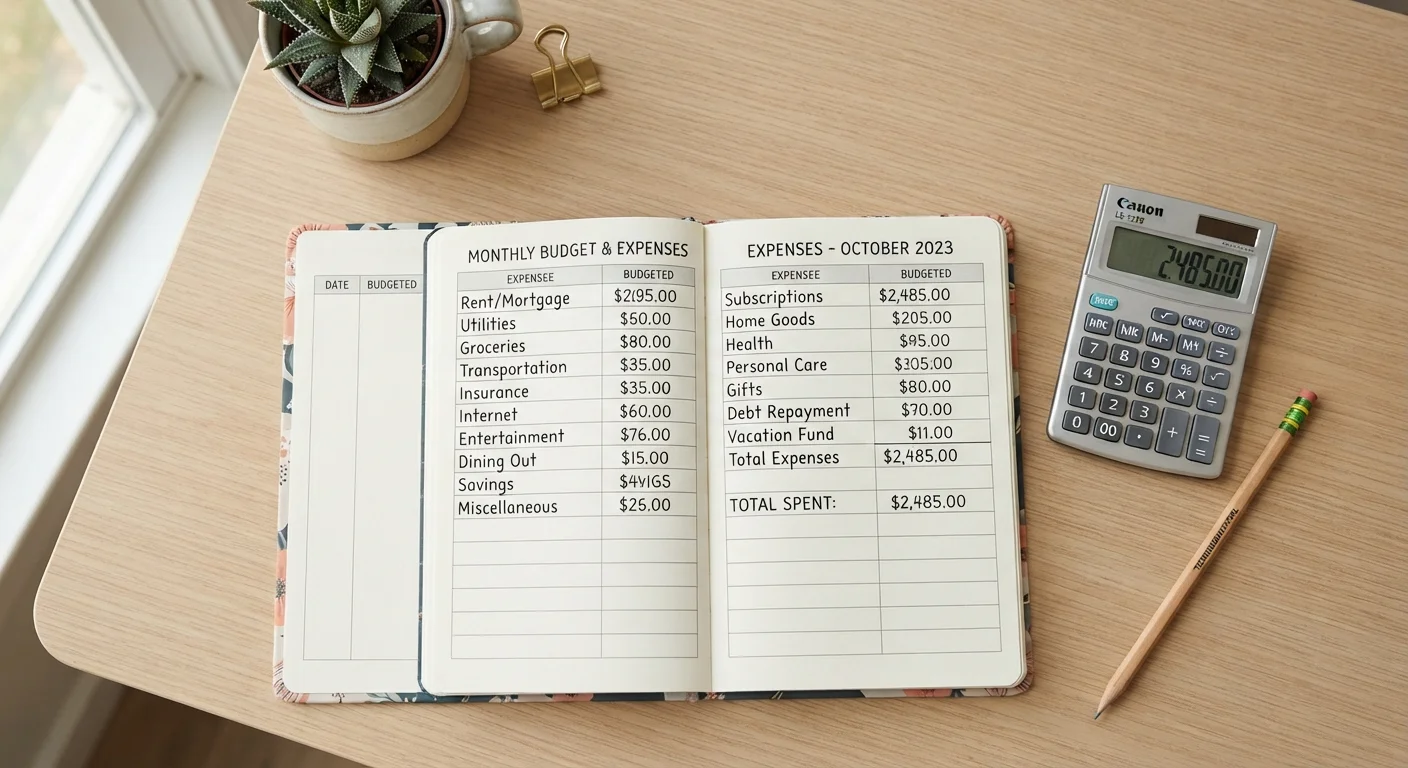
Photo: ResultsExplorer.com | Top Blogs For Everyone editorial
Key Takeaways
- Fixed expenses stay the same each billing cycle, making them easy to forecast in advance.
- Variable expenses change month to month and are where most spending flexibility lives.
- Knowing which category each cost falls into helps you build a more accurate monthly budget.
- Semi-variable expenses share traits of both types and deserve their own tracking category.
- Reducing variable costs is typically easier and faster than renegotiating fixed obligations.
What Are Fixed Expenses?
A fixed expense is any recurring cost that stays the same amount each billing period, regardless of how you live that month. Rent or mortgage payments, car loan installments, insurance premiums, and internet service bills are classic examples. You owe the same dollar amount whether you are home every day or traveling for three weeks.
Because fixed costs are predictable, they are the easiest line items to enter into a budget. You can list them once and rely on those figures month after month without recalculating. That stability is an advantage for planning — but it is also a constraint. Fixed obligations are typically locked in by a contract or agreement, so reducing them usually requires a more significant action: refinancing a loan, moving to a less expensive home, or canceling a subscription service.
For most households, fixed expenses represent the largest share of monthly outgoing money. Identifying them clearly is the essential first step in any budgeting process. See our plain-language glossary of budgeting terms for definitions of other foundational concepts.
What Are Variable Expenses?
A variable expense is a cost that changes in amount from one month to the next based on your choices and circumstances. Groceries, dining out, gasoline, clothing, and entertainment are all variable. You spend more in some months — a birthday dinner, a home repair, a road trip — and less in others.
Variable expenses are where most of your day-to-day financial decisions happen, which makes them both the most flexible and the most unpredictable part of a budget. This is also where overspending tends to silently accumulate. Small purchases that feel minor individually can add up to a significant total by month-end. Our article on spending categories beginners underestimate explores the specific areas where new budgeters most often lose track.
Because variable costs respond directly to your behavior, they are also the first place to look when you need to reduce spending in a given month. Skipping restaurant meals or delaying a discretionary purchase can produce real, immediate savings without requiring any contract changes.
| Criterion | Fixed Expenses | Variable Expenses |
|---|---|---|
| Amount each month | Stays the same | Changes month to month |
| Predictability | High — easy to forecast | Low — depends on behavior |
| Common examples | Rent, loan payments, insurance | Groceries, gas, dining out |
| Ease of reducing | Harder — often contract-bound | Easier — behavior-driven |
| Role in budgeting | Establish your spending floor | Where daily decisions are made |
| Tracking effort | Low — enter once and reuse | Higher — requires regular review |
The Middle Ground: Semi-Variable Expenses
Not every expense fits neatly into one category. Semi-variable expenses — sometimes called mixed costs — have a fixed base component plus a usage-driven portion. Your electric bill, for example, includes a fixed service charge each month, but the bulk of it fluctuates depending on how much energy you consume. Cell phone plans with a set monthly fee plus overage charges work the same way.
Treating semi-variable costs as purely fixed can cause you to underestimate them in high-usage months. A practical approach is to budget a conservative average based on your past 12 months of statements, then adjust when a seasonal spike is expected — higher air conditioning costs in summer, for instance.
When a Fixed Cost Becomes Variable
Using This Distinction to Budget More Accurately
Once you categorize your expenses, budgeting becomes a more structured exercise. Start by listing every fixed cost and subtracting the total from your monthly take-home pay. What remains is the income available for variable spending, saving, and debt repayment. This simple sequence prevents the common mistake of treating all income as freely available before accounting for locked-in obligations.
If your income varies month to month — as it does for freelancers, contractors, or gig workers — this framework becomes even more important. Our guide on budgeting with irregular income covers approaches specifically designed for that situation.
Understanding fixed versus variable costs also applies beyond household budgeting. When planning a trip, for instance, flights and accommodation often behave like fixed costs once booked, while food and local transport remain variable. Our piece on where travel money actually goes applies this same logic to trip planning.
This article is for general informational and educational purposes only and does not constitute personalized financial advice. Consult a qualified financial professional for guidance tailored to your individual circumstances.
The content provided on our blog site traverses numerous categories, offering readers valuable and practical information. Readers can use the editorial team’s research and data to gain more insights into their topics of interest. However, they are requested not to treat the articles as conclusive. The website team cannot be held responsible for differences in data or inaccuracies found across other platforms. Please also note that the site might also miss out on various schemes and offers available that the readers may find more beneficial than the ones we cover.