
Debt & Credit

Before You Apply for Any Loan: A Pre-Application Checklist

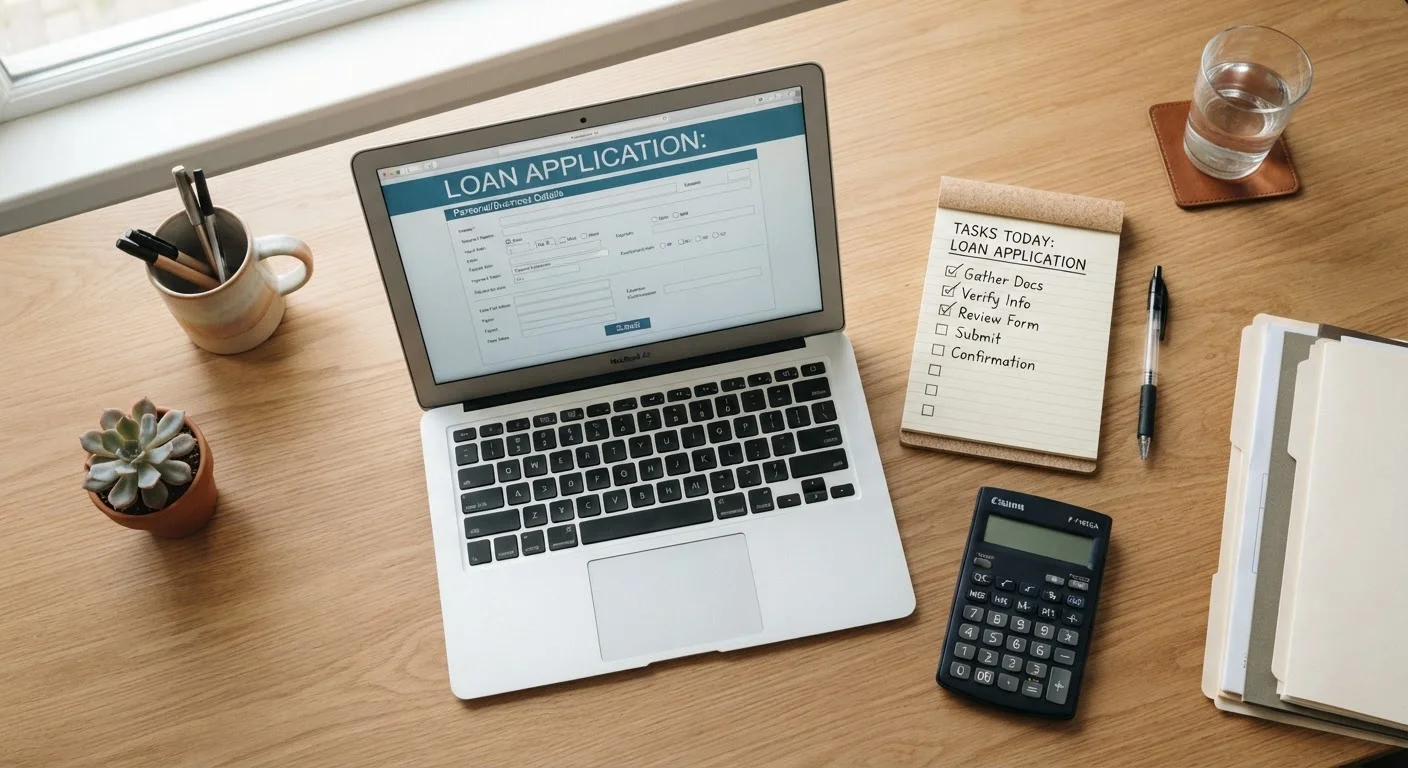
Before You Apply for Any Loan: A Pre-Application Checklist

Photo: ResultsExplorer.com | Top Blogs For Everyone editorial

Running through these steps before submitting a loan application can improve your odds, protect your credit, and help you spot red flags early.

Key Takeaways

  • Checking your credit report before applying helps you catch errors that could hurt your approval odds.
  • Knowing your debt-to-income ratio lets you gauge how lenders will view your application.
  • Multiple loan applications in a short window can trigger hard inquiries that temporarily lower your credit score.
  • Understanding the total cost of a loan — not just the monthly payment — prevents surprises over the loan term.
  • Spotting red flags early, like upfront fees or pressure tactics, can protect you from predatory lending.

Why Preparation Matters Before You Apply

Applying for a loan without preparation is a bit like signing a lease without reading it. You can do it — but the consequences of skipping due diligence tend to show up later, usually at the worst moment. A thoughtful pre-application review helps you enter the process with realistic expectations, a stronger position, and a clearer sense of whether borrowing makes sense at all right now.

This checklist is designed for any type of consumer loan: personal loans, auto loans, home improvement financing, or student loans. The specifics of each loan type will differ, but the groundwork is largely the same. For a broader framework on evaluating whether debt is the right move in the first place, see our article on borrowing wisely.

Work through the groups below before submitting any application. Some steps take minutes; others may take a few days if you discover issues that need correcting first.

Required

AnnualCreditReport.com

The federally authorized source for free credit reports from all three major bureaus — an essential first stop before any loan application.

Required

Consumer Financial Protection Bureau (CFPB)

Use the CFPB's complaint database and educational resources to research lenders and understand your rights as a borrower.

Required

A budgeting spreadsheet or app

Helps you map your current income and expenses so you can realistically evaluate whether a new loan payment fits your budget.

Optional

Loan amortization calculator

Lets you model different loan amounts, interest rates, and terms to see the true total cost before you commit.

Required

State financial regulatory agency website

Allows you to verify that a lender is properly licensed to offer loans in your state.

The Pre-Application Checklist

Use the checklist groups below as a structured walkthrough. Each item represents a decision point — not just a box to tick. If an item surfaces a concern, pause and address it before moving forward.

Know Your Credit Standing

Pull your free credit reports from all three major bureaus (Equifax, Experian, TransUnion) via AnnualCreditReport.com and review each one carefully. Must
Dispute any inaccurate accounts, incorrect balances, or outdated negative items before applying, as errors can unfairly suppress your score. Must
Check your credit score through your bank, credit union, or a free credit monitoring service so you have a realistic baseline. Must
Review your credit utilization ratio — the share of available revolving credit you are currently using — and aim to reduce it below 30% if possible before applying. Should

Assess Your Financial Position

Calculate your debt-to-income ratio (DTI) by dividing your total monthly debt payments by your gross monthly income — most lenders prefer a DTI below 43%. Must
Verify that your employment and income are stable, and gather documentation such as recent pay stubs, tax returns, or bank statements that lenders commonly require. Must
Confirm you have an emergency fund that will remain intact after taking on this loan, so unexpected expenses do not cause you to miss payments. Should
Review your monthly budget to confirm the projected loan payment fits comfortably without crowding out essentials or savings contributions. Must

Define the Loan Purpose and Amount

Write down the specific purpose of the loan and confirm that borrowing is genuinely the most appropriate way to meet that need right now. Must
Request only the amount you actually need — borrowing more than necessary increases total interest costs and repayment risk. Must
Consider whether a shorter repayment term is feasible; shorter terms typically mean higher monthly payments but significantly lower total interest paid. Should

Understand Loan Terms Before Comparing

Learn the difference between interest rate and APR — the APR includes fees and gives a more accurate picture of the true cost of borrowing. Must
Ask whether the interest rate is fixed or variable, and understand how a variable rate could affect your payment if rates rise. Must
Check for prepayment penalties that would charge you for paying off the loan early, which limits your flexibility. Should
Identify all fees associated with the loan — origination fees, late fees, and processing charges — and factor them into your cost comparison. Must

Protect Your Credit During the Process

Understand that each formal loan application typically triggers a hard inquiry on your credit report, which can temporarily lower your score. Must
Rate-shop within a focused window (generally 14–45 days depending on the scoring model) so multiple inquiries for the same loan type are often treated as a single inquiry. Should
Avoid opening new credit cards or taking on other new debt in the weeks before applying, as this can shift your credit profile unfavorably. Should

Verify the Lender

Confirm the lender is licensed to operate in your state by checking with your state's financial regulatory authority. Must
Look up the lender through the Consumer Financial Protection Bureau (CFPB) complaint database and your state attorney general's office for any significant complaint patterns. Should
Read the full loan agreement — including the fine print — before signing anything, and ask questions about any terms you do not fully understand. Must

Hard Inquiries Affect Your Credit Score

Every time a lender pulls your full credit report as part of a formal application, it typically counts as a hard inquiry and can temporarily lower your credit score by a few points. If you are comparing offers from multiple lenders, do so within a concentrated time window — most credit scoring models treat multiple inquiries for the same loan type within roughly 14 to 45 days as a single inquiry. Avoid submitting applications speculatively to lenders whose requirements you clearly do not meet.

Red Flags to Watch For

Part of preparing well is knowing what a problematic lender looks like before you engage with one. Legitimate lenders are transparent about their terms, fees, and licensing. Be cautious if you encounter any of the following:

  • Upfront fees before approval: Reputable lenders generally do not require payment before processing your application.
  • Guaranteed approval claims: No legitimate lender can guarantee approval without reviewing your financial profile. Such claims are a common feature of predatory or fraudulent operations.
  • Pressure to sign quickly: Urgency tactics are a warning sign. You should always have time to read the full loan agreement before committing.
  • Unclear APR or fee disclosure: Lenders are generally required by federal law to disclose the annual percentage rate (APR) and key terms in writing before you finalize a loan.

Never Skip Reading the Full Loan Agreement

Key loan terms — including prepayment penalties, balloon payments, and automatic-renewal clauses — are often buried in the fine print. Federal law generally requires lenders to disclose APR and key terms before you finalize a loan, but it is your responsibility to read and understand those disclosures. If anything is unclear, ask for a written explanation before signing. Once you sign, you are legally bound by those terms.

If you are also evaluating whether your broader financial footing is solid enough to take on new debt, our savings readiness checklist can help you assess that foundation first.

This article is for general informational and educational purposes only. It does not constitute personalized financial, legal, or credit advice. Your individual circumstances vary — consult a qualified financial professional before making significant borrowing decisions.

Personal Finance Editorial Team

ResultsExplorer.com | Top Blogs For Everyone

Personal Finance Editorial Team is the collective byline for our editorial team and contributor network. Articles published under this byline or an editorial pen name are researched, written, and reviewed according to our editorial standards for clarity, consistency, and independence before publication.

Budgeting BasicsSaving & GoalsDebt & Credit
View author profile

The content provided on our blog site traverses numerous categories, offering readers valuable and practical information. Readers can use the editorial team’s research and data to gain more insights into their topics of interest. However, they are requested not to treat the articles as conclusive. The website team cannot be held responsible for differences in data or inaccuracies found across other platforms. Please also note that the site might also miss out on various schemes and offers available that the readers may find more beneficial than the ones we cover.