
Digital Tools vs. Paper Planning: What Experienced Travellers Actually Use

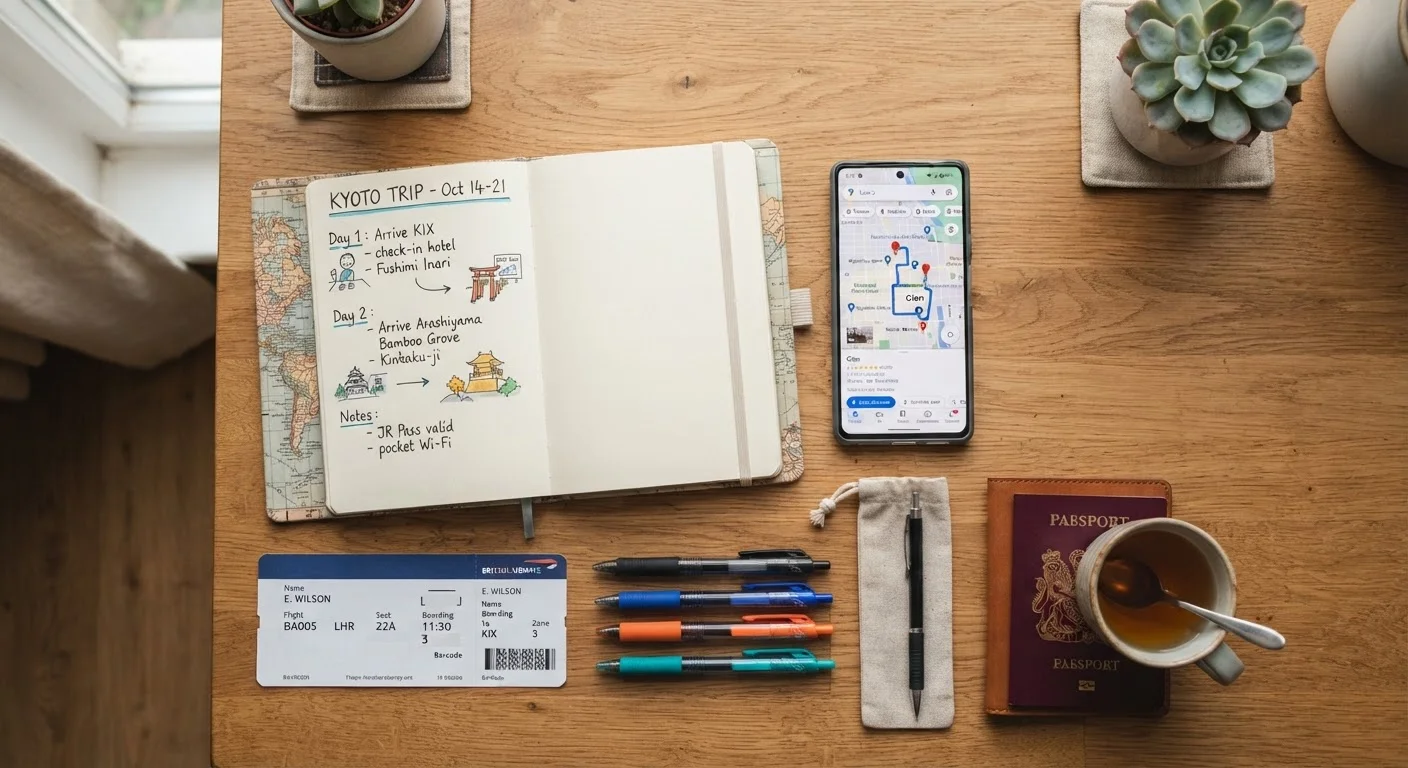
Photo: ResultsExplorer.com | Top Blogs For Everyone editorial
Key Takeaways
- Digital tools excel at real-time updates, collaboration, and consolidating bookings in one place.
- Paper planning reduces screen fatigue and works when connectivity is unreliable or absent.
- Most experienced travelers use a hybrid approach rather than committing to one method exclusively.
- The right tool depends on trip complexity, travel style, and how you process information.
- Backup printed copies of critical documents remain a practical safety net regardless of your primary method.
Why Your Planning Method Matters More Than You Think
Most travelers spend far more time planning than they realize — researching destinations, comparing options, managing confirmations, and building day-by-day schedules. The tools you use during that process directly affect how stressed or confident you feel once you're on the road.
This isn't just about preference. A poorly organized plan — regardless of whether it lives on your phone or in a binder — creates friction at the worst moments: airport lines, delayed trains, or unfamiliar neighborhoods where you need information fast. Getting the structure right before you leave matters. See our guide to building a travel itinerary that actually works for practical structure advice that applies to both approaches.
What experienced travelers have figured out is that the question isn't digital versus paper — it's knowing when each earns its place in your process.
What Digital Tools Do Well
Digital tools — including travel apps, shared spreadsheets, note-syncing platforms, and itinerary builders — have genuine advantages that paper can't replicate.
- Real-time updates: Flight changes, gate reassignments, and accommodation confirmations flow directly into apps. You're not relying on a printout that was accurate two weeks ago.
- Centralized storage: Confirmation numbers, passport scans, insurance documents, and reservation details can live in one searchable location rather than scattered across emails.
- Collaboration: Shared documents let everyone in a group see the same itinerary and contribute edits without version confusion. This is especially valuable for group trip planning, where misaligned information causes most of the friction.
- Offline maps: Downloaded maps work without a data connection, giving you navigation in areas with poor coverage.
The main liabilities: apps fail, phones run out of battery, and some destinations have genuinely unreliable connectivity. Over-reliance on digital tools without any backup is a risk.
| Digital Tools | Paper Planning | |
|---|---|---|
| Real-time updates | Automatic, syncs with bookings | Manual — requires reprinting or rewriting |
| Connectivity required | Partially (offline mode helps) | None — fully independent |
| Collaboration | Easy to share and co-edit | Difficult to coordinate across people |
| Reliability | Depends on battery and signal | Always accessible, no dependencies |
| Ease of searching | Instant keyword search | Manual scanning required |
| Learning curve | Varies by app; some are complex | Minimal — write and go |
| Best for | Complex, multi-destination trips | Backup use or low-connectivity areas |
What Paper Planning Still Gets Right
Paper hasn't disappeared from experienced travelers' bags for good reason. It offers things a screen can't easily replicate.
- Reliability: A printed itinerary works in airplane mode, underground, at border crossings, and anywhere else your phone doesn't. Paper doesn't need charging.
- Cognitive processing: Writing by hand helps many people retain and mentally organize information more effectively than typing. Sketching a rough map or jotting flexible notes can make a complex itinerary feel more intuitive.
- No distraction: A paper day-plan keeps your focus on the trip rather than notifications. Some travelers find a dedicated travel notebook reduces the urge to keep checking the phone.
- Backup for critical documents: Printed copies of visas, hotel confirmations, emergency contacts, and insurance policy numbers remain a widely recommended safeguard — particularly when traveling internationally.
Print One Page Per Travel Day
The drawback: paper doesn't update itself, is harder to share, and can be lost or damaged. A solo traveler on a weekend trip may find it perfectly adequate; a family of five managing complex logistics probably won't.
The Hybrid Approach Most Travelers Land On
When you talk to frequent travelers, a pattern emerges: most use digital tools for planning and management, and paper for access and backup. The split tends to look something like this:
- Research and booking happens digitally — it's simply faster and easier to compare, book, and store confirmations online.
- A master itinerary lives in a shared or synced document, accessible from multiple devices.
- A condensed paper version — one or two pages covering each day's key info — goes into a travel wallet or notebook for on-the-ground use.
- Critical documents (confirmations, insurance, emergency contacts) are printed and carried separately from the phone.
This structure handles both the convenience of digital access and the reliability of paper. It also makes contingency planning easier — you can annotate backup options on your paper summary without relying on connectivity when things go sideways.
It's worth noting that planning method and planning quality are separate things. A well-organized paper itinerary beats a cluttered app just as often as the reverse. If you want to pressure-test your approach against common planning mistakes, trip planning myths that lead travelers astray is worth a read before your next trip.
How to Choose Based on Your Trip
There's no universal answer, but a few factors reliably point toward one approach over the other:
- Trip complexity
- Multi-city, multi-traveler, or multi-week trips benefit from digital organization. A weekend road trip may need nothing more than a handwritten list.
- Destination connectivity
- Remote areas, cruises, or international destinations with expensive data roaming push the value of paper and offline-downloaded content higher.
- Your information style
- If you think spatially or find screens exhausting after a long travel day, paper may serve you better for on-the-ground use — even if your planning was entirely digital.
- Group size
- Larger groups almost always benefit from a shared digital document during planning; each person can then carry a printed summary tailored to their role.
The goal in any case is a plan you can actually use under pressure — not one that's comprehensive on paper (or screen) but impossible to navigate when you're tired, rushed, or in an unfamiliar place.
The content provided on our blog site traverses numerous categories, offering readers valuable and practical information. Readers can use the editorial team’s research and data to gain more insights into their topics of interest. However, they are requested not to treat the articles as conclusive. The website team cannot be held responsible for differences in data or inaccuracies found across other platforms. Please also note that the site might also miss out on various schemes and offers available that the readers may find more beneficial than the ones we cover.