
Car Maintenance Beliefs That Don't Hold Up to Scrutiny

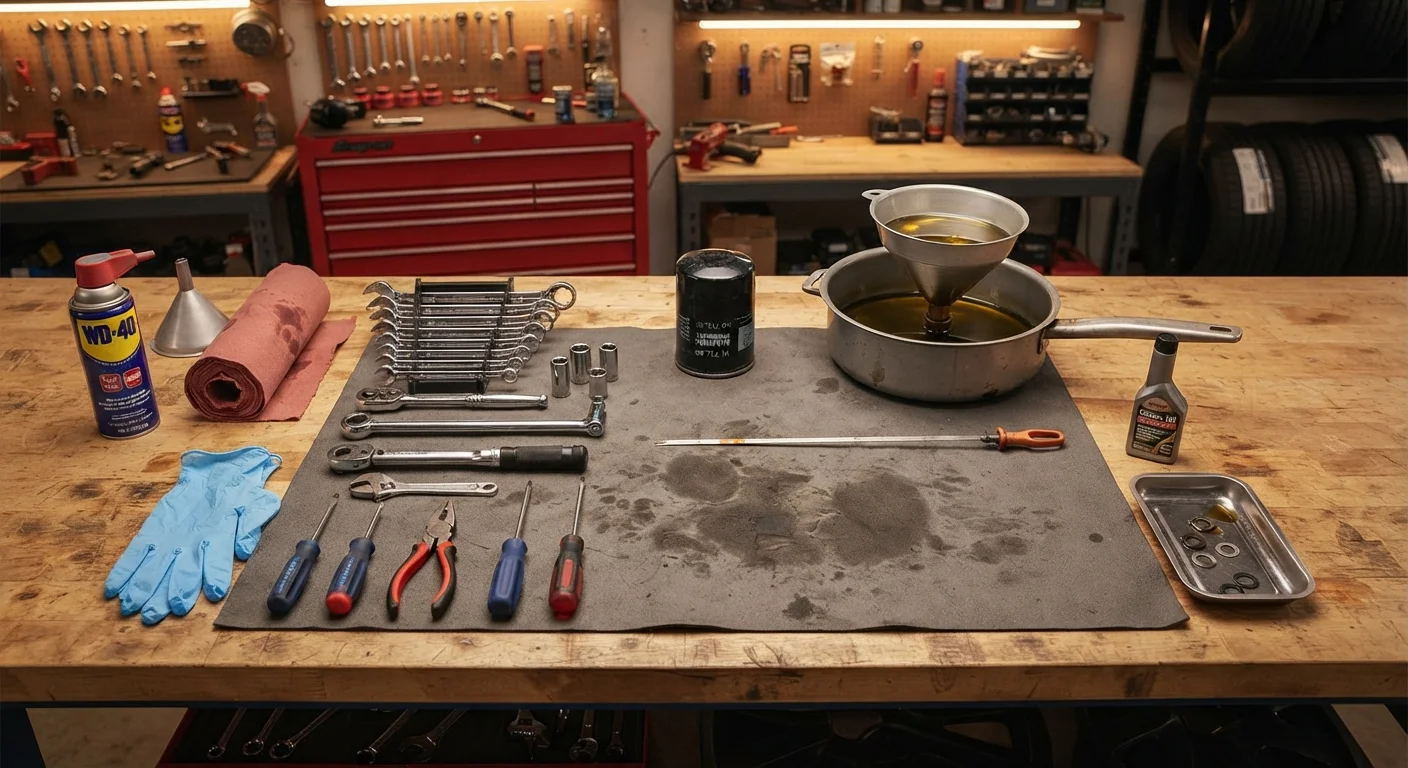
Photo: ResultsExplorer.com | Top Blogs For Everyone editorial
Key Takeaways
- Modern fuel-injected engines do not need extended warm-up idling before driving.
- Most vehicles today can go well beyond 3,000 miles between oil changes.
- Premium fuel provides no benefit in engines designed for regular unleaded gasoline.
- Tire pressure should be set to the vehicle manufacturer's specification, not the tire sidewall number.
- Replacing all four tires at once is not always necessary - but consult your owner's manual.
Why Car Maintenance Myths Persist
Car care advice gets passed down from generation to generation, often long after the vehicles it was written for have stopped rolling off lots. Some of these beliefs were once accurate - they made sense for carbureted engines of the 1970s or for oil formulations that have since been replaced. Others were never more than habits that felt logical. The result is a landscape of mixed guidance that can leave drivers spending money unnecessarily or, in some cases, skipping steps that do matter.
Understanding what current automotive knowledge actually says helps everyday drivers make smarter decisions - and spend their maintenance budgets where they'll have the most impact. For a broader look at managing those costs wisely, see our guide to managing car costs over the long term.
Myth
You need to let your car warm up for several minutes on cold mornings before driving.
Fact
Modern fuel-injected engines warm up faster and more efficiently by driving gently, not by idling.
Extended idling before driving made sense when carbureted engines needed time to stabilize the fuel-air mixture. Today's vehicles use electronic fuel injection, which adjusts automatically based on temperature. Sitting still actually prolongs the warm-up period for the drivetrain, transmission, and wheel bearings - components that only reach operating temperature through movement. A brief 30-second idle to allow oil to circulate is reasonable in extreme cold; anything beyond that largely wastes fuel and increases engine wear.
Myth
You should change your oil every 3,000 miles, no exceptions.
Fact
Most modern vehicles - using current-generation oils - can safely go 5,000 to 10,000 miles or more between changes, depending on the manufacturer's recommendation.
The 3,000-mile rule was a reasonable guideline for older engines using conventional motor oil. Advances in both engine design and oil chemistry - including full synthetic formulations - have extended service intervals considerably. Many manufacturers now specify 7,500 to 10,000 miles for standard driving conditions, with some recommending up to 15,000 miles under certain circumstances. The only authoritative source for your vehicle's interval is its owner's manual. Changing oil more frequently than necessary doesn't improve engine protection; it simply adds cost.
Myth
Using premium fuel will make any car run better and last longer.
Fact
Premium fuel benefits only engines specifically engineered to require or recommend it - in all other engines, it provides no measurable advantage.
Premium gasoline has a higher octane rating, which resists pre-ignition (commonly called knock) in high-compression engines. If your vehicle's manufacturer specifies regular unleaded, the engine's knock sensors and ignition timing are calibrated for that fuel. Running premium in such an engine does not produce more power, better fuel economy, or reduced wear. Check your owner's manual: if it says "premium recommended," regular fuel is generally acceptable with a possible small reduction in performance; if it says "premium required," that instruction should be followed.
Myth
Inflate your tires to whatever pressure is listed on the sidewall.
Fact
The sidewall number is the maximum pressure the tire can hold - not the correct operating pressure for your vehicle.
The correct tire pressure for your vehicle is determined by the automaker based on ride quality, handling, load capacity, and fuel efficiency. That specification is printed on a sticker inside the driver's door jamb (or sometimes in the glove box or fuel door), and it's the figure you should use. Inflating to the sidewall maximum typically results in a harsher ride, reduced contact patch, and uneven tread wear. Under-inflation - equally common - increases rolling resistance, generates heat, and can contribute to premature tire failure.
Myth
A car battery only needs replacement when the car won't start.
Fact
Batteries often degrade gradually, and waiting for a complete failure can leave you stranded unexpectedly.
Most car batteries have a service life of roughly three to five years, though this varies with climate, driving habits, and usage patterns. A battery can test within acceptable voltage at rest while still lacking the cold cranking amps needed to start a cold engine reliably. Many auto parts retailers and service shops offer free battery load testing, which gives a more accurate picture of remaining capacity. For a detailed look at what that process involves, see our article on car battery basics, lifespan, and warning signs. Proactive testing - especially before winter - is more informative than waiting for a failure.
Myth
You must always replace all four tires at the same time.
Fact
Many vehicles can safely receive two replacement tires, but correct placement and tread-depth matching matter significantly.
Replacing all four tires simultaneously is the simplest approach and ensures uniform performance. However, it isn't always mandatory. For front-wheel-drive and rear-wheel-drive vehicles, two tires can sometimes be replaced - but new tires are generally placed on the rear axle to maintain stability and reduce the risk of oversteer on slippery surfaces. All-wheel-drive vehicles are the most sensitive to mismatched tires: significant tread-depth differences between axles can stress the differential and transfer case. Consult your owner's manual and a trusted mechanic to determine the appropriate approach for your specific drivetrain.
Putting the Evidence to Work
The common thread running through these myths is that they were designed for an older generation of vehicles. Today's cars - with electronic fuel injection, multi-grade synthetic oils, and computer-managed ignition systems - operate under very different conditions. Your owner's manual remains the single most reliable source of maintenance guidance for your specific vehicle, because it reflects the engineering reality of how that car was built.
Don't Skip Your Owner's Manual
If you're weighing which tasks you can handle yourself and which are better left to a professional, our article on handling car maintenance yourself offers a balanced breakdown. For questions around coverage - particularly if you've heard claims about what your auto policy includes - car insurance myths is worth a read as well.
This article provides general automotive information for educational purposes. Always consult your vehicle owner's manual and a qualified mechanic for guidance specific to your car.
The content provided on our blog site traverses numerous categories, offering readers valuable and practical information. Readers can use the editorial team’s research and data to gain more insights into their topics of interest. However, they are requested not to treat the articles as conclusive. The website team cannot be held responsible for differences in data or inaccuracies found across other platforms. Please also note that the site might also miss out on various schemes and offers available that the readers may find more beneficial than the ones we cover.