
Why Tailgating Is More Dangerous Than Most Drivers Assume

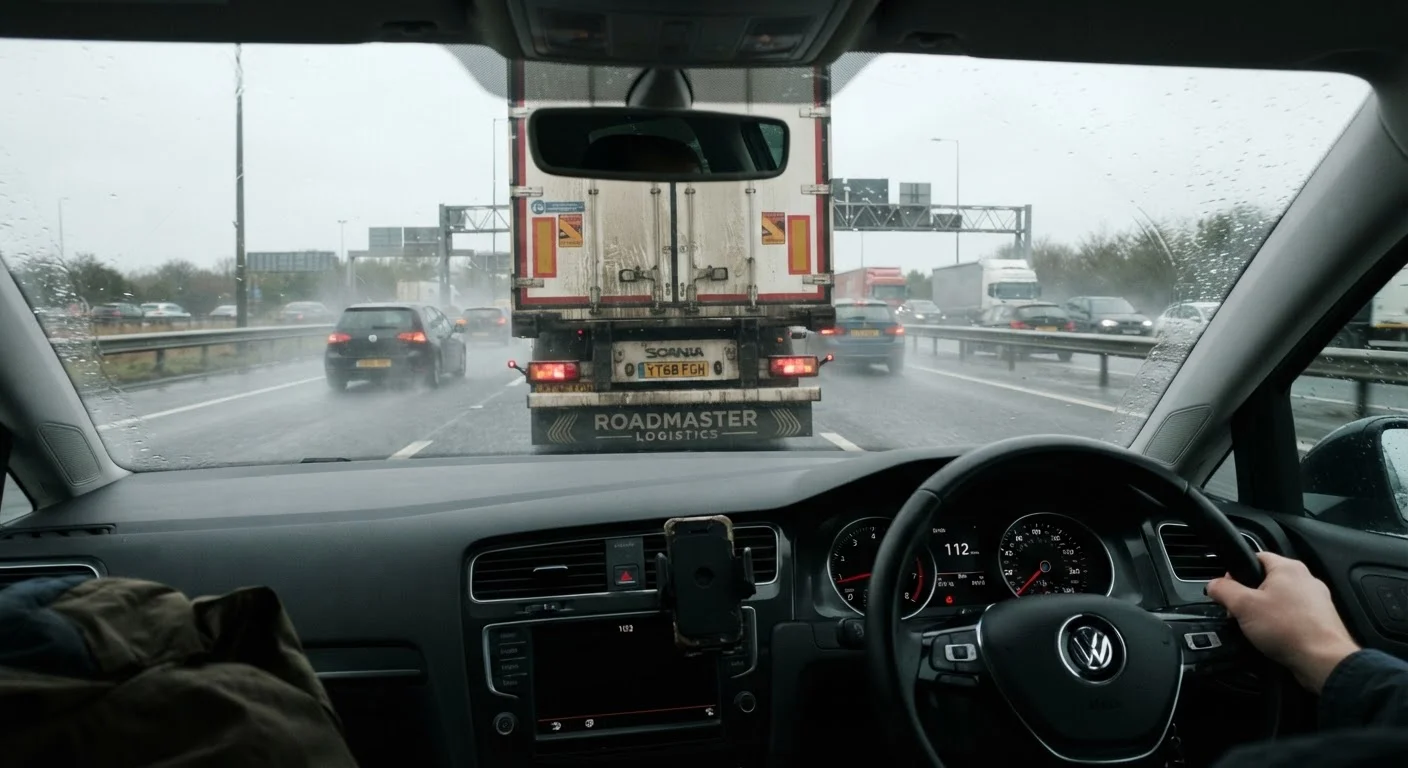
Photo: ResultsExplorer.com | Top Blogs For Everyone editorial
Key Takeaways
- Tailgating is a leading cause of rear-end crashes, which account for roughly 29% of all US traffic crashes.
- The 3-second following-distance rule is the minimum recommended gap under ideal conditions.
- Reaction time alone consumes about 1.5 seconds - during which your vehicle travels significant distance.
- Most US states have following-distance laws that can result in fines and license points.
- Wet roads, large vehicles, and fatigue all require increasing your following distance further.
- Tailgating-related behavior can overlap with aggressive driving laws in many states.
The Physics Behind Why Tailgating Is So Risky
Most drivers think of braking as an immediate action - press the pedal, car stops. In reality, stopping a vehicle involves two separate phases, and both consume time and distance that many drivers fail to account for.
The first phase is perception-reaction time: the interval between seeing a hazard and physically pressing the brake. For an alert driver under normal conditions, this typically takes around 1.5 seconds. At 60 mph, that means your vehicle travels roughly 132 feet before the brakes even engage.
The second phase is braking distance - the distance your vehicle needs once the brakes are fully applied. At 60 mph on dry pavement, this can add another 120-180 feet depending on your vehicle type, tire condition, and road surface. Combined, total stopping distance at 60 mph can easily exceed 240 feet.
Now picture following a car with only two car lengths of space between you. At highway speeds, that gap can vanish in well under a second - long before your foot ever reaches the brake pedal.
~29%
Share of US crashes that are rear-end collisions
According to the National Highway Traffic Safety Administration (NHTSA), rear-end crashes represent one of the largest categories of traffic collisions in the United States.
132 ft
Distance traveled during reaction time at 60 mph
At an average 1.5-second perception-reaction time, a vehicle traveling at 60 mph covers approximately 132 feet before braking even begins.
50%+
Increase in braking distance on wet pavement
Traffic safety research consistently shows that wet roads can more than double stopping distances compared to dry conditions, depending on tire tread and speed.
What the Law Actually Requires
Every US state has a following-distance statute, though the exact language varies. Most use the phrase "reasonable and prudent" distance, which gives law enforcement interpretive discretion based on road conditions, speed, and traffic density. Some states set specific minimums - for example, California's Vehicle Code Section 21703 prohibits following more closely than is reasonable given speed and traffic conditions.
For commercial vehicles - particularly large trucks - many states impose stricter rules. Some require a minimum 300-foot gap at certain speeds, reflecting how much longer a fully loaded semi-truck takes to stop compared to a passenger car.
Violating following-distance laws can result in a traffic citation, points on your driving record, and potentially higher insurance premiums. If a collision results from tailgating, the following driver may face civil liability for damages. It's worth noting that tailgating can also fall under aggressive driving statutes in certain states, particularly when combined with speeding or erratic lane changes. For a broader look at driving behaviors that carry unexpected legal consequences, see our article on road rage behaviors that drivers don't realize are illegal.
The 3-Second Rule - and When It Isn't Enough
The widely taught 3-second rule offers a practical way to judge following distance without doing math at 65 mph. Here's how it works: watch for a fixed object on the road ahead - a sign, shadow, or road marking. When the vehicle in front of you passes it, count: one-one-thousand, two-one-thousand, three-one-thousand. If you pass that same point before you finish counting, you're too close.
Three seconds is the minimum baseline for ideal conditions: dry roads, good visibility, alert driver, well-maintained vehicle. In many real-world situations, you should increase that buffer:
- Rain or wet pavement: Braking distance can increase by 50% or more. Aim for at least 5-6 seconds.
- Following a large truck or SUV: Their stopping distance is longer, and they block your forward visibility. Give extra space.
- Nighttime driving: Reduced visibility means hazards appear later. Pair a longer following distance with proper headlight use - our guide on night driving safety covers headlight rules and fatigue risks in detail.
- Highway speeds above 65 mph: Three seconds covers less ground at lower speeds; at higher speeds, that same gap means fewer options.
- Driver fatigue or distraction: If your reaction time is compromised, your buffer must compensate.
Use a Landmark to Check Your Gap
Tailgating in Context: Everyday Scenarios and Common Mistakes
Many tailgating incidents aren't the result of aggression - they stem from inattention, habit, or the gradual creep that happens in slow-moving traffic. Here are common situations where following distance quietly shrinks without drivers noticing:
Regardless of the cause, the outcome is the same: a narrowed margin that leaves no room for the unexpected. Whether it's a child darting into the road, a vehicle ahead hitting a pothole, or sudden construction signage, rear-end crashes often happen not because brakes failed - but because there was simply no distance left to work with.
Frequently Asked Questions
The content provided on our blog site traverses numerous categories, offering readers valuable and practical information. Readers can use the editorial team’s research and data to gain more insights into their topics of interest. However, they are requested not to treat the articles as conclusive. The website team cannot be held responsible for differences in data or inaccuracies found across other platforms. Please also note that the site might also miss out on various schemes and offers available that the readers may find more beneficial than the ones we cover.