
Night Driving Safety: Visibility, Fatigue, and Lighting Rules

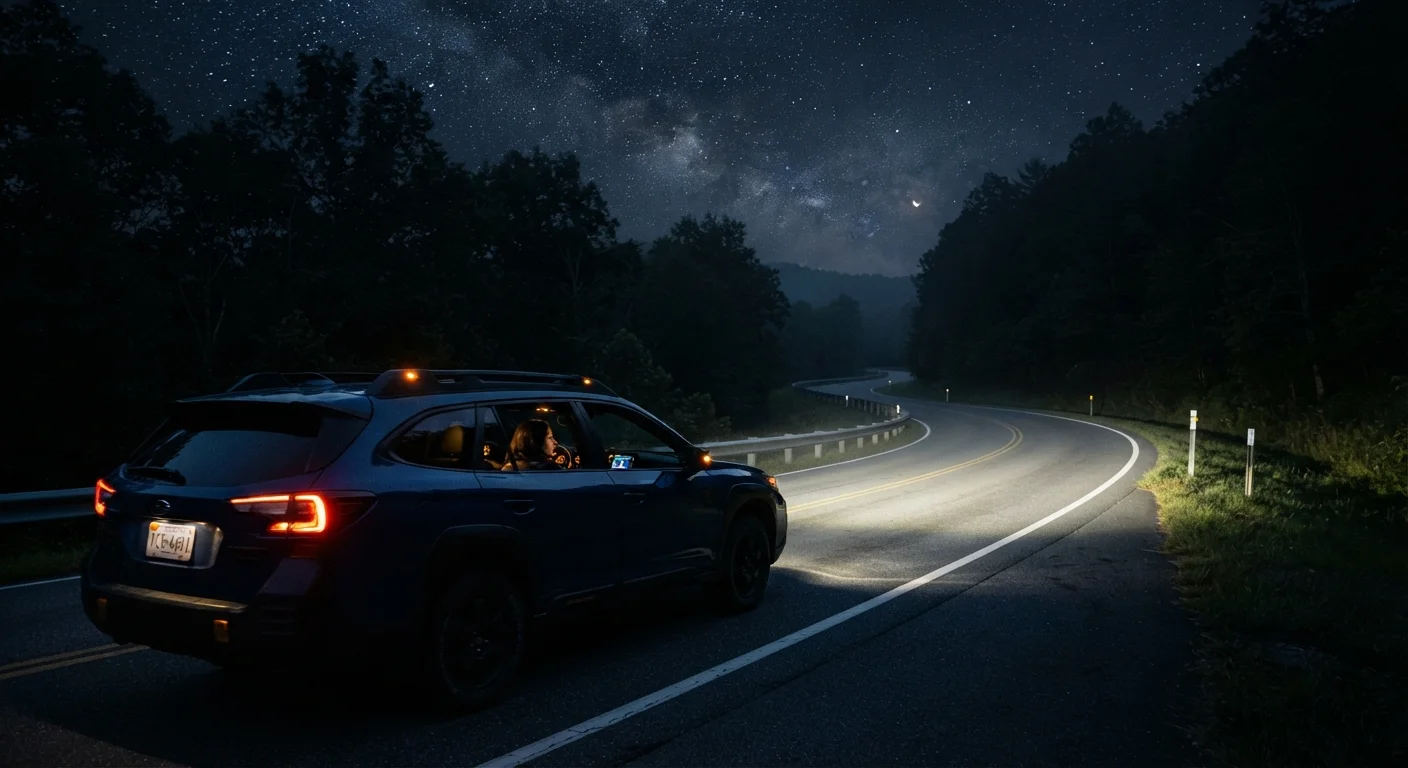
Photo: ResultsExplorer.com | Top Blogs For Everyone editorial
Key Takeaways
- Fatal crash rates are significantly higher at night despite fewer vehicles on the road.
- Most US states require headlights within 30 minutes of sunset and in low-visibility conditions.
- Human eyes take up to 30 minutes to fully adjust to darkness after bright light exposure.
- Drowsy driving impairs reaction time comparably to alcohol - stop and rest if you feel fatigued.
- High beams must be dimmed within 500 feet of oncoming traffic in most states.
- Regular headlight maintenance - including lens cleaning and alignment - directly affects your sight distance.
Why Night Driving Carries Greater Risk
According to the National Safety Council, traffic fatality rates per mile driven are roughly three times higher at night than during daylight hours. The reasons are layered: reduced visibility, impaired depth perception, compromised peripheral vision, and a higher statistical presence of impaired or fatigued drivers on the road after dark.
Your eyes can only do so much in darkness. Even under ideal conditions, human vision narrows significantly at night - your field of view shrinks, contrast sensitivity drops, and color discrimination becomes unreliable. On an unlit rural road, a standard low-beam headlight typically illuminates only about 160 feet ahead, while highway speeds may require 400 feet or more of stopping distance. That gap between what you can see and what you need to see is where crashes happen.
Understanding these physical limits - not just the legal requirements - is what separates a cautious night driver from a reactive one. For more on how road conditions interact with driver behavior, see our guide on driving in bad weather.
Headlight Laws: What US Regulations Actually Require
Headlight rules are established at the state level, but most states follow a consistent framework. Here are the core requirements most US drivers are subject to:
- Activation time: Most states require headlights from 30 minutes after sunset to 30 minutes before sunrise. Some states, such as California, require them any time visibility drops below 1,000 feet.
- In adverse conditions: If your wipers are running, many states legally require your headlights on as well - check your state's specific statute.
- High beam courtesy: In virtually every state, you must switch from high beams to low beams within 500 feet of an oncoming vehicle, and within 200-300 feet when following another car.
- Daytime running lights (DRLs): These are not a substitute for full headlights at night. DRLs do not activate taillights, which are required by law after dark.
State Headlight Laws Vary - Verify Yours
Laws vary meaningfully between states. Always confirm the specific headlight statutes for any state you regularly drive in or travel through. Your state DMV website is the authoritative source.
Maintaining Your Headlights for Maximum Effectiveness
Legal compliance and physical performance are two different things. A headlight can be switched on and still be nearly useless if the lens is yellowed, the bulb is dim, or the beam is misaligned. Routine car maintenance should include periodic headlight checks.
Inspect and clean headlight lenses at least twice a year.
Have headlight aim checked when you notice beam irregularities.
Replace both headlight bulbs at the same time.
Use high beams proactively on unlit roads - and dim them correctly.
Check that all exterior lights - not just headlights - are functional.
Recognizing and Managing Driver Fatigue at Night
Fatigue is one of the most underestimated night-driving hazards. The body's circadian rhythm naturally promotes sleepiness between midnight and 6 a.m., and again in early afternoon. Driving during these windows without adequate rest creates real danger.
If you notice lane drifting, difficulty maintaining speed, heavy eyelids, or can't remember the last few miles you drove, pull off at a safe location immediately. A 20-minute nap in a well-lit rest area can restore enough alertness to make a meaningful difference. Caffeine can help in the short term, but it is not a substitute for sleep. Notably, drowsy driving shares measurable cognitive impairment with alcohol intoxication, according to research from the AAA Foundation for Traffic Safety.
Following distance matters even more at night. Because you see obstacles later, you need more time to react. Our article on tailgating dangers and stopping distance explains why the gap you leave directly affects your odds of avoiding a crash.
Additional Visibility Strategies for Night Drivers
Beyond headlights and rest, several practical habits improve your safety margin in low-light conditions:
- Dim your dashboard: Bright interior lights reduce your eyes' adaptation to darkness. Use the dashboard dimmer and avoid using your phone screen at full brightness.
- Look to the right edge: When oncoming headlights approach, shift your gaze to the right edge of the road to avoid temporary blindness from glare.
- Clean your windshield inside and out: A film of grime on the interior glass scatters oncoming light into a blinding haze. Clean both surfaces regularly.
- Adjust speed for actual sight distance: The principle of "driving within your headlights" means not traveling faster than your ability to stop within the distance your headlights illuminate.
Understanding traffic control devices is equally important at night. Flashing signals, turn arrows, and lane-control lights behave the same after dark but are easier to miss when fatigued. Brush up with our guide to traffic signals beyond red, yellow, and green.
“Drowsy driving is a serious traffic safety issue in this country. People tend to underestimate how impaired they are when they're sleepy.”
— David Yang, Executive Director, AAA Foundation for Traffic Safety
The content provided on our blog site traverses numerous categories, offering readers valuable and practical information. Readers can use the editorial team’s research and data to gain more insights into their topics of interest. However, they are requested not to treat the articles as conclusive. The website team cannot be held responsible for differences in data or inaccuracies found across other platforms. Please also note that the site might also miss out on various schemes and offers available that the readers may find more beneficial than the ones we cover.