
The Four Dimensions of Physical Fitness, Explained

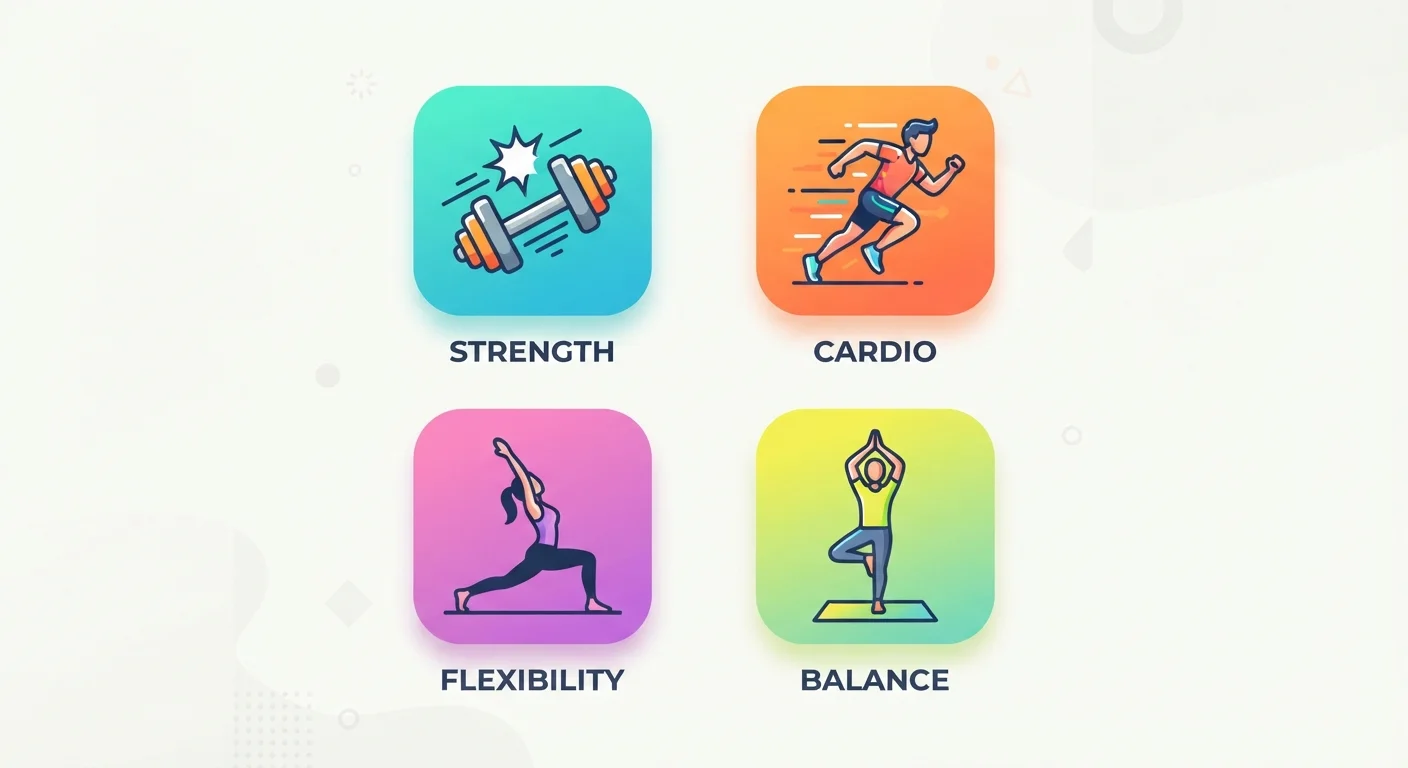
Photo: ResultsExplorer.com | Top Blogs For Everyone editorial
Key Takeaways
- Physical fitness encompasses four distinct but interconnected dimensions: strength, cardiovascular endurance, flexibility, and balance.
- Neglecting any single dimension can create gaps that limit overall health and increase injury risk.
- Each dimension responds to different types of movement - a well-rounded routine addresses all four.
- Balance and flexibility are often underemphasized, especially in younger adults, yet become critical as we age.
- Sustainable movement habits matter more than any single workout type or intensity level.
Why Physical Fitness Has More Than One Dimension
Most people think of fitness as a single quality - you're either fit or you're not. In reality, physical fitness is a composite of several distinct capacities, each of which can be developed, measured, and lost independently. A marathon runner may have exceptional cardiovascular endurance but limited muscular strength. A powerlifter may be extraordinarily strong but struggle with basic flexibility or balance tasks.
Health and exercise science organizations, including the American College of Sports Medicine, broadly recognize four core components of health-related fitness: muscular strength and endurance, cardiovascular endurance, flexibility, and balance. Understanding each dimension separately - and how they interact - helps clarify why a well-rounded approach to movement tends to serve long-term health better than optimizing for a single outcome.
“Fitness is not a single trait - it is a constellation of physical capacities, and a person may excel in one while being notably deficient in another. Measuring fitness through any single lens inevitably distorts the picture.”
— American College of Sports Medicine, Leading professional organization for exercise science and sports medicine
For a plain-English breakdown of terms you'll encounter throughout this guide, see our fitness terminology glossary.
Muscular Strength and Endurance
Muscular strength refers to the maximum force a muscle or muscle group can produce in a single effort. Muscular endurance is the ability to sustain repeated contractions over time without excessive fatigue. While related, they are not identical - a person can have high peak strength but tire quickly, or maintain moderate effort for an extended period without being able to generate significant force.
Both qualities matter for everyday life. Strength supports lifting, carrying, and postural control. Endurance underpins tasks that require sustained effort - climbing stairs, carrying groceries across a parking lot, or holding a working posture for hours. Resistance training (using bodyweight, free weights, resistance bands, or machines) is the primary way both are developed.
Research consistently associates resistance training with reduced risk of age-related muscle loss (sarcopenia), better metabolic health, improved bone density, and enhanced functional independence later in life. If you're weighing how to allocate time between resistance and cardio work, our article Cardio or Weights: Which One Deserves More of Your Time? explores the tradeoffs in detail.
4 in 10
U.S. adults meeting aerobic activity guidelines
According to the CDC, fewer than half of American adults meet recommended aerobic physical activity guidelines.
~30%
Fall-related injury reduction linked to balance training
Research published in the British Journal of Sports Medicine suggests structured balance training can meaningfully reduce fall risk in older adults.
2x
Functional decline risk without strength training
Studies indicate adults who do not engage in resistance training are at significantly higher risk of age-related muscle loss, known as sarcopenia.
Cardiovascular Endurance
Cardiovascular endurance - sometimes called cardiorespiratory fitness - describes how efficiently the heart, lungs, and circulatory system deliver oxygen to working muscles during sustained physical activity. It is one of the most studied dimensions of fitness, with a robust body of evidence linking higher cardiorespiratory capacity to reduced risk of cardiovascular disease, type 2 diabetes, and all-cause mortality.
Activities that challenge this dimension include walking briskly, cycling, swimming, jogging, dancing, and many others. What matters is sustained elevation of heart rate and breathing over time. Intensity, duration, and frequency all influence how this capacity develops - but even moderate-intensity activity produces meaningful benefits.
Walking, often underestimated as a fitness tool, contributes genuinely to cardiovascular endurance. Our article The Case for Walking as Serious Exercise examines where it fits in an active lifestyle and where its limits lie.
Start Where You Are, Not Where You Think You Should Be
Flexibility
Flexibility is the range of motion available at a joint or across a series of joints. It is shaped by the length and pliability of muscles, tendons, ligaments, and the joint capsule itself. Unlike strength or endurance, flexibility is highly joint-specific - someone may have excellent shoulder mobility but tight hamstrings.
Good flexibility supports posture, reduces the likelihood of muscle strains, and makes everyday movements - bending, reaching, twisting - more comfortable and efficient. It tends to decline with age and inactivity, which is one reason it deserves deliberate attention rather than being treated as a secondary concern.
Stretching approaches vary: static stretching (holding a position), dynamic stretching (controlled movement through a range), and methods such as proprioceptive neuromuscular facilitation (PNF) each have distinct applications. Current evidence does not strongly support stretching as a standalone injury prevention tool before exercise, but regular flexibility work contributes to long-term joint health and functional movement quality.
Treat flexibility as a daily practice rather than a pre-workout ritual - even five minutes of gentle stretching after meals or before bed compounds meaningfully over time.
When building balance skills, start with eyes open and stable surfaces, then progress gradually to unstable conditions - never rush the regression.
Balance and Coordination
Balance - the ability to maintain a controlled body position during static or dynamic tasks - is the most frequently neglected of the four dimensions, particularly among younger adults. It relies on an integrated system involving the inner ear (vestibular system), vision, and proprioception (the body's internal sense of position and movement).
Good balance underpins virtually every physical activity, from walking on uneven terrain to landing safely from a step. It is especially consequential in older adults: falls are a leading cause of injury-related hospitalization in that population, and structured balance training has been shown to reduce fall risk meaningfully.
Balance can be trained progressively - from stable, bilateral stances to single-leg positions, unstable surfaces, or movements with reduced visual input. Yoga, tai chi, and functional movement practices all engage balance and coordination alongside other fitness dimensions.
Don't Overload One Dimension at the Expense of Others
Physical fitness also connects deeply with mental well-being. Our piece on Sleep, Exercise, and Mental Health explores that relationship in more depth.
How the Four Dimensions Work Together
No single dimension of fitness operates in isolation. Cardiovascular endurance depends partly on the muscular efficiency of working muscles. Balance draws on core strength. Flexibility influences how safely and effectively strength and endurance work can be performed. A gap in any one area can limit performance across the others and increase vulnerability to injury.
A genuinely well-rounded movement habit doesn't require specialization or elaborate programming. It involves finding activities that - across the week - challenge each dimension in some meaningful way. That might look quite different from person to person, shaped by age, health status, preferences, and goals.
The most durable fitness habits tend to be ones that feel sustainable, accessible, and even enjoyable over years - not ones optimized for short-term results. Starting with honest attention to which dimensions you may be underemphasizing is often more productive than adding intensity to what you already do.
This Is General Health Information
This article is for general informational and educational purposes only and does not constitute medical or professional fitness advice. Consult a qualified healthcare provider before beginning or significantly changing a physical activity program.
The content provided on our blog site traverses numerous categories, offering readers valuable and practical information. Readers can use the editorial team’s research and data to gain more insights into their topics of interest. However, they are requested not to treat the articles as conclusive. The website team cannot be held responsible for differences in data or inaccuracies found across other platforms. Please also note that the site might also miss out on various schemes and offers available that the readers may find more beneficial than the ones we cover.