
A Plain-English Glossary of Common Fitness Terms

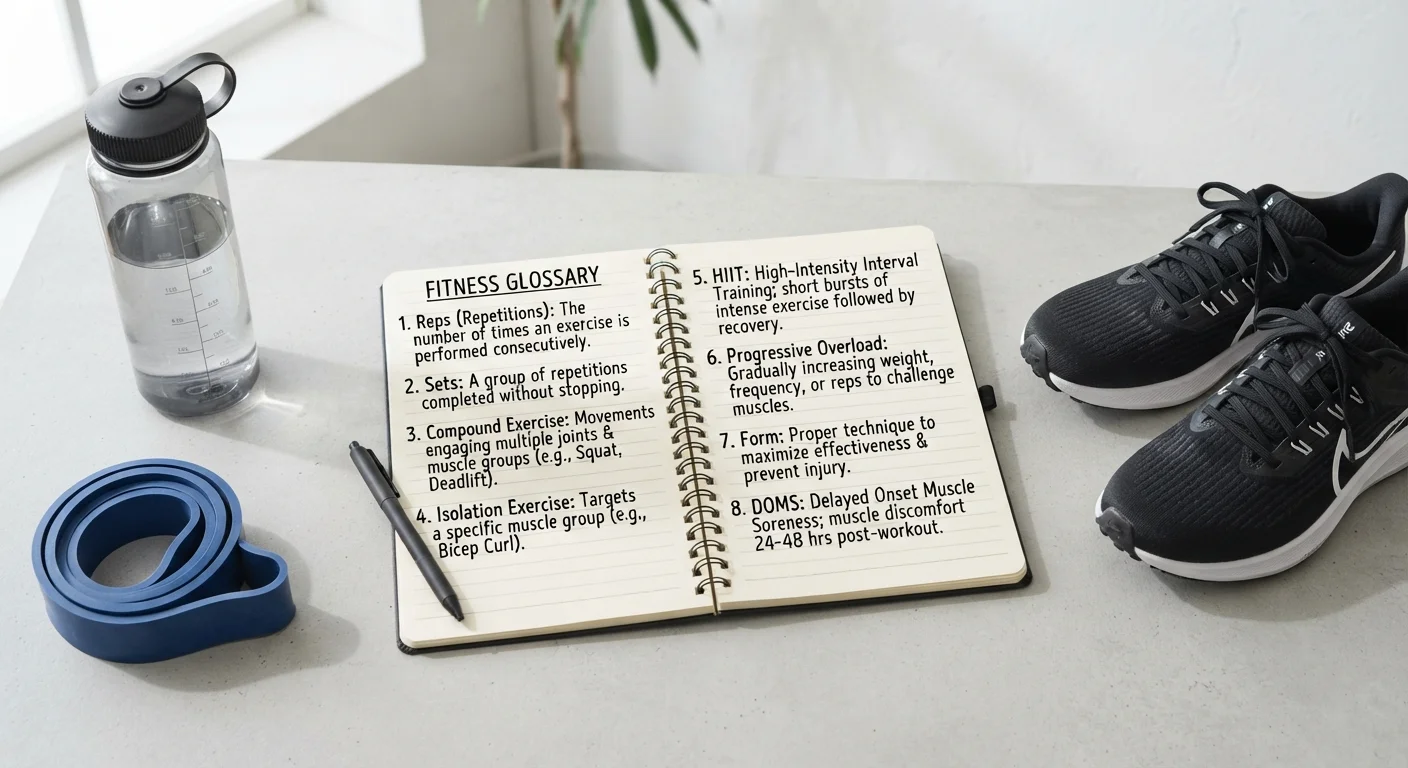
Photo: ResultsExplorer.com | Top Blogs For Everyone editorial
Why Fitness Jargon Matters
Walk into a gym, open a workout app, or read a fitness article, and you will quickly encounter terms that feel more like a foreign language than useful guidance. Words like hypertrophy, VO2 max, and deload are not gatekeeping devices - they are shorthand for real concepts that, once understood, make it significantly easier to follow instructions, evaluate your own progress, and ask better questions of fitness professionals.
This reference guide defines the terms that come up most often in fitness education, written in plain English. It complements deeper reading - for example, our guide to the four dimensions of physical fitness covers strength, endurance, flexibility, and balance in more detail.
This Is a Reference Guide, Not Medical Advice
The Glossary
The definitions below cover training methodology, intensity measurement, and physiological concepts. They are organized to build logically on one another rather than alphabetically.
If you find yourself reaching for similar plain-language references in other areas, you may find our mental health terminology glossary a useful companion, particularly when exploring how physical activity intersects with mood and stress.
How to Use These Concepts
Understanding a term is most useful when it connects to something actionable. Here is a brief orientation:
- Progressive overload and plateaus are two sides of the same coin. Overload is the mechanism; a plateau is what happens when that mechanism stops being applied.
- RPE gives you a way to self-regulate effort even when you do not have access to heart-rate monitors or performance data.
- Aerobic vs. anaerobic is not a better-or-worse comparison - most well-rounded movement habits include both types, in proportions suited to individual goals and health status.
- Flexibility and mobility are often used interchangeably in casual conversation, but the distinction matters when you are working to improve functional movement quality.
| Common intensity scale | RPE 1-10 (1 = no effort; 10 = maximum effort) |
| Typical HIIT session duration | 20-30 minutes including warm-up and cool-down (General industry consensus) |
| Deload frequency | Often every 4-8 weeks for consistent exercisers (General strength and conditioning guidance) |
| Key dimensions of fitness | Strength, endurance, flexibility, and balance |
Familiarity with these terms also helps when reading health content in other areas. The same analytical habit - learning the vocabulary before drawing conclusions - applies whether you are navigating fitness research, financial guidance like a credit term glossary, or learning science references.
This article is for general informational and educational purposes only and does not constitute medical or fitness advice. Consult a qualified healthcare provider or certified fitness professional before starting or changing an exercise program.
The content provided on our blog site traverses numerous categories, offering readers valuable and practical information. Readers can use the editorial team’s research and data to gain more insights into their topics of interest. However, they are requested not to treat the articles as conclusive. The website team cannot be held responsible for differences in data or inaccuracies found across other platforms. Please also note that the site might also miss out on various schemes and offers available that the readers may find more beneficial than the ones we cover.