
Home Improvement

Your Pre-Renovation Checklist: Before Work Begins

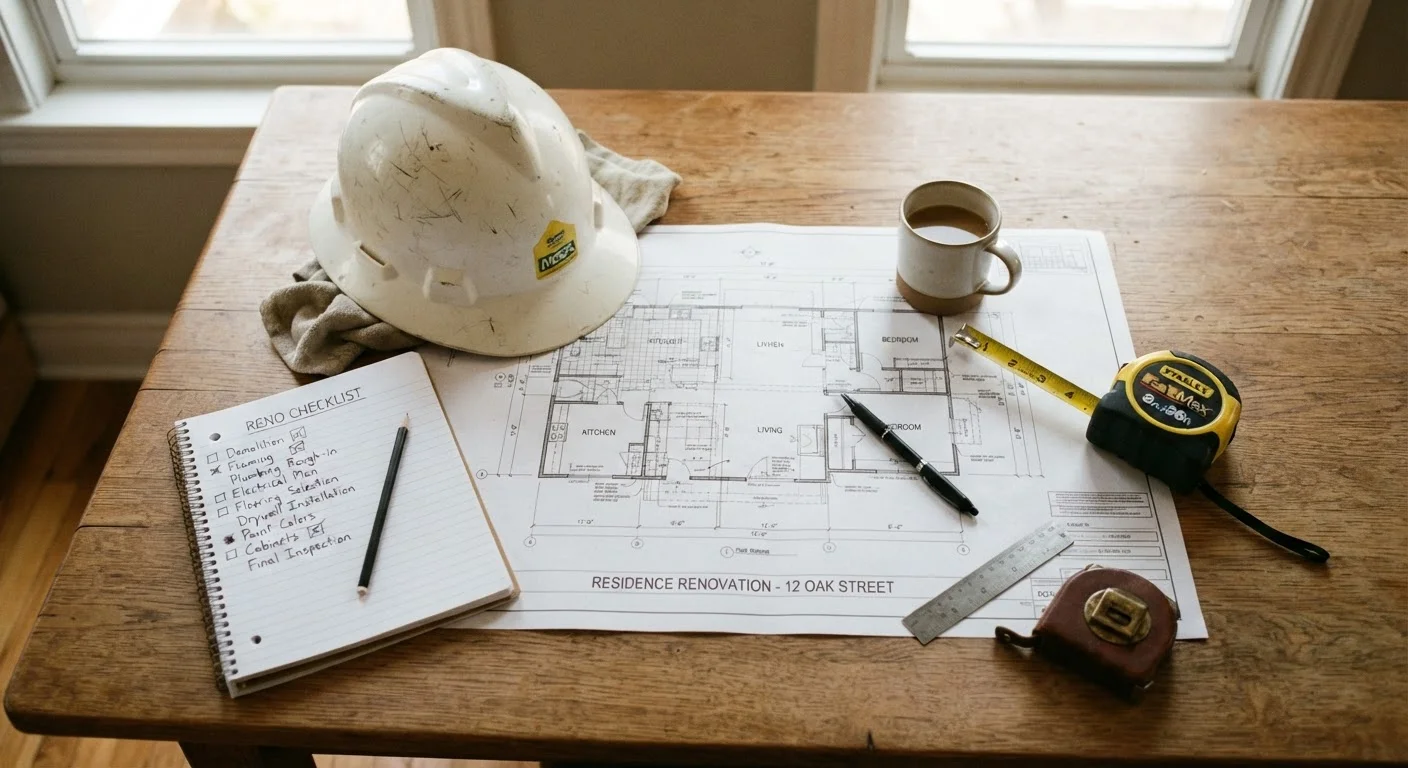
Your Pre-Renovation Checklist: Before Work Begins

Photo: ResultsExplorer.com | Top Blogs For Everyone editorial

Use this checklist to confirm your plans, paperwork, budget, and site are ready before any renovation work gets underway.

Key Takeaways

  • Confirming permits and codes before work starts can prevent costly stop-work orders.
  • A contingency budget of 10–20% above your estimate helps absorb unexpected costs.
  • Verifying contractor credentials and written contracts protects you legally and financially.
  • Protecting the site and neighboring spaces reduces damage and cleanup time.
  • Clear communication with everyone in your household avoids disruptions during the project.

Why a Pre-Renovation Checklist Matters

Renovation projects rarely go wrong because of poor craftsmanship alone — they go wrong because of poor preparation. Missing a permit, skipping a structural inspection, or starting without a firm contract can turn a weekend bathroom update into a months-long ordeal with unexpected bills attached.

This checklist walks you through the four areas that matter most before any hammer swings: planning and permits, budget, contractor readiness, and site preparation. Work through each group carefully, and you'll start your project on solid footing rather than scrambling to catch up once work is already underway.

If your renovation has a significant financial component, it's worth reviewing your broader money foundations first. Our monthly budget setup checklist can help you confirm your numbers are in order before committing to a project scope.

Planning & Permits

Confirm which permits your local authority requires for the specific work planned, including building, electrical, plumbing, or structural permits. Must
Submit permit applications and receive written approval before scheduling work to start. Must
Review local zoning regulations and HOA rules, if applicable, to verify your plans are compliant. Must
Obtain a copy of your home's existing floor plan or as-built drawings to share with your contractor. Should
Identify the location of all utility lines — gas, water, electrical — and mark them before any digging or wall work begins. Must
Schedule any required pre-construction inspections with your local building department. Should

Budget & Financing

Set a firm total budget, including materials, labor, permit fees, and disposal costs. Must
Build in a contingency fund of at least 10–20% of the total project estimate to cover unforeseen costs. Must
Get at least two or three written quotes from licensed contractors to establish a realistic cost baseline. Should
Confirm your payment method and financing are in place before work begins — never pay the full amount upfront. Must
Review whether your homeowner's insurance covers renovation-related incidents, and notify your insurer if required. Should
If financing the renovation, verify loan terms and disbursement timelines align with the contractor's payment schedule. Nice to have

Contractor & Contract Readiness

Verify your contractor holds a current license and adequate liability and workers' compensation insurance for your state. Must
Request and check references from at least two recent projects of similar scope. Should
Review and sign a written contract that specifies scope of work, materials, timeline, payment schedule, and change-order process. Must
Confirm who is responsible for obtaining permits — you or the contractor — and document this in the contract. Must
Establish a clear point of contact and agree on how and how often you'll receive project updates. Should

Site & Household Preparation

Clear the work area of furniture, personal items, and valuables before the crew arrives. Must
Set up dust barriers — plastic sheeting or temporary walls — to prevent construction debris from spreading through the home. Should
Notify neighbors of the project scope and likely noise or access disruptions, especially for exterior work. Should
Arrange alternative accommodations or work-from-home adjustments if the project affects kitchens, bathrooms, or main living spaces. Should
Confirm dumpster or waste disposal logistics with your contractor and check local rules on placement. Must
Take dated photographs of the space before any work begins for your records and insurance documentation. Nice to have

Tools and Resources to Have Ready

Before you start ticking off checklist items, gather the materials and information you'll need to verify each one properly.

Required

Local Building Department Contact

Use to confirm which permits are required for your specific project type and jurisdiction.

Required

Written Contractor Quotes

Collect at least two to three itemized quotes in writing to compare scope and costs accurately.

Required

Signed Contract

A legally binding agreement covering scope, timeline, materials, payment terms, and change-order procedures.

Optional

Home Floor Plan or As-Built Drawings

Helps contractors understand existing structures, utility locations, and layout constraints before work begins.

Required

Utility Location Service (811 in the US)

Call 811 before any digging to have underground utility lines marked at no cost.

Optional

Smartphone or Camera

Use to take dated before-photos of the renovation area for your records and insurance documentation.

Optional

Spreadsheet or Budgeting App

Track all project costs — quotes, actuals, permit fees, and contingency spending — in one place.

Common Pitfalls to Avoid

Even well-intentioned homeowners run into the same preventable problems. The most frequent issues are starting work without a signed contract, underestimating the total budget, and failing to notify utility companies before breaking ground.

Never Skip the Written Contract

Verbal agreements are difficult to enforce and leave both parties exposed if disputes arise over scope, timeline, or cost. Always insist on a signed written contract before any work begins. If a contractor is unwilling to provide one, treat that as a serious red flag.

Unpermitted Work Can Be Costly to Fix

Work completed without required permits may need to be removed, redone, or professionally certified before you can sell your home. Some municipalities issue fines for unpermitted work. Always confirm permit requirements with your local building authority before starting — even for projects that seem minor.

On the financial side, renovation costs have a way of expanding. If you're directing savings or extra funds toward this project, first check that your emergency fund and other financial priorities are stable. Our savings readiness check can help you assess that before committing funds.

Electrical and Structural Work Requires a Licensed Professional

Tasks involving your home's electrical panel, load-bearing walls, gas lines, or main plumbing connections are regulated in most states and should only be performed by licensed, insured tradespeople. Attempting these without proper credentials can void your homeowner's insurance, create safety hazards, and result in failed inspections. Always verify that the appropriate licensed professional is handling any regulated work on your project.

For ongoing guidance once your project is complete, the home maintenance hub offers essential upkeep tips to protect the improvements you've made.

Home & Garden Editorial Team

ResultsExplorer.com | Top Blogs For Everyone

Home & Garden Editorial Team is the collective byline for our editorial team and contributor network. Articles published under this byline or an editorial pen name are researched, written, and reviewed according to our editorial standards for clarity, consistency, and independence before publication.

Home MaintenanceGarden & OutdoorsHome Improvement
View author profile

The content provided on our blog site traverses numerous categories, offering readers valuable and practical information. Readers can use the editorial team’s research and data to gain more insights into their topics of interest. However, they are requested not to treat the articles as conclusive. The website team cannot be held responsible for differences in data or inaccuracies found across other platforms. Please also note that the site might also miss out on various schemes and offers available that the readers may find more beneficial than the ones we cover.