
Maintaining a Flat Roof: What's Different and Why It Matters

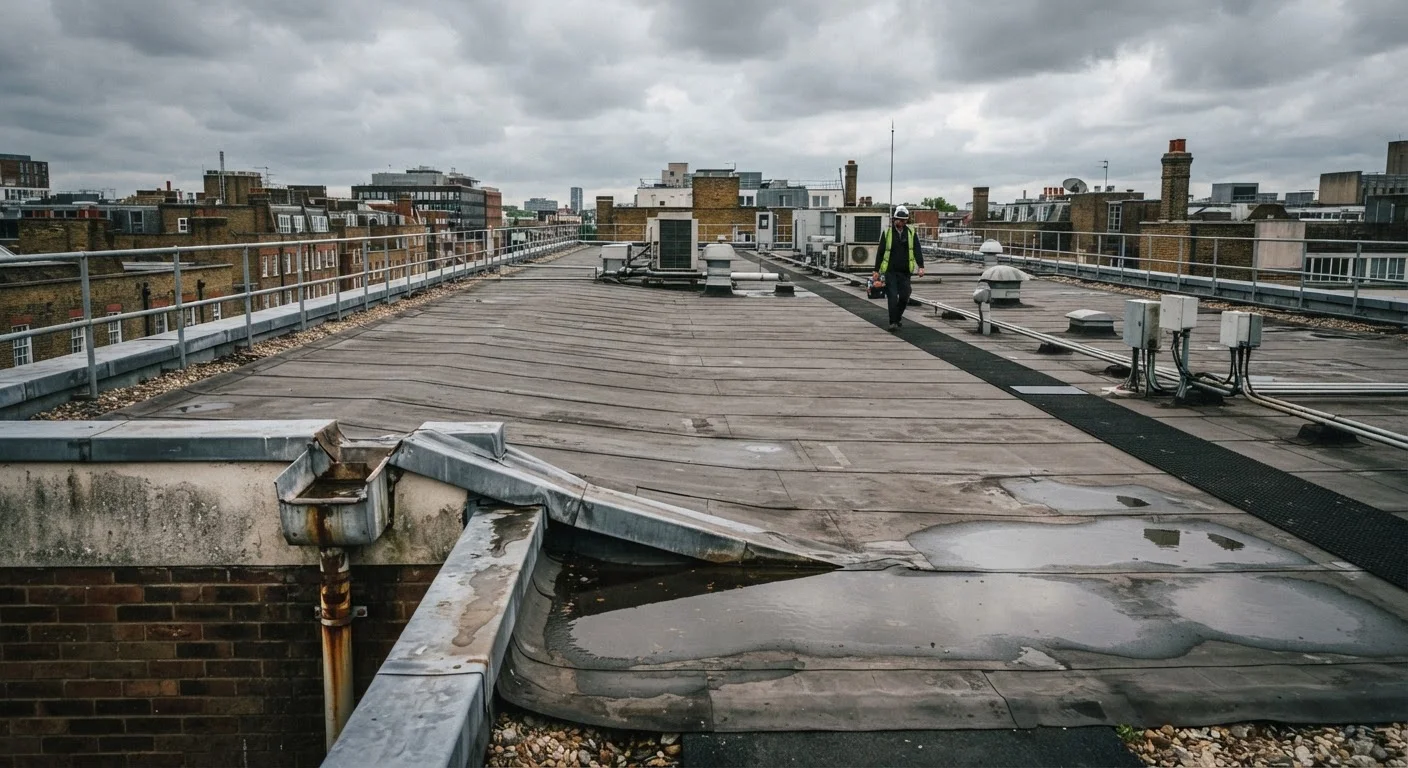
Photo: ResultsExplorer.com | Top Blogs For Everyone editorial
Key Takeaways
- Flat roofs rely on precise drainage design - standing water is the primary threat to membrane integrity.
- Inspection should happen at least twice a year, plus after any major storm.
- Membrane type determines how you identify damage - blistering, cracking, and seam separation vary by material.
- Minor maintenance like clearing drains is owner-manageable; membrane repairs typically need a licensed roofer.
- Ignoring small flat-roof issues escalates repair costs faster than with pitched roofs.
Why Flat Roofs Demand a Different Mindset
A pitched roof sheds water by gravity alone. A flat roof - more accurately described as a low-slope roof, since most have a slight pitch of ¼ inch per foot - cannot rely on the same passive drainage. Instead, it depends on a precisely installed membrane system, controlled drainage points, and regular upkeep to move water off before it finds a weakness.
That fundamental difference has real consequences. Water that sits on a flat roof for more than 48 hours is often called ponding water, and it accelerates membrane degradation, adds structural load, and eventually infiltrates the building envelope. Addressing this before it becomes chronic is the single most important flat-roof maintenance principle.
Flat roofs are common on commercial buildings, additions, garages, and modern residential homes. Their maintenance requirements are predictable and largely manageable - provided you understand what to look for and when to call a professional. This guide walks through both.
Inspect Twice a Year - Minimum
What You'll Need Before You Start
Before conducting any roof inspection, gather the appropriate tools and verify safe access. Never access a wet or icy roof surface.
What you will need
Soft-bristle broom or leaf blower
Removes surface debris without damaging the membrane.
Garden hose
Used to run water across the roof surface to test drainage flow.
Flashlight
Helps illuminate shadowed areas near penetrations and parapets.
Plumber's drain snake (hand auger)
Clears blockages in interior roof drains when surface debris removal is insufficient.
Smartphone or digital camera
Documents findings for your records and for sharing with a contractor.
Measuring tape
Measures the size and location of any ponding areas or membrane damage for documentation.
Step-by-Step Flat Roof Maintenance
Follow these steps in sequence for a thorough seasonal inspection and basic maintenance pass. For anything beyond surface cleaning and visual inspection, engage a licensed roofing contractor.
Clear the Roof Surface of Debris
Use a soft-bristle broom or leaf blower to remove leaves, dirt, standing twigs, and any other debris from the membrane surface. Pay particular attention to low spots and areas near drains where debris accumulates.
Debris traps moisture and can abrade the membrane over time, so clearing it is the starting point for every inspection cycle.
Inspect and Clear All Drains, Scuppers, and Gutters
Locate every drainage point: interior drains (circular drains flush with the membrane), scuppers (openings through the parapet wall), and any connected gutters or downspouts. Remove any blockage by hand or with a plumber's drain snake for interior drains.
Run water from a hose onto the roof to confirm drainage is flowing freely and that water reaches each drain rather than pooling in depressions.
Check for Ponding Water and Surface Depressions
Walk the dry roof surface carefully and look for areas where the membrane surface appears discolored, stained in a ring pattern, or visibly lower than surrounding areas. These are indicators of habitual ponding.
Minor ponding can sometimes be addressed by adding tapered insulation below the membrane during a re-cover, but this requires a licensed contractor. Document the locations and dimensions of any ponding areas.
Inspect the Membrane for Damage
Walk the full roof surface in a systematic grid pattern, looking for:
- Blistering or bubbling in the membrane surface
- Cracks, tears, or punctures
- Seam or lap separation (edges lifting or pulling apart)
- Granule loss on modified bitumen surfaces
- Chalking or surface oxidation on TPO/PVC
Do not attempt to probe suspected blisters - puncturing a blister can introduce water into a previously sealed area.
Examine All Flashings and Penetrations
Flashings are the metal or membrane strips that seal the roof at transitions - where the membrane meets parapet walls, HVAC units, vent pipes, skylights, and conduits. These are statistically the most common entry points for leaks.
Look for lifted edges, cracks in sealant, rust on metal flashings, and gaps where the flashing meets the membrane or wall surface. Press gently around penetrations to check for soft or spongy substrate beneath, which can indicate trapped moisture.
Check Interior Ceilings and Attic Space for Evidence of Leaks
After completing the exterior inspection, move inside. Check the ceiling directly below the flat roof for water stains, peeling paint, or soft drywall. In accessible attic or plenum spaces, look for wet insulation, mold growth, or daylight showing through the roof deck.
Interior evidence of water intrusion doesn't always align directly with the leak source above - water travels along rafters and joists before dripping. Use the interior location as a starting point, not a definitive diagnosis.
Membrane Repairs Require Licensed Professionals
Understanding Your Membrane Type
The maintenance and repair approach varies depending on the roofing material. The three most common residential flat-roof membrane systems are:
- EPDM (ethylene propylene diene monomer): A rubber membrane, typically black, that is glued or mechanically fastened. Look for seam separation, punctures, and shrinkage pulling away from flashings.
- TPO and PVC (thermoplastic membranes): Usually white or light gray, heat-welded at seams. Check for seam failures, chalking on the surface, and punctures from foot traffic.
- Modified bitumen: A layered asphalt-and-polymer system, often finished with a granule cap sheet. Watch for blistering, granule loss, and cracks in cold climates.
Knowing your membrane type helps you describe issues accurately to a contractor and understand inspection findings. If you're unsure what's installed, look at older invoices or ask a roofer during the next inspection visit.
Flat roofs sit alongside a number of other often-overlooked structural maintenance tasks. See our guide to lesser-known home maintenance jobs for a broader look at upkeep that protects your home's structure long-term.
The content provided on our blog site traverses numerous categories, offering readers valuable and practical information. Readers can use the editorial team’s research and data to gain more insights into their topics of interest. However, they are requested not to treat the articles as conclusive. The website team cannot be held responsible for differences in data or inaccuracies found across other platforms. Please also note that the site might also miss out on various schemes and offers available that the readers may find more beneficial than the ones we cover.