
Envelope Budgeting in a Digital World

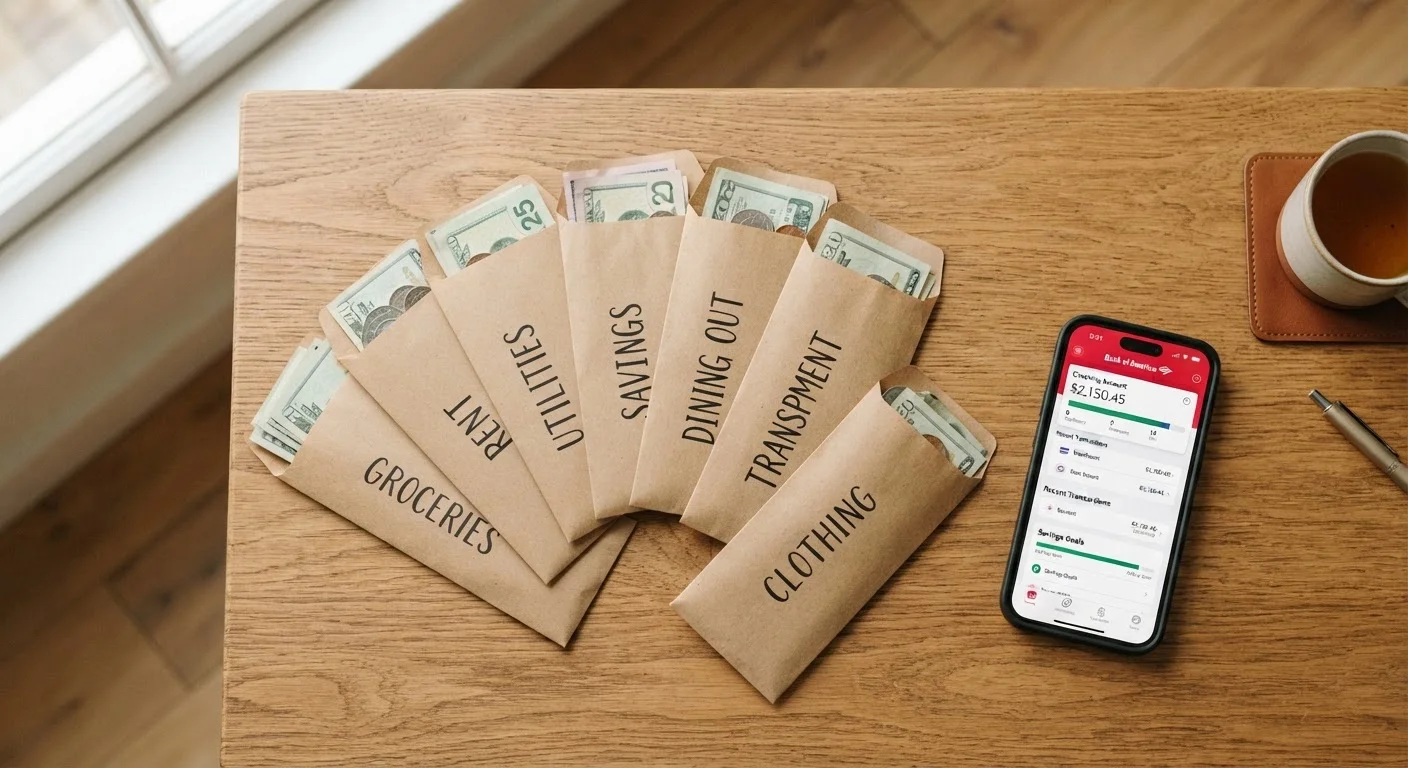
Photo: ResultsExplorer.com | Top Blogs For Everyone editorial
Key Takeaways
- Envelope budgeting divides your income into spending categories before the month begins.
- The core rule is simple: stop spending in a category when that envelope is empty.
- Digital versions use separate sub-accounts, spreadsheets, or budgeting apps instead of physical cash.
- The method is especially effective for people who overspend in a few recurring problem categories.
- No budgeting system guarantees results — consistent follow-through is what actually moves the needle.
How the Original System Worked
The traditional envelope method is straightforward. At the start of a pay period, you withdraw your expected income in cash, then sort it into labeled envelopes — one for groceries, one for gas, one for dining out, and so on. Each envelope holds only what you planned to spend in that category. When the cash runs out, spending in that area stops.
That hard stop is the system's defining feature. Unlike a bank account where overspending is invisible until you check an app, an empty envelope delivers immediate, physical feedback. You can see and feel exactly where you stand.
If you're new to budgeting concepts generally, this plain-English starting point covers the foundational ideas before you build any specific system.
Why It Still Holds Up Today
The envelope method works because it addresses a behavioral problem most budgeting approaches don't solve: the gap between knowing your limits and actually feeling them in the moment of spending. Tracking spending after the fact tells you what happened; envelopes create a constraint before you spend.
Research in behavioral economics consistently shows that people are more careful with money they can physically count or visually see depleting. Even in digital form, the envelope concept preserves that psychological boundary — your dining envelope has $120 in it, not an abstract line on a pie chart.
“The goal of a budget is not to restrict your life — it's to give you permission to spend on what matters most without guilt.”
— Jesse Mecham, Author and founder of a popular envelope-based budgeting philosophy
The method also pairs well with savings goals. Treating a savings target as its own envelope — funded first — builds the "pay yourself first" habit that many financial educators recommend. For a broader look at savings patterns that work, see approaches other savers use.
Adapting Envelopes for Digital Banking
Most people today don't carry cash for every purchase, and that's fine. The envelope concept translates cleanly to digital tools:
- Bank sub-accounts: Many banks and credit unions allow you to open multiple savings or checking sub-accounts at no cost. Label each one for a spending category and transfer the budgeted amount at the start of the month.
- Spreadsheets: A simple table with category columns and a running balance achieves the same result. You manually deduct each purchase, which keeps spending front of mind.
- Budgeting apps: Several apps are built around the envelope concept, allowing you to create virtual envelopes and link transactions. Evaluate any app based on how closely it mirrors the hard-limit discipline of the original system.
Start With Your Two Problem Categories
One consideration with digital versions: credit cards complicate the system because spending doesn't draw from a visible pool in real time. If you use credit cards, you'll need to update your virtual envelopes manually and pay the balance in full each month to avoid defeating the purpose with interest charges.
For help structuring the numbers before you set up any envelope system, the monthly budget setup checklist walks through gathering your income and expense figures step by step.
Common Pitfalls to Avoid
Even a well-designed envelope system can stall without consistent habits. A few patterns tend to undermine it:
1 in 3
U.S. adults who track spending regularly
A survey by the American Psychological Association found that financial stress is widespread partly because most people lack a consistent system for monitoring their money.
~60%
Americans living paycheck to paycheck at some point
Federal Reserve consumer finance surveys have repeatedly found that a majority of households report difficulty covering an unexpected $400 expense, underscoring why categorical spending limits matter.
- Too many categories: Tracking fifteen envelopes becomes tedious quickly. Focus on the five to eight categories where you most often overspend.
- Treating transfers as automatic: Moving money between envelopes is fine, but it should be a deliberate decision, not a reflex. Each transfer means another category gets less.
- Skipping irregular expenses: Annual costs like car registration or seasonal expenses like holiday gifts should have their own envelopes funded monthly in small amounts, not scrambled for when the bill arrives.
If you're also working on automating savings alongside your envelope system, it's worth reading about what automated savings does well and where it falls short before combining the two approaches.
This article is for general informational and educational purposes only and does not constitute personalized financial advice. Consider speaking with a qualified financial professional about decisions specific to your situation.
Frequently Asked Questions
The content provided on our blog site traverses numerous categories, offering readers valuable and practical information. Readers can use the editorial team’s research and data to gain more insights into their topics of interest. However, they are requested not to treat the articles as conclusive. The website team cannot be held responsible for differences in data or inaccuracies found across other platforms. Please also note that the site might also miss out on various schemes and offers available that the readers may find more beneficial than the ones we cover.