
Zero-Based Budgeting vs. the 50/30/20 Method

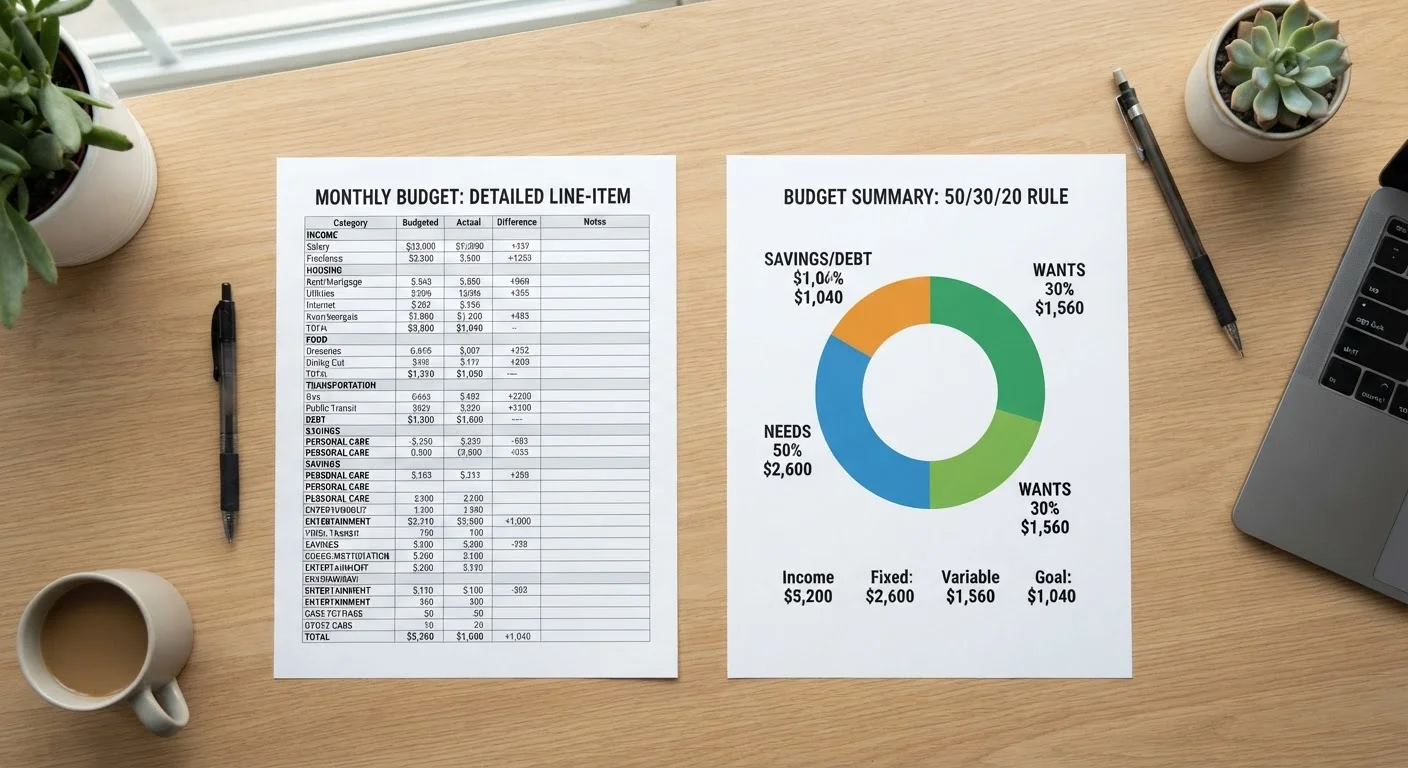
Photo: ResultsExplorer.com | Top Blogs For Everyone editorial
Key Takeaways
- Zero-based budgeting assigns every dollar of income to a specific category until nothing is left unallocated.
- The 50/30/20 method divides income into three broad buckets: needs, wants, and savings or debt repayment.
- Zero-based budgeting requires more monthly effort; 50/30/20 is quicker to set up and maintain.
- Neither method guarantees financial success — consistency and honesty about spending matter most.
- Both frameworks can be adapted as income, expenses, or financial goals change over time.
How Each Method Actually Works
Understanding the mechanics of each approach prevents confusion — and helps you honestly assess which one fits your life.
Zero-based budgeting (ZBB) starts with your total monthly income and works downward. You assign every dollar to a category — rent, groceries, utilities, savings, debt payments, entertainment, and so on — until you reach exactly zero. The goal isn't to spend everything; it's to give every dollar a deliberate purpose, including the dollars you're setting aside. If you earn $3,500 this month, your category totals must add up to $3,500. Any unassigned dollar gets allocated before the month begins.
The 50/30/20 method works differently. You split take-home pay into three broad groups: roughly 50% toward needs (housing, utilities, groceries, transportation), 30% toward wants (dining out, subscriptions, hobbies), and 20% toward savings and debt repayment above the minimum. The percentages are guidelines, not rigid rules, making the framework forgiving and fast to apply.
For a deeper walkthrough of the 50/30/20 approach, see The 50/30/20 Rule Explained. If you're entirely new to budgeting concepts, Budgeting From Zero: A Plain-English Starting Point covers the foundational vocabulary worth knowing first.
| Criterion | Zero-Based Budgeting | 50/30/20 Method |
|---|---|---|
| Setup time | 30–60 min per month | Under 15 min to start |
| Ongoing tracking effort | High — category-by-category | Low — three buckets only |
| Flexibility | Fully customizable each month | Fixed percentage structure |
| Best income type | Variable or irregular income | Stable, predictable income |
| Granularity of control | Very high — line-item detail | Broad — category-level only |
| Learning curve | Moderate to steep | Gentle — beginner-friendly |
| Suited for aggressive savings goals | Yes — strong alignment | Partially — less targeted |
The Real Trade-Offs: Time, Effort, and Flexibility
Both methods work — but they demand different things from you.
Zero-based budgeting is time-intensive. You'll typically spend 30–60 minutes at the start of each month building your plan, plus periodic check-ins to track actuals against your allocations. That effort creates accountability: it's harder to overspend a category when you've consciously written it down. The trade-off is friction. If detailed tracking feels like a chore, that friction can erode motivation over time.
The 50/30/20 method trades precision for simplicity. Once you know your take-home income and roughly categorize your fixed expenses, you can check in weekly rather than daily. The downside is that "needs" and "wants" aren't always easy to distinguish — a car payment might be a need for one household and a choice for another — so some honest self-examination is still required.
When Neither Percentage Fits Your Life
It's also worth noting that 50/30/20 can be harder to use for lower-income households where needs may consume far more than 50% of take-home pay. How the 50/30/20 Rule Works — and When It Doesn't explores these limitations honestly.
For a broader discussion of what any strict budgeting system really demands, see The Honest Trade-Offs of Strict Budgeting. And if you're curious how a third approach compares, Envelope Budgeting in a Digital World outlines a cash-allocation system with its own strengths and limits.
This article is for general informational and educational purposes only and does not constitute personalized financial advice. Consider consulting a qualified financial professional for guidance specific to your situation.
The content provided on our blog site traverses numerous categories, offering readers valuable and practical information. Readers can use the editorial team’s research and data to gain more insights into their topics of interest. However, they are requested not to treat the articles as conclusive. The website team cannot be held responsible for differences in data or inaccuracies found across other platforms. Please also note that the site might also miss out on various schemes and offers available that the readers may find more beneficial than the ones we cover.