
Personal Loan vs. Credit Card: Choosing the Right Tool for the Job

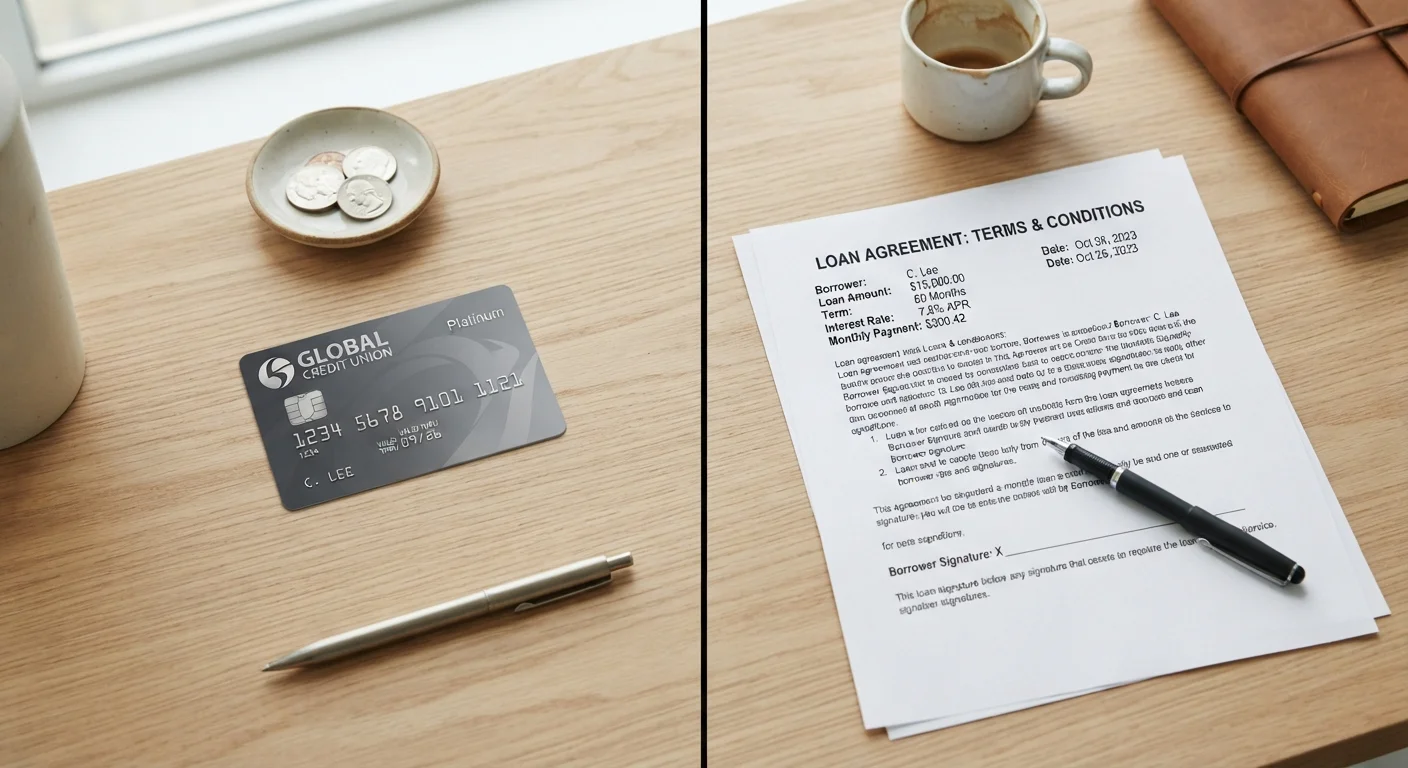
Photo: ResultsExplorer.com | Top Blogs For Everyone editorial
Key Takeaways
- Personal loans deliver a fixed lump sum with a set repayment schedule, making them well-suited for large, defined expenses.
- Credit cards offer revolving credit that works best for everyday spending, short-term needs, or purchases you can pay off quickly.
- Interest rates on personal loans are typically lower than credit card rates, but credit cards may offer interest-free periods.
- Your credit score affects the rate you qualify for on both products — shop around and compare before committing.
- Neither option is universally better; the right choice depends on the amount, timeline, and your repayment discipline.
How Each Product Actually Works
A personal loan gives you a one-time, fixed sum of money that you repay in equal monthly installments over a set term — typically 12 to 60 months. The interest rate is usually fixed, so your payment never changes. Once you repay the loan, the account closes.
A credit card provides a revolving line of credit up to a set limit. You can borrow, repay, and borrow again repeatedly. You're required to make at least a minimum payment each month, but any balance you carry beyond the due date accrues interest — often at a significantly higher rate than a personal loan. Many cards offer a grace period during which no interest is charged if you pay in full.
Understanding this structural difference is the foundation for choosing wisely. For a broader look at how unsecured debt like these two products compares to collateral-backed borrowing, see how secured and unsecured debt differ.
Cost Comparison: Interest Rates and Fees
Interest cost is usually the deciding factor. Personal loan rates vary widely based on your credit profile but have historically averaged well below the typical credit card rate. Credit cards commonly carry annual percentage rates (APRs) in the high teens to mid-twenties or higher, and carrying a balance month-to-month makes purchases significantly more expensive over time.
| Personal Loan | Credit Card | |
|---|---|---|
| Structure | Fixed lump sum, closed-end | Revolving credit line |
| Typical APR range | Generally lower (varies by credit) | Often higher, especially if carrying a balance |
| Repayment | Fixed monthly installments | Minimum payment required; balance can revolve |
| Best for | Large, defined, one-time expenses | Short-term or recurring everyday spending |
| Fees to watch | Origination fee (0–8%) | Annual fee, late fee, balance transfer fee |
| Flexibility | Low — set amount, set term | High — borrow and repay repeatedly |
| Interest-free window | None after disbursement | Grace period if paid in full each cycle |
Beyond APR, watch for origination fees on personal loans — some lenders charge 1% to 8% of the loan amount upfront — as well as annual fees and late payment penalties on credit cards. Always calculate the total cost of borrowing, not just the monthly payment, before deciding.
Get Rate Quotes Before You Commit
When a Personal Loan Is the Stronger Choice
A personal loan tends to win when the expense is large, one-time, and well-defined. Common examples include home improvements, medical bills, or consolidating several high-interest credit card balances into a single, lower-rate payment. The fixed payment schedule creates built-in discipline — you know exactly when the debt ends.
Debt consolidation is a particularly common use case. If you're carrying balances on multiple cards, rolling them into a personal loan at a lower rate can reduce total interest paid and simplify your monthly obligations. For strategies on tackling that consolidated balance efficiently, our guide on debt avalanche vs. debt snowball repayment methods is a useful next step.
When a Credit Card Makes More Sense
Credit cards shine for smaller, everyday purchases — groceries, gas, subscriptions — especially when you pay the full balance each billing cycle. In that scenario, you essentially borrow interest-free while potentially earning rewards. Cards are also more flexible for variable or unpredictable costs, since you only draw what you need.
If an expense is genuinely short-term and you're confident you can repay it within one to three billing cycles, the math often favors a credit card over taking out a formal loan with an origination fee attached. Cards also offer consumer protections — such as dispute rights and fraud liability limits — that can add meaningful value on purchases.
Keep in mind that responsible credit card use — keeping utilization low and paying on time — can also help build a stronger credit profile over time.
Factors That Should Drive Your Decision
Before choosing, ask yourself four practical questions:
- How much do I need? Personal loans typically start at $1,000 and can go much higher. For smaller amounts, a credit card may be simpler.
- How long do I need to repay it? If you need more than a few months, a personal loan's fixed term provides more structure.
- Can I handle a variable balance? Credit cards require self-discipline; without it, a revolving balance can grow quickly.
- What rate will I qualify for? Your credit score drives this on both products. A borrower with strong credit may get a personal loan rate competitive enough to make it clearly worthwhile.
For a principled framework to evaluate any borrowing decision, see borrowing wisely without regret.
This article is for general informational and educational purposes only and does not constitute personalized financial or legal advice. Consult a qualified financial professional before making decisions about borrowing that affect your individual circumstances.
The content provided on our blog site traverses numerous categories, offering readers valuable and practical information. Readers can use the editorial team’s research and data to gain more insights into their topics of interest. However, they are requested not to treat the articles as conclusive. The website team cannot be held responsible for differences in data or inaccuracies found across other platforms. Please also note that the site might also miss out on various schemes and offers available that the readers may find more beneficial than the ones we cover.