
Why Cats Hide When They're Unwell — and What to Watch For

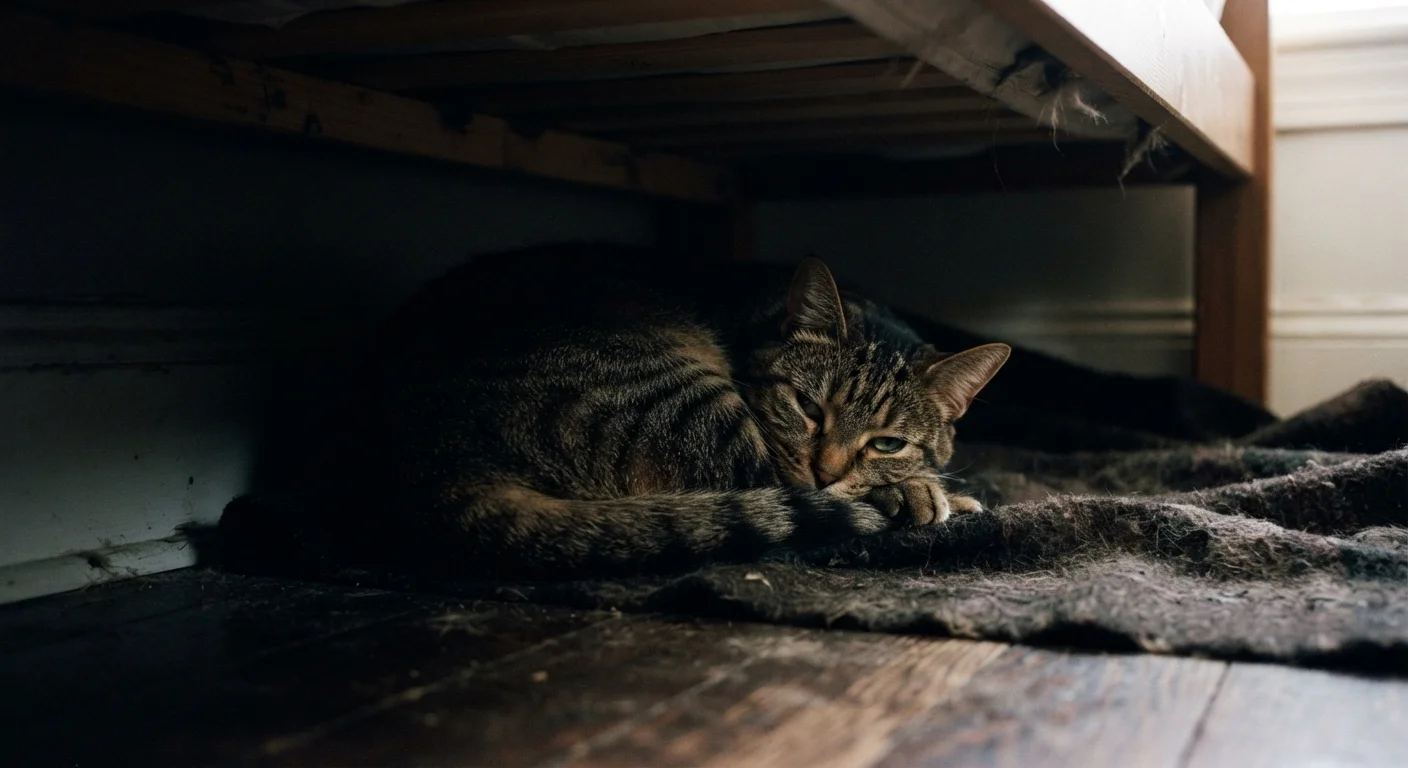
Photo: ResultsExplorer.com | Top Blogs For Everyone editorial
Key Takeaways
- Cats hide illness instinctively — it is a survival behaviour, not a personality quirk.
- Subtle changes in routine, appetite, or grooming are often the earliest warning signs.
- Hiding alone is not always alarming, but hiding combined with other symptoms warrants veterinary attention.
- Owners who know their cat's baseline behaviour are best positioned to notice early changes.
- Never wait for dramatic symptoms — by the time a cat shows obvious distress, illness may be advanced.
The Evolutionary Roots of Hiding
Domestic cats descended from solitary wild hunters — animals that were simultaneously predator and prey. When injured or sick in the wild, a cat became vulnerable to attack, making it critical to conceal any sign of weakness. This survival pressure shaped a behavioural reflex so strong that thousands of years of domestication have not erased it.
Today's house cat, however pampered and safe, carries that same wiring. When something feels wrong internally, the instinct to withdraw from social contact, find a dark enclosed space, and become still and quiet kicks in automatically. Understanding this helps owners reframe what they are seeing: a cat hiding under the bed is not being dramatic — it is doing exactly what evolution trained it to do.
“Cats are masters at hiding illness. By the time clinical signs become obvious to owners, the disease process may already be well advanced — which is why knowing your individual cat's normal behaviour is so important.”
— International Cat Care, Global feline health and welfare organisation
What Hiding Actually Looks Like
Illness-related hiding differs from the casual napping a cat does in a favourite quiet spot. Key distinctions include:
- Duration: A sick cat may remain hidden for hours or an entire day, emerging only briefly or not at all.
- Location change: The cat retreats to an unusual spot — inside a closet, behind an appliance, or deep under furniture — rather than a normal resting place.
- Resistance to interaction: The cat moves away when approached, avoids eye contact, or becomes tense when touched.
- Posture: A hunched or loaf position with the head lowered and eyes partially closed can signal pain or nausea.
For a deeper understanding of posture cues and what they communicate, see our practical guide to feline body language.
Build a Behavioural Baseline for Your Cat
Other Early Warning Signs to Monitor
Because cats mask symptoms so effectively, owners need to watch for clusters of subtle signals rather than waiting for obvious distress. Changes worth noting include:
- Appetite shifts: Eating significantly less — or not at all — for more than 24 hours is a meaningful flag, particularly in cats prone to hepatic lipidosis (fatty liver disease) triggered by food refusal.
- Grooming changes: Both over-grooming a specific area (possible pain site or skin problem) and under-grooming (coat becoming dull or matted) can indicate illness.
- Litter box habits: Increased or decreased urination, straining, or avoiding the box entirely can point to urinary, kidney, or gastrointestinal issues.
- Vocalisation changes: Unusual silence in a normally chatty cat, or new vocalising in a quiet one, both deserve attention.
Our companion article on signs your cat may be in pain covers these signals in further detail.
~25%
Cats estimated to have chronic pain
Some veterinary behaviour specialists estimate that a significant proportion of cats — particularly older individuals — live with undetected chronic pain, partly because of their tendency to conceal discomfort.
70%+
Cats over 12 with some osteoarthritis
Studies in veterinary journals suggest the majority of cats over age 12 show radiographic evidence of degenerative joint changes, yet many owners report no obvious lameness — illustrating how effectively cats mask physical decline.
Knowing Your Cat's Baseline — and When to Act
The most useful tool an owner has is familiarity with their individual cat's normal behaviour. A cat that already prefers solitude may hide more without it meaning anything alarming. A normally social cat that suddenly vanishes is a stronger signal. Track what is normal — eating amounts, activity levels, social engagement, grooming routine — so that deviations stand out clearly.
As a general guide: hiding alone is not always a cause for alarm, but hiding combined with any of the changes listed above warrants a call to your veterinarian. Do not wait for a cat to appear dramatically ill. By the time a cat stops concealing symptoms — showing laboured breathing, collapse, or crying — the condition is often already serious. Early veterinary contact consistently leads to better outcomes.
This article provides general educational information about feline behaviour and is not a substitute for professional veterinary advice. Always consult a qualified veterinarian if you are concerned about your cat's health.
Frequently Asked Questions
The content provided on our blog site traverses numerous categories, offering readers valuable and practical information. Readers can use the editorial team’s research and data to gain more insights into their topics of interest. However, they are requested not to treat the articles as conclusive. The website team cannot be held responsible for differences in data or inaccuracies found across other platforms. Please also note that the site might also miss out on various schemes and offers available that the readers may find more beneficial than the ones we cover.