
Signs Your Dog May Be Anxious—and What Tends to Help

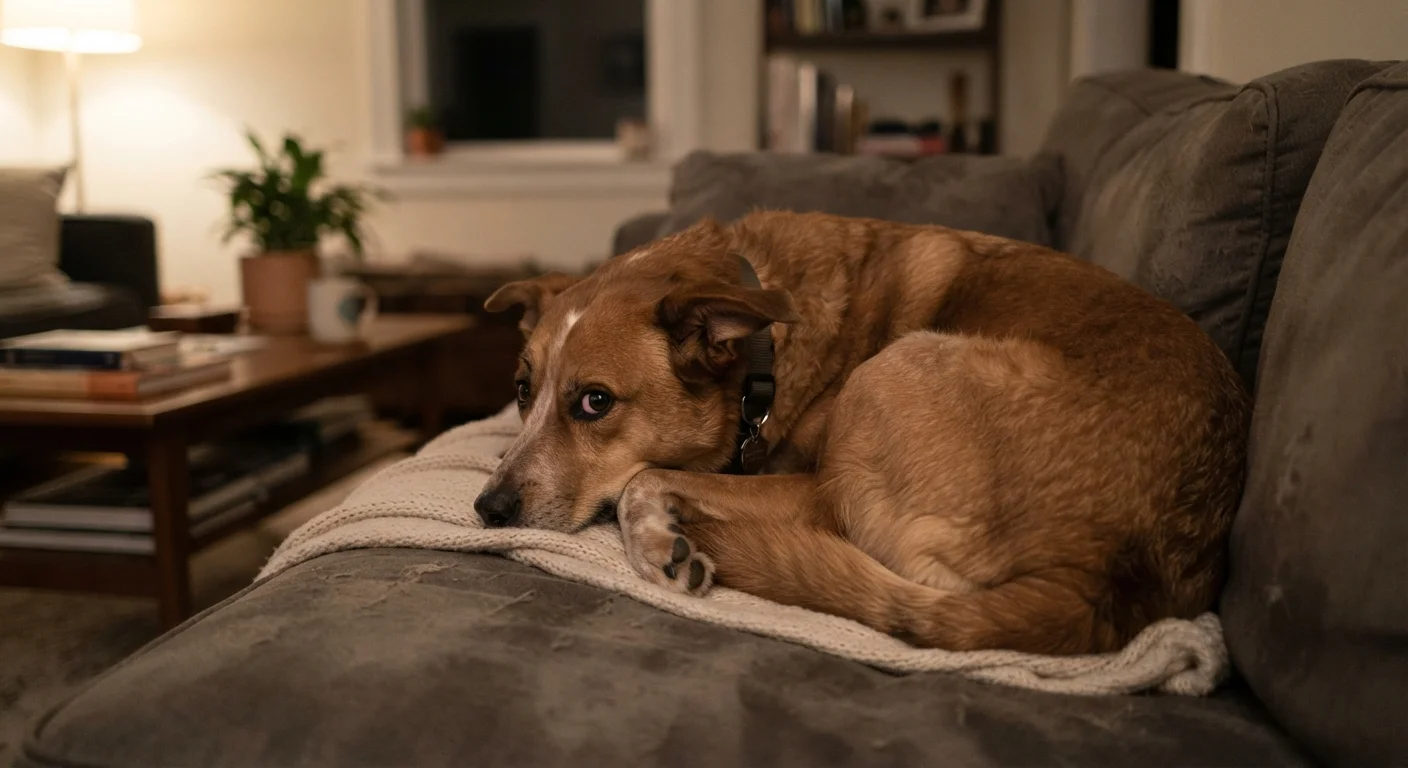
Photo: ResultsExplorer.com | Top Blogs For Everyone editorial
Key Takeaways
- Canine anxiety manifests in subtle ways, including yawning, lip-licking, and changes in appetite or sleep.
- Identifying anxiety triggers is a critical first step before any intervention can be effective.
- Consistency, predictable routines, and positive reinforcement are foundational evidence-based management strategies.
- Severe or persistent anxiety warrants a veterinary or veterinary behaviourist consultation — not just lifestyle adjustments.
- Punishment-based responses to anxious behaviour can significantly worsen the underlying condition.
Reading the Signs: More Than Just Shaking
Most dog owners know to watch for trembling during thunderstorms, but anxiety in dogs presents across a much broader spectrum of behaviours. Some signals are so commonplace they're often misread as personality quirks rather than distress. Understanding what your dog is actually communicating is the first step toward helping them. For a deeper look at how body posture and facial cues feed into the full picture, see what your dog's body language is actually telling you.
Anxiety in dogs generally falls into a few categories: separation anxiety, noise phobias, social anxiety, and generalised anxiety. Each has overlapping signs but distinct triggers. Recognising which type — or combination — your dog experiences allows for more targeted, effective responses. Below are the key signs and the approaches that tend to help most.
Repetitive or displaced behaviours
Excessive yawning outside of tiredness, frequent lip-licking without food present, repetitive pawing, or persistent self-grooming can all be calming signals — communication tools dogs use to manage or express internal stress. Tail-chasing and flank-sucking that become compulsive also fall into this category. These behaviours are easy to overlook because they seem low-key, but their frequency and context matter. A dog that yawns once during a vet visit is coping normally; one that yawns constantly at home without an obvious cause deserves closer attention.
Frequent lip-licking or yawning without an obvious cause can be a dog's way of signalling internal distress.
Destructive behaviour tied to departure
Chewing furniture, scratching at doors, or destroying bedding predominantly when left alone is a hallmark of separation anxiety rather than boredom or disobedience. Dogs with separation anxiety often show pre-departure distress — pacing, whining, or shadowing their owner as routines that signal departure begin. Punishing a dog for destruction after the fact is ineffective and counterproductive, since the behaviour is anxiety-driven, not deliberate. A useful starting point is desensitising the dog to departure cues through gradual, reward-paired exposure. Positive reinforcement training is the professional standard for this kind of counter-conditioning work.
Destruction concentrated around exits or departures points to separation anxiety, not stubbornness or spite.
Avoidance, freezing, or excessive appeasement
A dog that consistently tries to make itself smaller, refuses to enter certain rooms, freezes when approached, or constantly rolls onto its back in unfamiliar situations may be experiencing social anxiety or a generalised fear response. These dogs are often described as 'shy' but the underlying state can be genuine distress. Forcing interaction — even with well-meaning handling — can deepen the aversion. Allowing the dog to approach new people, environments, and objects at its own pace, and pairing those exposures with high-value rewards, is the evidence-supported approach.
A dog labelled 'shy' may actually be experiencing a fear response that deepens without gentle, reward-paired exposure.
Changes in appetite, sleep, or elimination
Anxiety affects the autonomic nervous system, which governs involuntary functions. Dogs under chronic stress may eat less, have irregular sleep patterns, or experience house-training regression — urinating or defecating indoors despite being reliably trained. Diarrhoea and vomiting can also accompany acute stress episodes. These physical symptoms can mask or mimic other medical conditions, which is why a veterinary check-up is always warranted when behavioural and physiological changes appear together. A vet can confirm whether the root cause is anxiety, illness, or both.
House-training regression in an otherwise reliable dog is often a physiological stress response, not a behavioural setback.
Hypervigilance and exaggerated startle responses
Dogs that startle at minor sounds, scan the environment constantly, or cannot settle despite adequate exercise may be operating in a chronic state of arousal consistent with anxiety. This is particularly common following a traumatic event or prolonged stress. A predictable daily routine — consistent feeding times, exercise schedules, and sleep environments — reduces unpredictability and can meaningfully lower baseline arousal over time. Enrichment activities such as nose-work and food puzzles give anxious dogs productive focus and draw on natural behaviours that are inherently calming.
A predictable routine is one of the most underrated tools for lowering a chronically anxious dog's baseline stress level.
Noise reactivity and phobic responses
Thunderstorms, fireworks, and urban noise can trigger phobic responses in dogs that go well beyond typical wariness — including full panic, self-injury attempts, and extreme escape behaviour. Systematic desensitisation using recorded sound at very low volumes, paired with positive associations, is a well-documented approach for noise phobias, but it requires patience and consistent application over weeks or months. Pressure wraps (snug-fitting garments that may reduce arousal through deep-touch pressure) show mixed evidence but are generally low-risk. For dogs with severe phobias, discuss options with your vet before the next storm season rather than during one.
Noise desensitisation works best when started well before the triggering season, not in the middle of a panic episode.
Building a Management Plan That Holds
No single technique resolves canine anxiety on its own. Effective management typically combines environmental adjustments, behavioural conditioning, and — when needed — professional support. It's also worth noting that anxiety can look different at different life stages; cognitive and sensory changes in older dogs can amplify anxious tendencies, as outlined in our guide on senior dog care.
Start with a veterinary check-up
If your dog's anxiety is significantly affecting their quality of life or your household, speak with your veterinarian. A vet can rule out medical causes, and in some cases may refer you to a certified veterinary behaviourist. Medication, when appropriate and prescribed by a vet, can lower baseline anxiety enough for behavioural training to take effect — it is not a standalone solution, but it can be an important part of one.
This article provides general information about canine behaviour and is not a substitute for professional veterinary advice. If you are concerned about your dog's mental or physical wellbeing, consult a licensed veterinarian.
The content provided on our blog site traverses numerous categories, offering readers valuable and practical information. Readers can use the editorial team’s research and data to gain more insights into their topics of interest. However, they are requested not to treat the articles as conclusive. The website team cannot be held responsible for differences in data or inaccuracies found across other platforms. Please also note that the site might also miss out on various schemes and offers available that the readers may find more beneficial than the ones we cover.