
Leopard Gecko vs Crested Gecko: Which Suits Your Lifestyle?

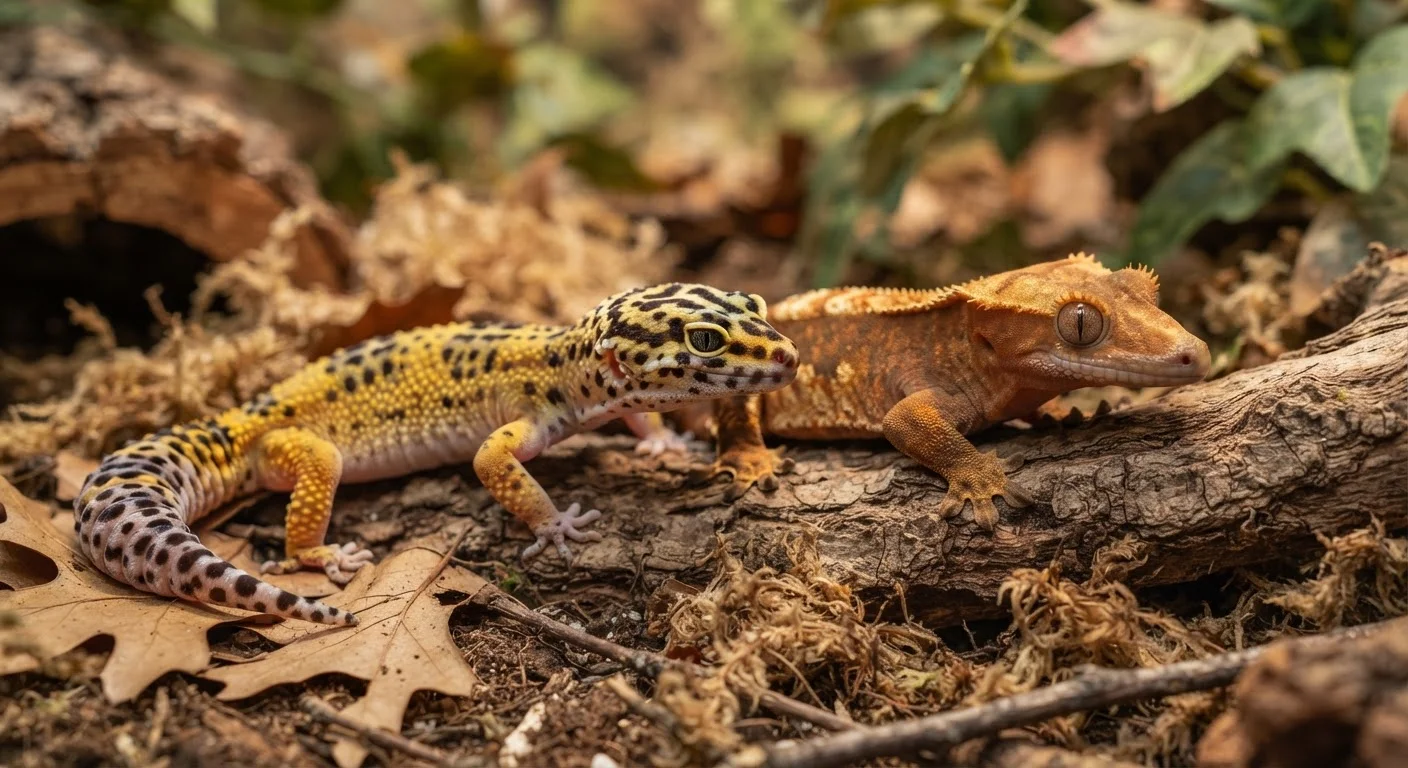
Photo: ResultsExplorer.com | Top Blogs For Everyone editorial
Key Takeaways
- Leopard geckos need a warm thermal gradient and are strictly ground-dwellers; crested geckos thrive at room temperature and need vertical climbing space.
- Both species are considered beginner-friendly, but their habitat and dietary requirements differ significantly.
- Crested geckos can live primarily on a commercially prepared meal-replacement powder diet; leopard geckos require live insects.
- Leopard geckos are generally more tolerant of frequent handling; crested geckos tend to be more skittish but can be tamed with patience.
- Both species have lifespans of 15–20 years, making them long-term commitments for any owner.
Habitat and Enclosure Requirements
Leopard geckos are terrestrial desert animals native to South Asia. They require a 20-gallon tank minimum, a warm side maintained at 88–92°F (using an under-tank heater or low-wattage heat mat), and a cool side around 75°F. A temperature gradient is non-negotiable for their thermoregulation. Humidity should stay low — generally 30–40% — and substrate choices typically include reptile carpet, tile, or paper towel to avoid ingestion risks.
Crested geckos originate from New Caledonia and are arboreal, meaning they live and move primarily above ground. Their enclosures should be taller than they are wide — a 20-gallon tall or larger is appropriate for an adult. They need branches, cork bark, and artificial or live plants to climb and hide in. Ambient humidity should be maintained at 60–80%, achieved through daily or twice-daily misting. A key advantage: crested geckos thrive between 68–78°F, meaning most US households need no additional heating equipment during most of the year.
| Criterion | Leopard Gecko | Crested Gecko |
|---|---|---|
| Enclosure orientation | Horizontal (terrestrial) | Vertical (arboreal) |
| Temperature needs | Warm gradient, 75–92°F | Room temp, 68–78°F |
| Humidity needs | Low, 30–40% | High, 60–80% |
| Primary diet | Live insects only | Meal-replacement powder + optional insects |
| Handleability | Generally very calm | Skittish; improves with patience |
| Typical lifespan | 15–20 years | 15–20 years |
| Heating equipment needed | Yes (heat mat or ceramic emitter) | Rarely needed in temperate homes |
Diet and Feeding
Leopard geckos are insectivores. Their diet centers on appropriately sized live insects — primarily crickets and mealworms, with dubia roaches and black soldier fly larvae as valuable variety. All insects should be gut-loaded (fed a nutritious diet before being offered to the gecko) and dusted with calcium and vitamin D3 supplements. Juveniles eat daily; adults typically eat every two to three days. This feeding routine requires sourcing and maintaining live feeders, which some owners find inconvenient.
Crested geckos are omnivores in the wild, eating insects and soft fruits. In captivity, they can thrive on commercially prepared meal-replacement powders (MRPs) — a complete, balanced diet mixed with water and offered in a small dish. Live insects can be offered as enrichment but are not strictly required. This makes the crested gecko's feeding routine notably simpler and more flexible, particularly for owners with busy schedules.
15–20 yrs
Average lifespan in captivity
Both leopard and crested geckos can reach 15–20 years with consistent, appropriate care — a commitment comparable to many dog or cat adoptions.
20+ yrs
Crested gecko captive care history
Crested geckos were thought extinct until rediscovered in 1994 and have since become one of the most popular pet geckos in the United States.
68–78°F
Crested gecko comfort temperature range
This range aligns with typical US home temperatures, eliminating the need for supplemental heating in most households during temperate seasons.
Regardless of species, always provide a small dish of fresh water and remove uneaten food promptly to maintain enclosure hygiene.
Temperament and Handling
Leopard geckos are widely recognized as one of the most handleable gecko species. They move slowly, rarely bite when well-socialized, and tend to become calmer and more confident with regular, short handling sessions. They do not autotomize (drop) their tails except under significant stress. Most owners find them rewarding to interact with, especially for households with older children.
Crested geckos are faster and more prone to jumping or leaping unexpectedly, which can startle new owners. They are not aggressive, but they are more likely to be skittish, particularly as juveniles. With patient, low-stress handling sessions over weeks, most crested geckos become more accustomed to human contact. Because they are arboreal, their instinct is to move upward rapidly, so handling should take place close to a flat surface. Never grab or restrain a crested gecko forcefully, as this elevates stress significantly.
Both species should always be supervised during handling and should not be handled immediately after feeding. For broader context on reptile care demands, see our guide to bearded dragon care for a comparison with another popular lizard species.
A Note on Juveniles and Young Children
Health, Lifespan, and Veterinary Considerations
Both geckos can live 15–20 years in captivity with proper care, making them serious long-term commitments. Leopard geckos are susceptible to metabolic bone disease (caused by inadequate calcium or UV exposure), cryptosporidiosis (a parasitic gut infection), and dysecdysis (difficult shedding). Crested geckos can experience floppy tail syndrome if enclosures lack appropriate resting surfaces, and they are also prone to respiratory infections if humidity is not properly maintained.
Both species benefit from annual wellness exams with a reptile-experienced veterinarian. Finding an exotic vet in your area before bringing a gecko home is strongly recommended — not all general veterinary practices see reptiles. Any signs of lethargy, weight loss, abnormal droppings, or changes in feeding habits warrant a veterinary consultation promptly. This article is for general educational purposes and does not replace professional veterinary advice.
The content provided on our blog site traverses numerous categories, offering readers valuable and practical information. Readers can use the editorial team’s research and data to gain more insights into their topics of interest. However, they are requested not to treat the articles as conclusive. The website team cannot be held responsible for differences in data or inaccuracies found across other platforms. Please also note that the site might also miss out on various schemes and offers available that the readers may find more beneficial than the ones we cover.