
Food as a Window Into Culture: What Eating Local Really Teaches You

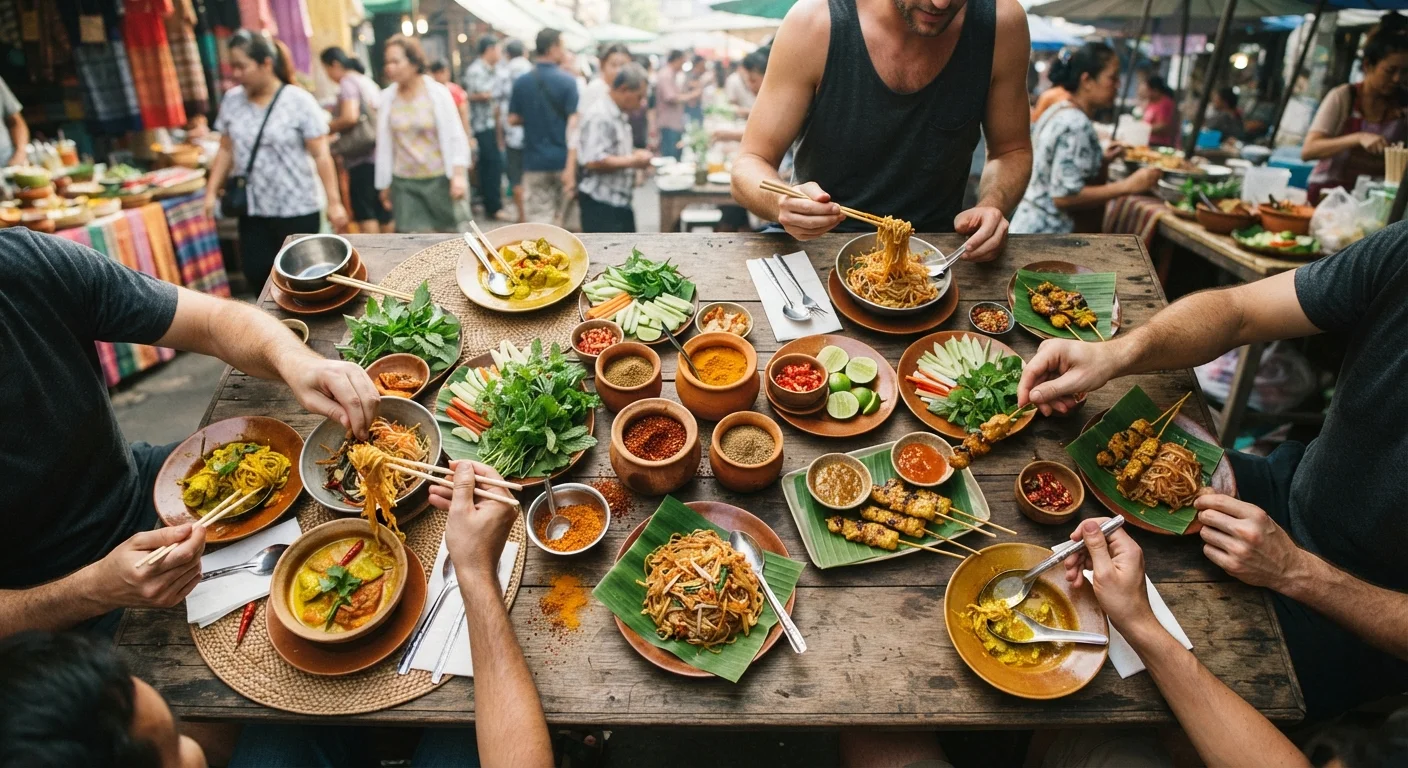
Photo: ResultsExplorer.com | Top Blogs For Everyone editorial
Key Takeaways
- Local cuisine encodes a destination's history, trade routes, religion, and climate in every dish.
- Asking questions about food is one of the lowest-barrier ways to connect with locals respectfully.
- Street markets and home-style restaurants often reflect everyday culture more accurately than tourist-facing menus.
- Food restrictions and rituals reveal deeply held values — understanding them shows cultural respect.
- Approaching unfamiliar food with openness, not judgment, is a form of cultural etiquette.
Every Dish Has a History Behind It
Food does not appear from nowhere. The dishes served at a local table are the accumulated result of centuries of geography, migration, conquest, trade, and necessity. Spice blends in North African cooking trace the ancient trans-Saharan trade. The prevalence of rice versus wheat in a region reflects rainfall patterns and agricultural history. Fermented and preserved foods tell the story of winters survived without refrigeration.
When you order a bowl of soup at a market stall, you are, in a real sense, eating the answer to questions that community has spent generations working out: What grows here? What keeps? What tastes good? That context transforms a meal from a transaction into something worth paying attention to. For travelers who want to go deeper than sightseeing, reading a destination before you arrive gives food experiences an interpretive layer they would otherwise lack.
Food Safety Is Still Your Responsibility
Religion, Ritual, and the Rules Around Food
In many cultures, what you eat — and equally, what you do not eat — is bound up with religious practice and community identity. Halal and kosher dietary laws are not simply restrictions; they reflect worldviews about purity, gratitude, and covenant. Hindu vegetarianism in parts of India is inseparable from philosophical traditions around non-harm. Fasting periods like Ramadan or Lent reshape not just menus but the entire social rhythm of a place.
A traveler who notices a restaurant is quiet during midday in a Muslim-majority country during Ramadan, and adjusts accordingly, is practicing exactly the kind of cultural awareness that separates curious visitors from oblivious ones. Understanding cultural etiquette — including around food — is one of the clearest ways to signal genuine respect.
88%
Travelers who say food experiences are important to their trips
According to a World Food Travel Association survey, the vast majority of travelers consider culinary experiences a meaningful part of their destination choices.
4 in 5
Countries where food is tied to UNESCO cultural heritage listings
UNESCO's Intangible Cultural Heritage lists recognize culinary traditions — from Mexican cuisine to Mediterranean diets — as inseparable from community identity and living heritage.
Where to Eat to Actually Learn Something
Tourist-facing restaurants serve a version of local food optimized for outside palates — milder, more familiar, often stripped of the context that makes it meaningful. The more instructive places are usually less polished: the covered market where grandmothers sell three-ingredient dishes they have made every morning for forty years, the hole-in-the-wall lunch spot where construction workers eat, the family-run place without an English menu.
These settings also offer something menus cannot: the chance to observe how people eat together — whether meals are communal or individual, whether conversation pauses for food or happens through it, whether eating is rushed or ceremonial. Pairing food exploration with visits to lesser-known local landmarks builds a fuller picture of a place than either approach delivers alone.
Let the Market Be Your First Stop
Asking Questions Is the Real Meal
The single most effective tool for learning through food is also the simplest: ask. What is this dish called? When do people eat it? Is it for everyday or special occasions? A willingness to ask — and to listen to the answer — signals genuine interest and tends to open conversations that go well beyond the table. Food is often a safer starting point for cross-cultural exchange than politics, religion, or economics, yet it leads naturally into all three.
This kind of engagement pairs naturally with traveling around cultural events, where food is almost always central. Planning a trip around festivals gives travelers structured opportunities to witness food in its full ceremonial and communal context, not just as a daily routine. The traveler who shows up curious, observes carefully, and asks respectfully will almost always leave with more than a well-fed stomach.
Frequently Asked Questions
The content provided on our blog site traverses numerous categories, offering readers valuable and practical information. Readers can use the editorial team’s research and data to gain more insights into their topics of interest. However, they are requested not to treat the articles as conclusive. The website team cannot be held responsible for differences in data or inaccuracies found across other platforms. Please also note that the site might also miss out on various schemes and offers available that the readers may find more beneficial than the ones we cover.