
Travelling as an Outsider: The Honest Trade-Offs of Being a Tourist

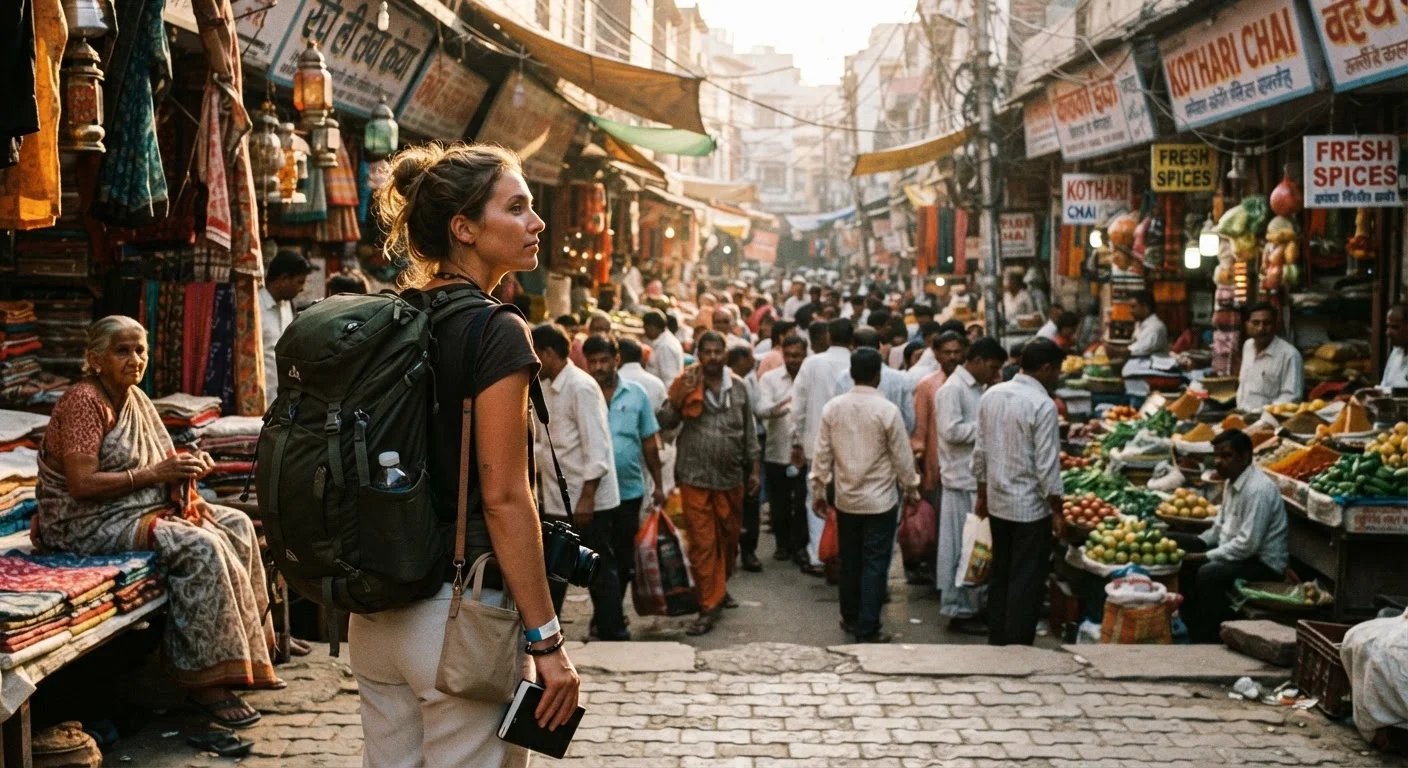
Photo: ResultsExplorer.com | Top Blogs For Everyone editorial
Key Takeaways
- Tourism brings genuine economic and cultural benefits to destinations, but also real costs.
- Being an informed, intentional traveler can reduce negative impact without eliminating the experience.
- Overtourism is a documented pressure in many popular destinations, affecting residents and landscapes alike.
- Awareness of your outsider status is itself a form of cultural respect.
- Slower, more deliberate travel tends to produce more equitable outcomes for both traveler and host.
Expands cultural understanding and reduces bias
Direct exposure to different cultures, languages, and social norms is associated with reduced ethnocentrism and broader perspective. This is a genuine, if imperfect, benefit of firsthand travel over secondhand observation.
Supports local economies when spending is directed well
Tourism dollars that flow to locally owned businesses, guides, and producers provide more stable community benefit than spending concentrated in international hotel chains or large tour operators.
Funds preservation of cultural and natural sites
Entry fees, tourism taxes, and visitor-driven advocacy have contributed to the maintenance of heritage sites, national parks, and cultural institutions that might otherwise lack funding.
Creates personal stakes in global preservation
Travelers who experience a destination directly often become more engaged in its long-term protection — an emotional investment that, at scale, can translate into advocacy and more responsible behavior.
Stimulates cross-cultural exchange and dialogue
When travelers and locals interact genuinely, both sides gain exposure to different worldviews. This exchange, even when brief, contributes to social understanding across national and cultural lines.
Overtourism degrades quality of life for residents
Concentrated visitor numbers in popular destinations have contributed to housing cost increases, infrastructure strain, and the displacement of local businesses by tourism-oriented services. This is documented across multiple European and Asian cities.
Environmental pressure from travel and foot traffic
Air travel carries a significant carbon footprint, and high visitor volume causes measurable physical damage to natural and historic sites — from trail erosion to reef degradation to water resource depletion.
Cultural practices can be flattened or commodified
Tourism demand sometimes incentivizes the simplification of complex traditions into consumable performances, stripping context and meaning from practices that are living and evolving within their home communities.
Economic benefits are unevenly distributed
Tourism revenue often concentrates among property owners, international operators, and established businesses rather than reaching the broader population of a destination community equitably.
Tourists often remain in surface-level engagement
The structural brevity of most visits — combined with language barriers and curated tourist itineraries — makes deep cultural understanding difficult to achieve, even when travelers are motivated to seek it.
Tourist presence can change a destination permanently
Neighborhoods and towns built around tourism often lose the organic character that made them attractive in the first place, creating a self-undermining cycle that locals bear the long-term consequences of.
What It Means to Arrive as an Outsider
Every traveler, no matter how experienced, arrives somewhere as an outsider. That status carries weight — economic, cultural, and social. Understanding the dual nature of that position is more useful than either romanticizing travel or dismissing it.
Tourism is one of the world's largest economic sectors. For many communities, visitor spending funds infrastructure, supports livelihoods, and draws attention to places that might otherwise lack investment. At the same time, the concentration of outsiders in specific places creates pressures that residents navigate daily: crowded streets, inflated rents, and the reshaping of neighborhoods around visitor preferences rather than local needs.
Neither the positive nor the negative side of this equation should be ignored. Good intentions don't neutralize impact, but awareness is a meaningful starting point. For travelers thinking carefully about how they plan trips, thoughtful trip planning is where those intentions become practical decisions.
The Real Advantages of Tourism — For Travelers and Destinations
Travel genuinely expands perspective. Encountering different languages, customs, foods, and social norms challenges assumptions in ways that reading or watching cannot fully replicate. Research in cross-cultural psychology consistently links international exposure to reduced ethnocentrism and greater cognitive flexibility — though individual outcomes vary widely.
Expands cultural understanding and reduces bias
Direct exposure to different cultures, languages, and social norms is associated with reduced ethnocentrism and broader perspective. This is a genuine, if imperfect, benefit of firsthand travel over secondhand observation.
Supports local economies when spending is directed well
Tourism dollars that flow to locally owned businesses, guides, and producers provide more stable community benefit than spending concentrated in international hotel chains or large tour operators.
Funds preservation of cultural and natural sites
Entry fees, tourism taxes, and visitor-driven advocacy have contributed to the maintenance of heritage sites, national parks, and cultural institutions that might otherwise lack funding.
Creates personal stakes in global preservation
Travelers who experience a destination directly often become more engaged in its long-term protection — an emotional investment that, at scale, can translate into advocacy and more responsible behavior.
Stimulates cross-cultural exchange and dialogue
When travelers and locals interact genuinely, both sides gain exposure to different worldviews. This exchange, even when brief, contributes to social understanding across national and cultural lines.
For host communities, tourism spending — when it circulates locally rather than flowing to international chains — can provide meaningful economic stability. Cultural sites gain funding for preservation. Artisan crafts find markets. Local guides build sustainable income. The scale of benefit depends heavily on how tourism is structured and whether money stays in the community.
Travel also creates personal stakes in global issues. Travelers who have walked through a coral reef, explored a historic medina, or spent time in a coastal town often become more invested in environmental and cultural preservation than they were before. That emotional connection, while not a policy solution, is a real phenomenon.
The Honest Costs That Often Go Unexamined
Overtourism is not a fringe concern. Cities like Venice, Kyoto, and Barcelona have each implemented or debated visitor restrictions in response to documented pressure on infrastructure, housing affordability, and quality of life for residents. The problem is structural: tourism revenue benefits some stakeholders while spreading costs across the broader community.
Overtourism degrades quality of life for residents
Concentrated visitor numbers in popular destinations have contributed to housing cost increases, infrastructure strain, and the displacement of local businesses by tourism-oriented services. This is documented across multiple European and Asian cities.
Environmental pressure from travel and foot traffic
Air travel carries a significant carbon footprint, and high visitor volume causes measurable physical damage to natural and historic sites — from trail erosion to reef degradation to water resource depletion.
Cultural practices can be flattened or commodified
Tourism demand sometimes incentivizes the simplification of complex traditions into consumable performances, stripping context and meaning from practices that are living and evolving within their home communities.
Economic benefits are unevenly distributed
Tourism revenue often concentrates among property owners, international operators, and established businesses rather than reaching the broader population of a destination community equitably.
Tourists often remain in surface-level engagement
The structural brevity of most visits — combined with language barriers and curated tourist itineraries — makes deep cultural understanding difficult to achieve, even when travelers are motivated to seek it.
Tourist presence can change a destination permanently
Neighborhoods and towns built around tourism often lose the organic character that made them attractive in the first place, creating a self-undermining cycle that locals bear the long-term consequences of.
Environmental impact is similarly concrete. Air travel remains a significant contributor to individual carbon footprints. High-traffic destinations face soil erosion, water stress, and wildlife disturbance. Popular hiking trails and beaches show measurable degradation in heavily visited periods.
There is also a subtler cost: the performance of culture for tourist consumption. When local traditions are packaged and simplified for outside audiences, something is often lost — context, meaning, and the organic evolution of living culture. Travelers rarely see this happening, which is part of why it continues.
When Visiting Means Disrupting
For travelers interested in avoiding the most concentrated tourist pressures, lesser-known landmarks offer culturally significant alternatives to crowded flagship sites.
How to Travel With These Trade-Offs in Mind
Acknowledgment is the first step; adjustment is the second. A few practical shifts can meaningfully change the balance of a trip's impact without diminishing the experience.
Spend locally. Choosing locally owned accommodation, food vendors, and guides keeps more money in the community. It also tends to produce richer, less generic experiences.
Travel in the off-season or to less-visited areas. Spreading visitor load across time and geography reduces pressure on overtaxed destinations. Slow travel approaches — spending more time in fewer places — naturally align with this.
Learn the basics before you arrive. A few words of the local language, awareness of dress codes, and understanding of local customs signal respect. They also reduce the social friction that travelers often don't notice they're creating.
Be honest about your own position. You are a temporary guest in someone else's place. That framing doesn't require guilt — it requires consideration. Tourists who arrive with awareness of how tourist dynamics work also tend to navigate destinations more confidently and respectfully.
Travel shaped by this kind of intentionality is different from travel driven purely by consumption. The trade-offs don't disappear, but they become something you're actively managing rather than passively creating.
1 in 10
Global jobs supported by tourism
According to the World Travel and Tourism Council, tourism directly and indirectly supports roughly one in ten jobs worldwide, underscoring its economic significance to host communities.
~8%
Global CO₂ emissions linked to tourism
A widely cited study published in Nature Climate Change estimated that tourism accounts for approximately 8% of global greenhouse gas emissions when transport, accommodation, and consumption are included.
2.5x
Rent increase in some overtouristed neighborhoods
Research on short-term rental platforms in high-tourism cities has found that some neighborhoods have seen rents rise by more than twice their pre-tourism-boom levels, according to housing economists studying cities like Barcelona and Lisbon.
The content provided on our blog site traverses numerous categories, offering readers valuable and practical information. Readers can use the editorial team’s research and data to gain more insights into their topics of interest. However, they are requested not to treat the articles as conclusive. The website team cannot be held responsible for differences in data or inaccuracies found across other platforms. Please also note that the site might also miss out on various schemes and offers available that the readers may find more beneficial than the ones we cover.