
Why Travelers Underestimate Jet Lag — And What Actually Helps

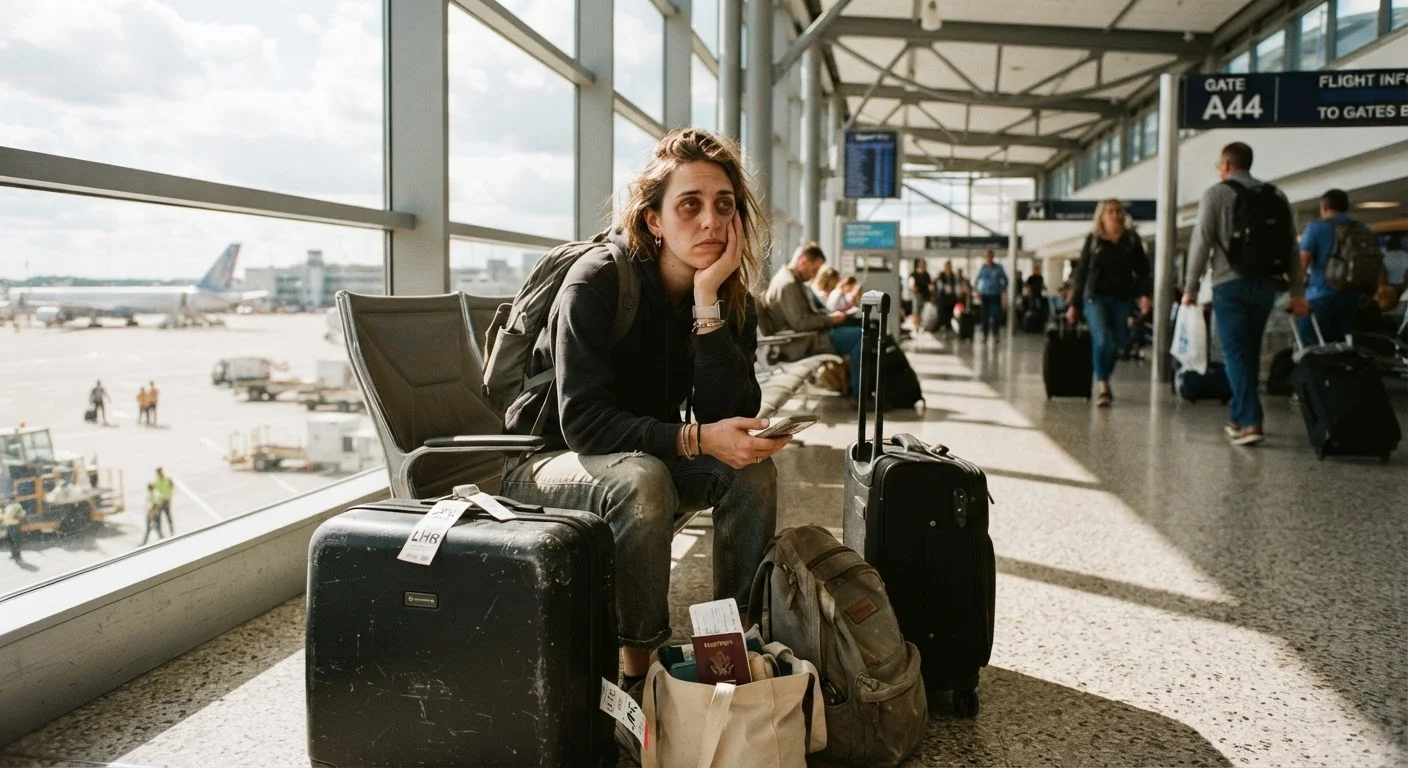
Photo: ResultsExplorer.com | Top Blogs For Everyone editorial
Key Takeaways
- Jet lag is a physiological disruption to your circadian rhythm, not just travel fatigue.
- Eastward travel typically causes more severe jet lag than westward travel.
- Light exposure and sleep timing are among the most evidence-supported tools for recovery.
- Alcohol and sleep aids on flights often worsen circadian disruption rather than help.
- Most adults need roughly one day per time zone crossed to fully recover.
What Jet Lag Actually Is
Jet lag — formally known as circadian desynchrony — occurs when your body's internal clock falls out of alignment with the local time at your destination. Your circadian rhythm governs sleep, hunger, hormone release, digestion, and alertness. When you cross multiple time zones quickly, these biological processes keep running on your origin schedule while the outside world runs on a different one.
The result isn't just tiredness. Travelers commonly experience difficulty concentrating, digestive upset, mood changes, and disrupted sleep patterns that can persist for days. Understanding this distinction matters: strategies aimed only at masking fatigue (like caffeine or short naps at the wrong time) don't address the underlying clock misalignment.
If jet lag is interfering with a packed schedule, it's worth noting that building in recovery buffer time is a practical fix. See how rest factors into realistic trip design in our guide to building a travel itinerary that actually works.
Common Myths About Jet Lag — Corrected
Misinformation about jet lag is widespread, and acting on bad advice can extend your recovery significantly. The myth-fact pairs below address the most common misconceptions travelers carry with them.
Myth
A good night's sleep on the plane means you'll arrive recovered and ready to go.
Fact
In-flight sleep, even if restful, does not reset your circadian clock — it only reduces sleep debt temporarily.
Sleep on a plane rarely reaches the restorative deep and REM stages as reliably as ground-based sleep. More importantly, sleeping at the wrong biological time can actually reinforce your origin-timezone rhythms rather than help your body adapt to the destination. Arriving feeling rested is not the same as being circadianly adjusted.
Myth
Alcohol helps you sleep on the flight, which speeds up jet lag recovery.
Fact
Alcohol disrupts sleep architecture and tends to worsen circadian misalignment, not improve it.
While alcohol may help you fall asleep faster, it suppresses REM sleep and increases nighttime wakefulness as it metabolizes. Combined with cabin dehydration and low-humidity air, it can leave you arriving in worse shape than if you had slept sober. Research consistently links alcohol-assisted sleep with poorer next-day cognitive function and mood — exactly the opposite of what jet-lagged travelers need.
Myth
Jet lag is equally bad no matter which direction you travel.
Fact
Eastward travel is generally harder to adapt to than westward travel for most people.
The human circadian clock naturally runs slightly longer than 24 hours, making it easier to delay sleep (as required when flying west) than to advance it (as required when flying east). Travelers crossing the same number of time zones eastward typically report more severe and longer-lasting symptoms. This is why a flight from New York to London often feels harder to recover from than the return journey.
Myth
Jet lag only affects sleep — everything else stays normal.
Fact
Jet lag disrupts digestion, mood, cognitive function, and even immune response, not just sleep.
Circadian rhythms regulate far more than when you feel sleepy. Hormone secretion, gut motility, body temperature, and immune activity all follow time-of-day patterns. When these are desynchronized, travelers may experience appetite loss, constipation or diarrhea, reduced concentration, irritability, and a temporarily lowered immune response. Treating jet lag as a purely sleep issue overlooks the broader physiological disruption involved.
Myth
Young, healthy travelers bounce back from jet lag quickly and don't need to plan for it.
Fact
Age and fitness level reduce but do not eliminate jet lag; individual variation is significant and unpredictable.
While older adults may experience longer recovery times on average, younger travelers frequently underestimate their own impairment — particularly in cognitive tasks requiring decision-making or memory. Studies on shift workers and military personnel show that even fit individuals perform measurably worse in the days following significant time-zone changes. Assuming you'll be unaffected is a planning risk, especially for business travel or time-sensitive itineraries.
~1 day
Recovery time per time zone crossed
Sleep researchers commonly cite one day of adaptation per time zone as a general rule of thumb for most adults.
6+
Time zones typically needed to trigger significant jet lag
Symptoms become reliably disruptive for most travelers once crossing six or more time zones, according to circadian biology literature.
Strategies With Actual Evidence Behind Them
No single intervention eliminates jet lag, but several approaches are consistently supported by sleep research:
- Light exposure timing: Morning light at your destination helps shift your clock earlier (useful after westward travel); avoiding morning light and seeking evening light helps after eastward travel. Outdoor daylight is more effective than artificial light.
- Sleep scheduling before departure: Gradually shifting your bedtime by 30–60 minutes in the days before a long eastward trip can reduce the adaptation burden.
- Melatonin: Low-dose melatonin taken at the target destination's bedtime has modest but credible evidence supporting its use for circadian realignment. It is not a sedative and works differently from prescription sleep aids. Consult a healthcare provider before use, especially if you take other medications.
- Hydration and meal timing: Eating on local time — rather than when you feel hungry — can help anchor your digestive rhythm to the new schedule.
- Strategic napping: Short naps (20–30 minutes) before 3 p.m. local time can reduce impairment without significantly delaying nighttime sleep onset.
Jet lag shares some overlap with other travel health disruptions. For a look at a related condition, our article on motion sickness at sea, in the air, and on the road covers behavioral and environmental approaches to that distinct challenge.
It's also worth acknowledging the mental toll of disrupted sleep across time zones. Irritability, low motivation, and mild anxiety are common companions to jet lag. For broader strategies on protecting your wellbeing while traveling, see our guide on mental wellbeing while traveling.
This article is for general informational purposes only and does not constitute medical advice. Consult a qualified healthcare professional for guidance specific to your health situation.
The content provided on our blog site traverses numerous categories, offering readers valuable and practical information. Readers can use the editorial team’s research and data to gain more insights into their topics of interest. However, they are requested not to treat the articles as conclusive. The website team cannot be held responsible for differences in data or inaccuracies found across other platforms. Please also note that the site might also miss out on various schemes and offers available that the readers may find more beneficial than the ones we cover.