
Engine Air Filters: What They Catch, When They Clog, and Why It Matters

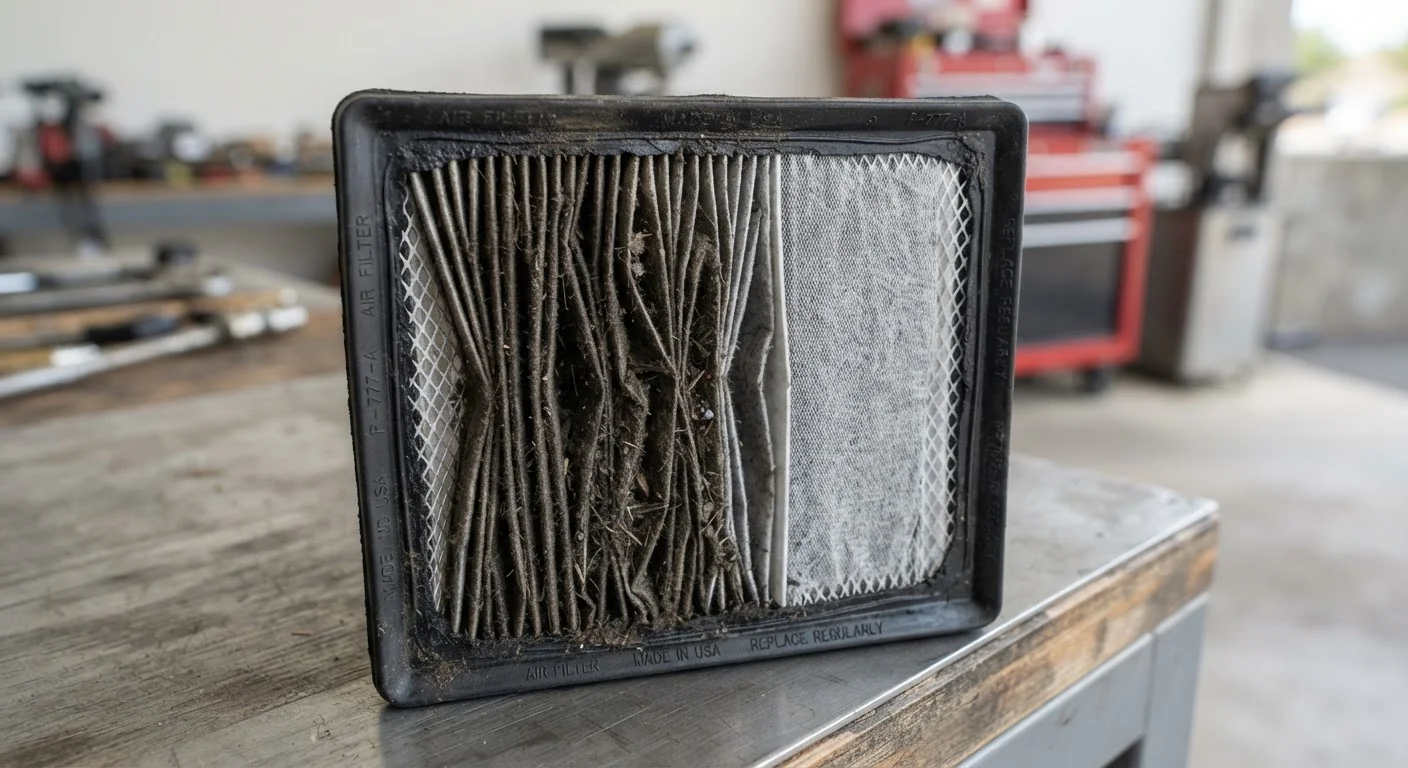
Photo: ResultsExplorer.com | Top Blogs For Everyone editorial
Key Takeaways
- Engine air filters remove dust, pollen, and debris before air reaches combustion.
- A clogged filter restricts airflow, reducing engine efficiency and potentially fuel economy.
- Most manufacturers recommend replacing the air filter every 15,000-30,000 miles, though driving conditions vary this interval.
- Dusty or unpaved-road driving shortens filter life significantly compared to highway driving.
- Visual inspection is a quick, no-tool method for gauging filter condition.
- Replacing an air filter is one of the more accessible maintenance tasks, but confirm with your owner's manual.
What an Engine Air Filter Actually Does
Every time your engine runs, it pulls in large volumes of outside air to mix with fuel for combustion. That outside air carries invisible and visible contaminants - road dust, pollen, sand, insect debris, and carbon particles from surrounding traffic. Without a filter, those particles would travel straight into the engine's cylinders, where they can abrade cylinder walls, clog injectors, and accelerate wear on pistons and rings.
The air filter intercepts these particles before they ever reach the intake manifold. Its pleated media - usually paper or synthetic fiber - creates a large surface area in a compact housing, giving the filter maximum particle-trapping capacity without significantly choking airflow when it is clean. The design balances two competing priorities: keeping contaminants out while letting enough air in to support efficient combustion.
Clean, correctly metered airflow also matters for your engine's fuel management system. Sensors like the mass airflow (MAF) sensor measure the volume of incoming air and signal the engine control unit to inject the right amount of fuel. A well-functioning filter keeps that measurement accurate. See our guide to what engine oil does inside your engine for another look at how individual components work together to protect your powertrain.
What Clogs a Filter - and How Fast
Filter clogging is a gradual process, not a sudden event. Every mile you drive deposits more particulate matter into the filter media. The rate at which that happens depends heavily on your driving environment.
15,000-30,000 mi
Typical engine air filter replacement interval
Most vehicle manufacturers specify this range in their maintenance schedules, though driving environment can shorten the interval considerably.
Up to 50%
Potential reduction in filter life on dusty roads
Industry guidance consistently notes that unpaved or heavily particulate environments can roughly halve the expected service life of a standard air filter.
- Dusty or unpaved roads: Gravel roads, construction zones, and agricultural areas dramatically accelerate particulate loading. A filter that might last 25,000 miles on clean suburban streets could require replacement after 10,000 miles or fewer in these conditions.
- Stop-and-go urban traffic: Frequent acceleration from low speeds pulls in higher volumes of air per mile traveled compared to steady highway cruising, increasing contaminant intake over time.
- Wildfire smoke or high-pollen seasons: Unusually particle-dense air temporarily spikes the rate at which filters accumulate debris.
The filter doesn't fail all at once - it progressively restricts airflow as its pores fill. Early stages may produce no noticeable symptoms. Later stages can reduce throttle response and, in older vehicles without sophisticated engine management, noticeably affect fuel efficiency.
How to Tell When Your Filter Needs Replacing
Visual inspection is the simplest starting point. On most vehicles, the air filter housing is accessible without tools - it's typically a black plastic box near the top of the engine bay, secured by a few clips or screws. Open the housing and pull out the filter element.
Check the Filter at Every Oil Change
A new filter is usually white or light gray. As it loads with debris, it darkens progressively toward tan, brown, and eventually black or gray throughout the pleats. A filter that looks uniformly dark and heavy with grime is overdue for replacement. That said, surface discoloration alone isn't always definitive - filter media can look dusty but still have serviceable capacity. If you're uncertain, compare it against a new filter of the same type or ask a mechanic to evaluate it.
Beyond appearance, pay attention to these performance signals:
- Noticeable reduction in acceleration response
- Rough or hesitant idling
- Check engine light, particularly codes related to the MAF sensor
- Unusual engine sounds during acceleration
These symptoms have multiple possible causes, so don't replace the air filter in isolation if the underlying issue isn't resolved. A worn spark plug, for example, can produce similar drivability symptoms and should be evaluated at the same time.
Replacement: What to Expect
Replacing an engine air filter is among the more accessible maintenance tasks on most modern vehicles. On many cars and light trucks, the process involves unclipping the air filter housing, removing the old filter, inserting the new one in the correct orientation, and re-securing the housing. Your owner's manual will specify the correct filter size and any model-specific steps.
That said, vehicle designs vary. Some engines have air intake systems routed in ways that make filter access less straightforward, and turbocharged engines may have additional components nearby. If you are not confident in the procedure for your specific vehicle, having a qualified mechanic perform the replacement is a reasonable choice. The task is typically quick and inexpensive during a routine service visit.
Always use a filter that meets the fitment and performance specifications listed in your owner's manual. The filter housing is designed around a specific element geometry, and an ill-fitting filter can allow unfiltered air to bypass the media entirely - negating the protection the filter is supposed to provide.
This article is for general informational purposes only. Always consult your vehicle's owner's manual and a qualified mechanic for maintenance decisions specific to your vehicle.
Frequently Asked Questions
The content provided on our blog site traverses numerous categories, offering readers valuable and practical information. Readers can use the editorial team’s research and data to gain more insights into their topics of interest. However, they are requested not to treat the articles as conclusive. The website team cannot be held responsible for differences in data or inaccuracies found across other platforms. Please also note that the site might also miss out on various schemes and offers available that the readers may find more beneficial than the ones we cover.