
What Engine Oil Actually Does Inside Your Car's Engine

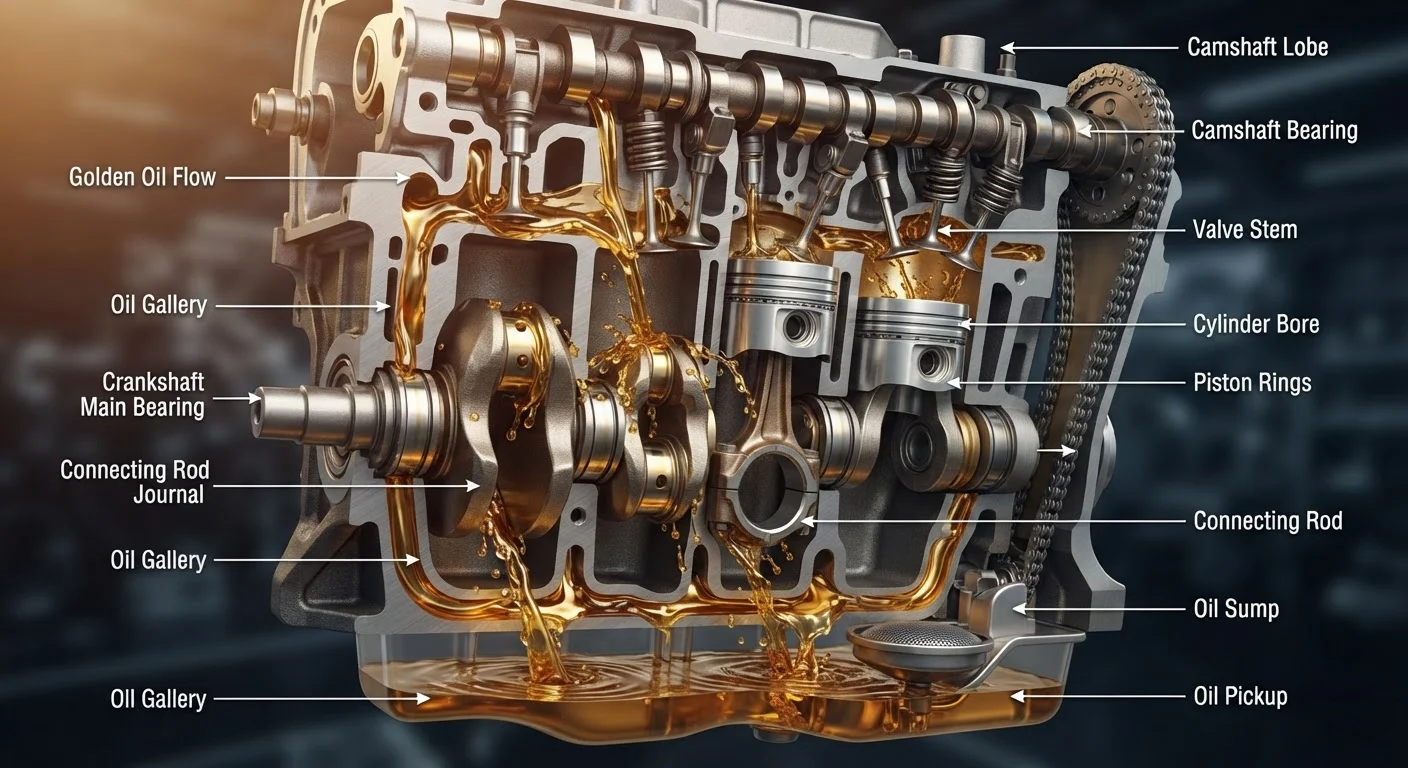
Photo: ResultsExplorer.com | Top Blogs For Everyone editorial
Key Takeaways
- Engine oil performs five distinct jobs: lubrication, cooling, cleaning, sealing, and corrosion protection.
- Oil degrades over time through heat and contamination, making regular changes essential.
- Driving with low or dirty oil can cause irreversible engine damage.
- Your owner's manual - not a generic rule - determines the correct oil change interval for your vehicle.
- Checking your oil level regularly takes less than five minutes and can prevent costly repairs.
The Five Jobs Engine Oil Performs
Most drivers think of engine oil simply as a lubricant. In reality, it performs five distinct functions simultaneously, each essential to engine health.
- Lubrication: Oil creates a continuous film between metal surfaces - pistons, crankshaft bearings, camshafts - preventing direct metal-to-metal contact that would cause rapid wear.
- Cooling: Oil absorbs heat from components that coolant cannot reach directly, such as pistons and valve stems, then carries that heat away as it circulates back to the oil pan.
- Cleaning: Detergent additives in modern oils suspend soot, carbon deposits, and other combustion byproducts, carrying them to the oil filter where they are trapped.
- Sealing: Oil fills microscopic gaps between piston rings and cylinder walls, improving compression and reducing blow-by - the leakage of combustion gases past the pistons.
- Corrosion protection: Chemical additives in engine oil coat metal surfaces with a protective layer that resists oxidation and acid buildup from combustion byproducts.
These functions work together. When oil degrades or runs low, all five are compromised at once.
5 functions
Roles engine oil performs simultaneously
Lubrication, cooling, cleaning, sealing, and corrosion protection all depend on properly maintained engine oil.
250°F+
Typical oil film operating temperature
Engine oil routinely withstands extreme heat inside a running engine, which is why thermal stability is a key property of quality formulations.
~5 min
Time to check your oil level
A dipstick check takes only a few minutes and can catch low oil before it leads to costly engine damage.
Why Oil Degrades - and Why That Matters
Engine oil does not last forever. Every time your engine runs, oil is exposed to extreme heat (often exceeding 250°F at the oil film), combustion gases, and mechanical shear stress. Over time, this breaks down the base oil molecules and depletes the additive package that gives oil its cleaning and protective properties.
Contaminants also accumulate. Fuel can dilute oil during short cold-weather trips before the engine reaches full operating temperature. Water vapor from combustion can condense into the oil. The oil filter traps solid particles, but it has limits - once saturated, it bypasses unfiltered oil to protect flow rate.
The result of neglected oil changes is a dark, thick, acidic sludge that can block oil passages, starve components of lubrication, and trap heat. Engine sludge is one of the leading causes of premature engine failure and is almost entirely preventable with timely maintenance.
Check Your Oil Monthly - Not Just at Oil Changes
Reading the Signs and Staying on Schedule
Your car provides several signals worth paying attention to. The oil pressure warning light - often shaped like an old oil can - indicates low oil pressure reaching the engine and requires immediate action. Do not continue driving if this light appears; have the vehicle checked promptly by a qualified mechanic.
Routine oil level checks are straightforward. Most vehicles have a dipstick in the engine bay, typically marked with a bright handle. Checking the level when the engine is cool and the car is on level ground gives you an accurate reading. To learn how to locate the dipstick and interpret the markings, see our guide on finding and reading your car's essential fluid levels.
For change intervals, consult your owner's manual. Many modern vehicles also have an oil life monitoring system that calculates remaining oil life based on driving conditions - not just mileage - and displays a reminder when a change is due. These systems are generally reliable, but checking your manual to understand how your specific system works is always worthwhile.
Keeping your engine in good shape involves more than just oil. Clean air entering the engine matters too - a clogged air filter forces the engine to work harder, generating more heat and wear. Our article on engine air filters explains what they do and when to replace them.
Frequently Asked Questions
The content provided on our blog site traverses numerous categories, offering readers valuable and practical information. Readers can use the editorial team’s research and data to gain more insights into their topics of interest. However, they are requested not to treat the articles as conclusive. The website team cannot be held responsible for differences in data or inaccuracies found across other platforms. Please also note that the site might also miss out on various schemes and offers available that the readers may find more beneficial than the ones we cover.