
Protein: Animal Sources vs Plant Sources

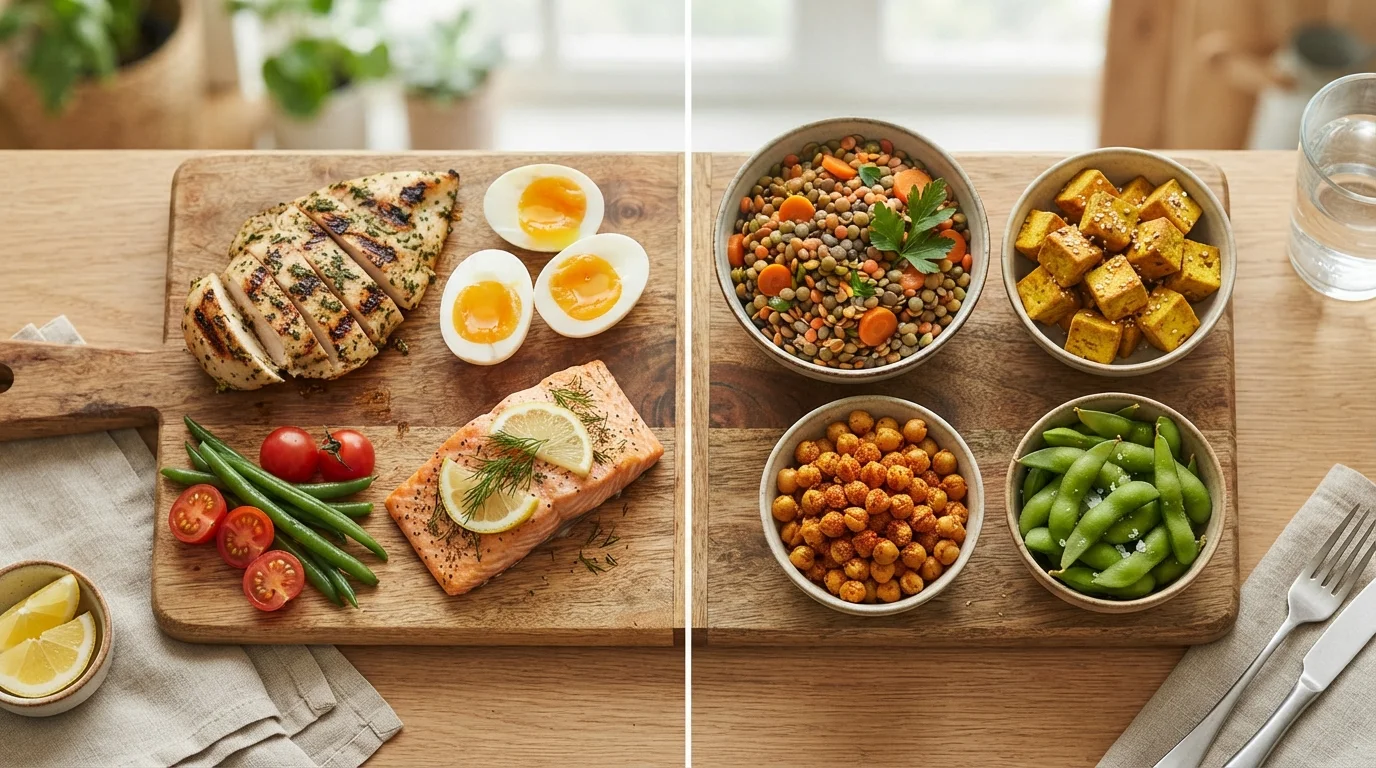
Photo: ResultsExplorer.com | Top Blogs For Everyone editorial
Key Takeaways
- Animal proteins are generally 'complete,' containing all nine essential amino acids in adequate proportions.
- Most plant proteins are 'incomplete,' but combining different sources throughout the day covers all essential amino acids.
- Plant proteins often come packaged with fiber, phytonutrients, and less saturated fat than many animal sources.
- Animal proteins tend to have higher bioavailability, meaning the body absorbs and uses them more efficiently.
- Both protein types can support good health; dietary pattern, variety, and overall food quality matter most.
- Individual needs vary - consult a registered dietitian for guidance tailored to your health situation.
What Makes a Protein 'Complete' or 'Incomplete'?
Protein is built from amino acids - 20 in total, nine of which are classified as essential because the body cannot make them and must obtain them from food. A protein source is called complete when it contains all nine essential amino acids in proportions the body can readily use.
Animal proteins - including meat, poultry, fish, eggs, and dairy - are almost universally complete. Plant proteins, such as legumes, grains, nuts, and seeds, are more variable. Most are low in at least one essential amino acid. Soy and quinoa are notable exceptions, generally considered complete plant proteins. This distinction matters, but it is less limiting in practice than it might seem. Eating a variety of plant foods throughout the day - beans and rice, hummus and whole-grain pita, peanut butter on whole-wheat bread - can supply the full spectrum of essential amino acids. If you are newer to thinking about protein this way, our guide to core nutrition concepts covers the foundational ideas.
Bioavailability: How Well Does Your Body Use Each Source?
Getting protein into your diet is only part of the picture. Bioavailability - how efficiently the body digests and absorbs a protein - also matters. Nutritional scientists use the DIAAS as a modern benchmark. By this measure, animal proteins such as eggs, dairy, and lean meat typically score higher than most plant sources.
Plant proteins are often bound within fibrous cell walls, reducing digestibility. Cooking, fermenting, or sprouting plant foods can meaningfully improve their bioavailability. Processing also plays a role - an isolated soy protein product may behave quite differently from whole soybeans. For a broader look at how food processing affects nutritional value, see our piece on whole foods vs. processed foods.
~20%
Lower protein digestibility in most legumes vs. animal sources
FAO/WHO assessments using DIAAS methodology consistently show legumes scoring notably below egg and dairy proteins in digestibility-corrected amino acid scoring.
2x
Greater heme iron absorption vs. non-heme iron
According to the National Institutes of Health, heme iron from animal foods is absorbed at roughly 15-35%, compared to 2-20% for non-heme iron from plant foods, depending on dietary context.
Beyond Amino Acids: The Full Nutritional Picture
Protein foods rarely arrive in isolation - they come packaged with fats, carbohydrates, vitamins, minerals, and other compounds that influence health outcomes.
- Animal proteins are rich in vitamin B12, heme iron (highly absorbable), zinc, and omega-3 fatty acids (especially oily fish). Red and processed meats, however, tend to be higher in saturated fat and sodium, and their frequent consumption has been associated with increased cardiovascular risk in observational research.
- Plant proteins deliver dietary fiber, antioxidants, and phytonutrients largely absent from animal foods. They are also lower in saturated fat and contain no cholesterol. Trade-offs include lower iron bioavailability (non-heme iron), absence of vitamin B12, and in some cases higher levels of compounds like phytates that can inhibit mineral absorption.
Neither category is a nutritional monolith. Fatty fish and processed deli meat are both animal proteins, yet their health implications differ substantially. The same nuance applies to plant foods.
| Animal Protein | Plant Protein | |
|---|---|---|
| Amino acid completeness | Complete (all 9 essential amino acids) | Often incomplete; soy and quinoa are exceptions |
| Bioavailability (DIAAS) | Generally high | Generally moderate; improves with cooking or sprouting |
| Saturated fat content | Variable; often higher (red meat, dairy) | Generally low |
| Fiber content | None | Present in whole-food sources |
| Vitamin B12 | Naturally present | Absent; supplementation needed for vegans |
| Iron type | Heme iron (highly absorbable) | Non-heme iron (lower absorption) |
| Phytonutrients and antioxidants | Minimal | Rich, varied by food type |
| Environmental footprint (general) | Typically higher, especially ruminant meat | Typically lower |
Building a Diet That Works for You
Current evidence does not support declaring one protein category the winner for all people in all circumstances. Dietary patterns - the overall combination and quality of foods - matter far more than any single nutrient source. Research on Mediterranean-style, DASH, and predominantly plant-based diets all suggest that variety, vegetable density, and minimally processed foods are consistent features of diets linked to better long-term health.
Practical steps supported by evidence include diversifying protein sources across the week, prioritizing fish and legumes, moderating red and processed meat, and not treating any single food as either essential or forbidden. If you are considering a meaningful dietary shift, our overview of plant-based eating offers a grounded look at both the benefits and nutritional considerations. And for guidance on how protein fits within a complete meal, see our piece on building a balanced plate.
This article is for general informational and educational purposes only and is not a substitute for personalized medical or nutritional advice. For guidance specific to your health needs, please consult a qualified healthcare professional or registered dietitian.
The content provided on our blog site traverses numerous categories, offering readers valuable and practical information. Readers can use the editorial team’s research and data to gain more insights into their topics of interest. However, they are requested not to treat the articles as conclusive. The website team cannot be held responsible for differences in data or inaccuracies found across other platforms. Please also note that the site might also miss out on various schemes and offers available that the readers may find more beneficial than the ones we cover.