
Whole Foods vs Processed Foods: What the Difference Really Means

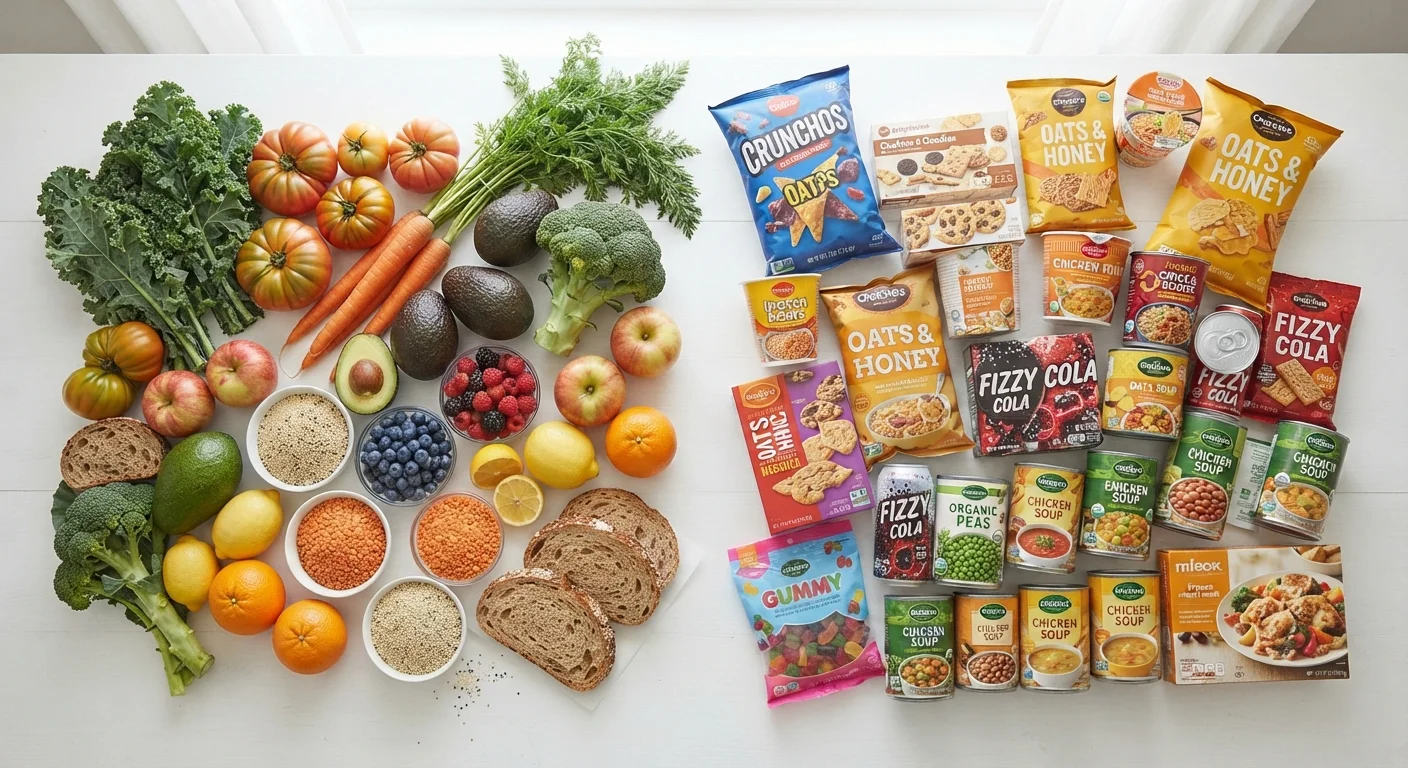
Photo: ResultsExplorer.com | Top Blogs For Everyone editorial
Key Takeaways
- Processing exists on a spectrum - canned beans and packaged cookies are both 'processed' but nutritionally worlds apart.
- The NOVA classification system divides foods into four groups based on the extent and purpose of processing.
- Ultra-processed foods are associated with higher intakes of added sugar, sodium, and refined fats.
- Many minimally processed foods - frozen vegetables, plain yogurt, canned fish - are nutritious and convenient.
- No single food defines diet quality; overall eating patterns matter most for long-term health.
- Consulting a registered dietitian can help you interpret nutrition guidance for your specific health needs.
Processing Is a Spectrum, Not a Binary
When people say "processed food," they usually picture brightly colored snack bags or fast food. But processing simply means any deliberate change applied to a food after harvest - washing, chopping, fermenting, canning, or adding preservatives all count. That makes frozen broccoli and a cheese puff technically both "processed," yet nutritionally very different.
The most widely used scientific framework for sorting this out is the NOVA classification, developed by nutrition researchers at the University of São Paulo. NOVA assigns foods to one of four groups:
- Group 1 - Unprocessed or minimally processed: Fresh or dried fruits and vegetables, plain meats, eggs, plain nuts, plain milk, legumes.
- Group 2 - Processed culinary ingredients: Oils, flour, salt, sugar - used to prepare Group 1 foods at home or in professional kitchens.
- Group 3 - Processed foods: Canned fish, cheese, cured meats, simple breads with few ingredients. These are made by adding salt, sugar, or oil to Group 1 foods to extend shelf life or enhance flavor.
- Group 4 - Ultra-processed foods (UPF): Formulations containing ingredients rarely found in a home kitchen - emulsifiers, artificial flavors, hydrogenated fats, high-fructose corn syrup, color additives. Examples include many packaged snacks, sugary cereals, and reconstituted meat products.
The NOVA system isn't universally accepted - some nutrition scientists argue it oversimplifies food quality - but it provides a practical lens for understanding why "processed" alone tells us very little.
| Criterion | Whole / Minimally Processed Foods | Ultra-Processed Foods |
|---|---|---|
| Examples | Fresh produce, eggs, plain nuts, canned beans, frozen veg | Packaged snacks, sugary cereals, reconstituted meat products |
| Ingredient complexity | Few, recognizable ingredients | Long lists with industrial additives |
| Fiber content | Generally higher | Often low due to refining |
| Added sugar & sodium | Naturally low or absent | Typically elevated |
| Nutrient density | Higher per calorie on average | Lower per calorie on average |
| Convenience | Variable; some require prep | High; ready-to-eat format |
| Cost | Variable; staples can be affordable | Variable; often competitive per serving |
| Shelf life | Shorter for fresh items | Extended by preservatives and processing |
What the Research Actually Says
The health science around ultra-processed foods has grown substantially in recent years. Multiple large observational studies, including research published in journals such as BMJ and The Lancet, have found associations between high UPF consumption and elevated risks of cardiovascular disease, type 2 diabetes, obesity, and certain other health outcomes. Importantly, these are associations, not proven cause-and-effect relationships - people who eat more UPFs may also have other lifestyle factors that contribute to those outcomes.
Still, the nutritional explanation is plausible: ultra-processed products tend to be lower in fiber, higher in added sugar and sodium, and more calorie-dense relative to their volume. They're also engineered to be highly palatable, which may make it easier to eat more than intended.
57%
Share of US daily calories from ultra-processed foods
A study published in BMJ Open estimated that ultra-processed foods account for roughly 57% of daily caloric intake in the average American diet.
~14g
Average daily added sugar from UPFs per person
Research using NHANES data found that ultra-processed foods contribute a disproportionate share of the added sugars Americans consume daily.
4 groups
NOVA food processing classification levels
The NOVA system, developed by researchers at the University of São Paulo, organizes all foods into four groups based on the extent and purpose of industrial processing.
Minimally processed foods tell a different story. Frozen vegetables retain most of their vitamins when frozen quickly after harvest. Canned legumes are a convenient, affordable source of plant protein and fiber. Plain yogurt delivers probiotics and protein without the added sugars found in many flavored varieties. If you're interested in the broader benefits and trade-offs of a plant-forward approach, see our overview of plant-based eating.
Protein source is another layer worth considering. Whether animal or plant, the form in which protein arrives - whole food versus highly refined isolate - can affect how it fits into an overall diet. Our comparison of animal and plant protein sources explores those trade-offs in more depth.
Practical Ways to Think About Your Own Diet
The goal isn't to eliminate all processing - that would mean excluding yogurt, sourdough bread, and olive oil, none of which represent a nutritional problem. A more useful approach is to assess your overall eating pattern rather than judging individual foods in isolation.
Some practical considerations:
- Read ingredient lists, not just nutrition labels. A shorter list of recognizable ingredients generally signals less processing. Added sugars - listed under many names including dextrose, maltose, and cane syrup - and partially hydrogenated oils are worth noting.
- Anchor meals in minimally processed foods. Vegetables, fruits, whole grains, legumes, plain proteins, and dairy can form the base of most meals without much additional effort.
- Use processed foods strategically. Canned tomatoes, frozen edamame, or pre-cooked lentils can make whole-food eating more realistic on busy days. These aren't compromises - they're tools.
- Be skeptical of health halos. Ultra-processed products marketed as "natural," "organic," or "plant-based" can still be high in added sugar, sodium, and refined ingredients. Marketing claims don't determine nutritional value.
Diet quality is cumulative. A diet largely built around whole and minimally processed foods - with occasional ultra-processed items - looks very different from one where UPFs are the foundation. No single meal or food item defines a diet, and rigid food rules often create unnecessary stress around eating.
This article provides general nutrition information for educational purposes and is not a substitute for personalized dietary advice. If you have specific health concerns or conditions, consult a registered dietitian or qualified healthcare professional.
The content provided on our blog site traverses numerous categories, offering readers valuable and practical information. Readers can use the editorial team’s research and data to gain more insights into their topics of interest. However, they are requested not to treat the articles as conclusive. The website team cannot be held responsible for differences in data or inaccuracies found across other platforms. Please also note that the site might also miss out on various schemes and offers available that the readers may find more beneficial than the ones we cover.