
What Companion Planting Actually Does - and What It Doesn't

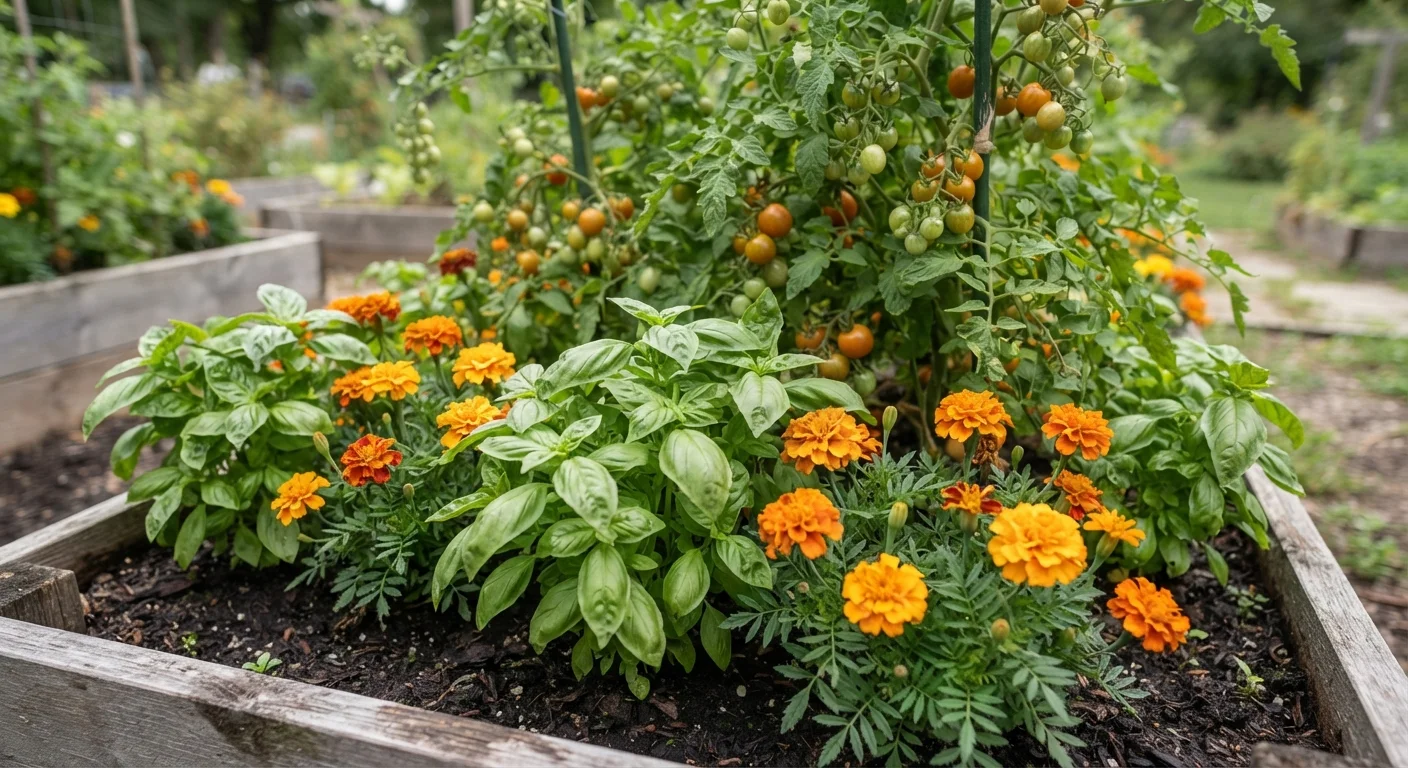
Photo: ResultsExplorer.com | Top Blogs For Everyone editorial
Key Takeaways
- Some companion plant combinations have measurable, research-supported benefits - but many popular pairings lack strong evidence.
- Companion planting is a useful garden tool, not a guaranteed pest control or yield-boosting system.
- The Three Sisters combination (corn, beans, squash) is one of the most reliably documented traditional pairings.
- Marigolds can deter some pests under certain conditions, but results vary significantly by species and placement.
- Soil type, climate, and plant variety matter far more than most companion planting guides acknowledge.
What Companion Planting Claims to Do
Companion planting - the practice of growing different plant species in close proximity to benefit one or both - has been part of gardening culture for centuries. Proponents suggest it can repel pests, attract beneficial insects, improve soil, and even boost flavor or yield in neighboring plants.
These claims range from well-supported to entirely anecdotal. The challenge for home gardeners is that gardening books and online forums often repeat companion planting rules as settled fact, when many are based on tradition, single-garden observations, or studies too limited to generalize reliably. This article walks through the most common claims and what the evidence actually shows.
If you're thinking about garden structure more broadly, see how raised beds compare to in-ground planting - since your growing setup affects which companion strategies are even practical.
Myth
Planting marigolds next to vegetables will reliably keep pests away from your entire garden.
Fact
Marigolds can deter specific pests - particularly certain nematodes and whiteflies - but only under particular conditions and with the right marigold species.
French marigolds (Tagetes patula) have demonstrated nematicidal properties in research settings, particularly against root-knot nematodes when planted densely for a full season. However, this effect is soil-specific and not universal. Marigolds won't meaningfully deter aphids, caterpillars, or most common garden insects, and a border of marigolds won't create a pest-proof perimeter. They're a useful addition to a diverse planting scheme, but treating them as a catch-all pest solution leads to disappointment.
Myth
Basil makes tomatoes taste better when planted nearby.
Fact
There is no scientific evidence that basil improves tomato flavor through proximity. The two simply grow well together as companions in the garden.
The idea that basil improves tomato flavor is one of the most persistent companion planting myths. Tomato flavor is determined primarily by genetics, sunlight, soil nutrition, water consistency, and harvest timing - not by a neighboring herb. What is true is that basil and tomatoes share similar growing requirements (full sun, warm temperatures, regular watering), making them practically compatible in the same bed. The pairing makes organizational sense, even if the flavor claim doesn't hold up.
Myth
The Three Sisters - corn, beans, and squash - is a folk myth without real horticultural benefit.
Fact
The Three Sisters is one of the better-documented traditional companion combinations, with measurable ecological logic behind each role.
Developed by Indigenous peoples of North America over centuries, this combination reflects genuine plant ecology. Corn provides a vertical structure for pole beans to climb. Beans fix atmospheric nitrogen into the soil through root bacteria, benefiting neighboring plants. Squash leaves shade the soil surface, reducing moisture loss and suppressing weeds. Each plant plays a functional role. Research published in agricultural journals has confirmed soil nitrogen improvements in Three Sisters plots, though yield benefits can vary based on spacing and variety selection.
Myth
Companion planting can replace pesticides entirely if done correctly.
Fact
Companion planting can reduce pest pressure in some situations, but it is not a reliable substitute for integrated pest management.
No combination of companion plants will eliminate all pest problems in a garden. Experienced gardeners use companion planting as one layer of a broader approach that also includes crop rotation, physical barriers, proper plant spacing for airflow, and targeted intervention when needed. Relying solely on companion planting while ignoring other factors - like removing diseased plant matter or managing overwatering - leaves gardens vulnerable. The goal is a resilient system, not a single magic fix.
Myth
Garlic planted near roses will prevent all aphid and fungal problems.
Fact
Garlic has some demonstrated antimicrobial properties, but evidence for it reliably protecting roses from aphids or fungal disease in garden conditions is limited.
Garlic contains sulfur compounds that show antifungal activity in laboratory studies, and garlic-based sprays have shown some effectiveness against certain fungal pathogens in research trials. However, growing garlic in soil near roses is a different proposition from applying a garlic extract directly to foliage. Aphid control on roses depends heavily on encouraging natural predators like ladybugs and lacewings, maintaining plant health, and monitoring early. Garlic as a neighbor plant may offer minor benefits, but should not be counted on as primary disease or pest control.
What Gardeners Should Actually Expect
The honest takeaway is that companion planting can contribute positively to a garden ecosystem - but it works best as one layer of a broader strategy, not as a standalone solution. Healthy soil, adequate water, good spacing, and appropriate plant varieties will always matter more than which plants you grow side by side.
~30%
Potential nematode reduction with dense French marigold planting
Research in agricultural settings has suggested dense planting of French marigolds over a full growing season can reduce soil nematode populations meaningfully, though results vary by soil type.
3+
Functional roles in the Three Sisters system
Corn, beans, and squash each fill a distinct ecological role - vertical structure, nitrogen fixation, and ground cover - making this one of the most ecologically logical traditional pairings.
Diversity in the garden genuinely helps. Mixing flowering plants among vegetables can attract pollinators and provide habitat for predatory insects that feed on common pests. That benefit is real - though it's less about specific pairs and more about overall plant variety.
If you're growing herbs alongside vegetables, the same logic applies. Our guide to growing herbs in small spaces covers which herbs tend to coexist well and how to manage them in compact areas.
Don't Crowd Plants in the Name of Companionship
Approach companion planting as an experiment worth running in your own garden, not a formula with guaranteed results. Keep notes, observe what changes, and adjust based on what you actually see - not just what tradition prescribes.
The content provided on our blog site traverses numerous categories, offering readers valuable and practical information. Readers can use the editorial team’s research and data to gain more insights into their topics of interest. However, they are requested not to treat the articles as conclusive. The website team cannot be held responsible for differences in data or inaccuracies found across other platforms. Please also note that the site might also miss out on various schemes and offers available that the readers may find more beneficial than the ones we cover.