
Underfloor Heating vs Radiators: Which Suits Your Home?

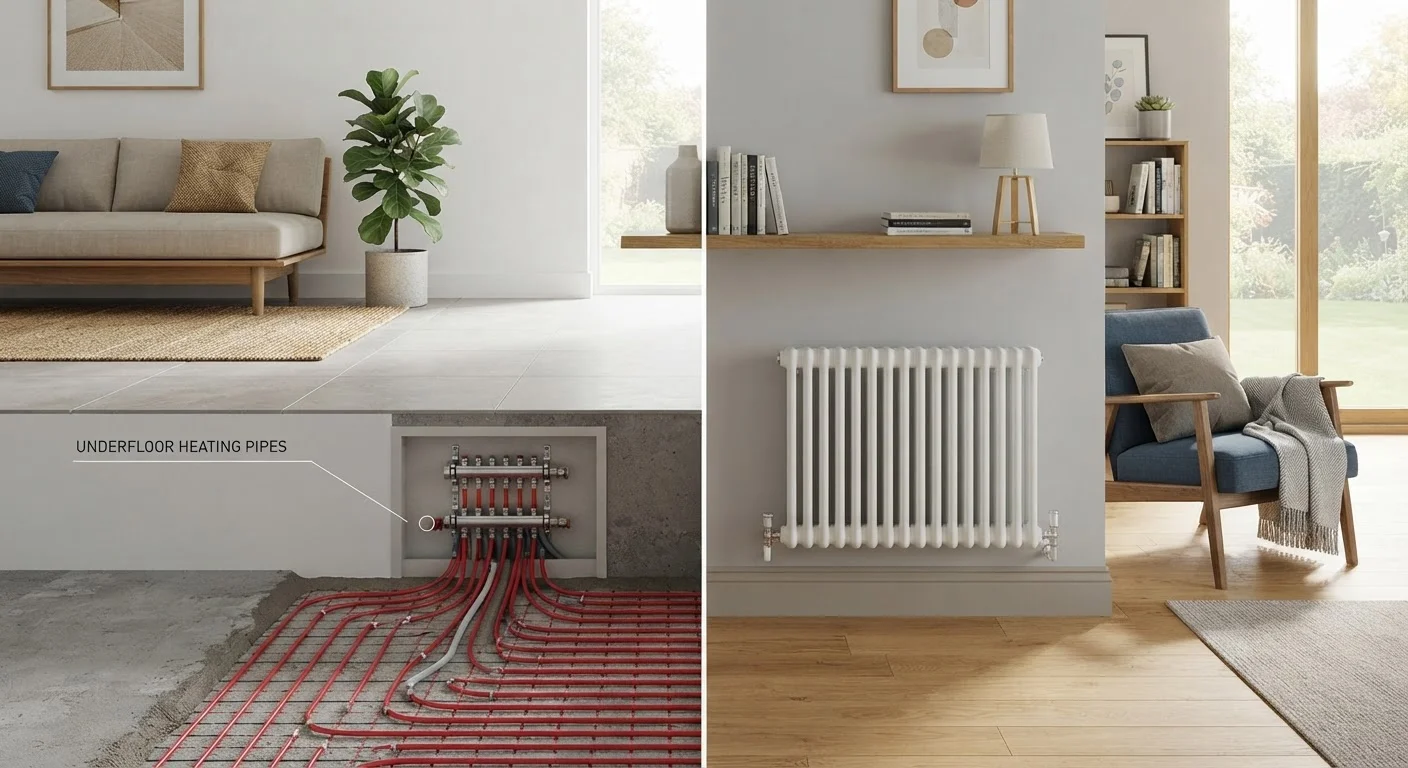
Photo: ResultsExplorer.com | Top Blogs For Everyone editorial
Key Takeaways
- Underfloor heating provides even, comfortable warmth but requires significant upfront installation work.
- Radiators are easier and cheaper to install or replace, making them ideal for retrofit situations.
- Wet underfloor systems can be more energy-efficient when paired with a heat pump or modern boiler.
- Electric underfloor heating suits small areas like bathrooms; hydronic suits whole-home heating.
- Room use, flooring type, and renovation scope are the key factors that should drive your choice.
- Good home insulation is essential for either system to perform efficiently.
How Each System Works
Radiators work by circulating hot water - typically from a boiler - through metal panels mounted on walls. They heat rooms primarily through convection, warming the air around them, which then circulates through the space. Most modern homes already have a radiator-based wet central heating system in place.
Underfloor heating (UFH) comes in two forms. Electric (dry) systems use heating cables or mats laid beneath floor coverings. Hydronic (wet) systems circulate warm water through a network of pipes embedded in or beneath the floor screed. Both distribute heat evenly across the floor surface, warming the room from the ground up through radiant heat rather than convection.
Good insulation underpins the performance of either system. If you're evaluating your home's heat retention alongside this decision, our beginner's guide to home insulation explains the fundamentals clearly.
| Criterion | Underfloor Heating | Radiators |
|---|---|---|
| Installation cost | Higher (especially wet systems) | Lower overall |
| Retrofit disruption | Significant (wet); minimal (electric mats) | Minimal to moderate |
| Heat distribution | Even, whole-floor radiant warmth | Convective, warmer near units |
| Response time | Slow (1-2 hours typical) | Fast (15-30 minutes) |
| Wall space freed up | Yes - no wall units needed | No - units mounted on walls |
| Compatibility with heat pumps | Excellent (low temp operation) | Good with low-temp radiators |
| Flooring flexibility | Limited (check compatibility) | Works with any flooring |
| Maintenance | Very low once installed | Occasional bleeding and TRV checks |
Installation: Cost, Disruption, and Complexity
Radiator installation or replacement is relatively straightforward for a qualified heating engineer. Swapping an old radiator for a new one typically takes a few hours per unit, with minimal floor disruption. Adding radiators to an existing system is more involved but remains far less disruptive than retrofitting underfloor heating.
Hydronic UFH is a significant undertaking in an existing home. Pipes must be laid into the floor structure - either in a screed layer or in pre-formed panels - which typically means removing existing flooring, increasing floor height, and a full cure period before the system can be used. Installation costs are considerably higher than radiators, and the project usually needs to be coordinated with broader renovation work to be cost-effective.
Electric UFH mats are an exception: they can be installed under tiles in a bathroom or kitchen in a day or two, with far less disruption. For that narrow use case - a single tiled room - they're genuinely practical as a retrofit. For whole-home heating, however, the running costs of electric systems are generally higher than wet systems. If a bathroom renovation is part of your planning, see our small bathroom design guide for complementary layout ideas.
25-40%
Potential energy saving with UFH and heat pump
Industry estimates suggest wet underfloor heating paired with an air-source heat pump can reduce heating energy use compared to a gas boiler and standard radiators, though actual savings depend heavily on insulation and usage.
£4,000-£12,000+
Typical whole-home wet UFH retrofit cost (UK estimate)
Costs vary considerably based on home size, floor construction, and whether other renovation work is happening simultaneously; always obtain multiple qualified installer quotes.
35-45°C
Typical water temperature for UFH systems
Compared to 60-80°C for standard radiators, this lower operating temperature is why wet UFH pairs efficiently with heat pump technology.
Running Costs and Energy Efficiency
Wet UFH systems typically operate at lower water temperatures (around 35-45°C) compared to radiators (60-80°C). This lower operating temperature makes them a natural companion for heat pumps, which perform more efficiently at lower outputs. Paired with a modern heat pump and good insulation, a wet UFH system can offer meaningful long-term energy savings - though outcomes vary significantly based on home size, insulation quality, and usage patterns.
Radiators, especially older, oversized models, can be upgraded for better efficiency through modern low-temperature radiators designed to work with heat pumps, or simply by fitting thermostatic radiator valves (TRVs) for room-by-room control. A well-maintained radiator system on a modern condensing boiler remains an efficient choice for most homes.
Electric UFH, while comfortable and low-maintenance, relies on electricity as its energy source. Unless powered by renewables, running costs are typically higher than gas or heat pump-driven wet systems. It's worth reviewing any assumptions you have about heating costs - our article on home maintenance myths addresses some common misconceptions worth knowing.
Comfort, Aesthetics, and Room Suitability
Underfloor heating delivers radiant warmth evenly across the entire floor, eliminating cold spots and the draft effect associated with convective heating. Rooms feel consistently warm without the localised heat zones you get near radiators. The absence of wall-mounted units also frees up space and allows more flexible furniture placement - a real advantage in smaller rooms.
Radiators respond to temperature changes more quickly than UFH, which can take an hour or more to warm a cooled-down room. This responsiveness makes radiators well-suited to rooms used intermittently. UFH is better suited to spaces that maintain a steady temperature throughout the day.
Flooring choice matters significantly for UFH: stone, ceramic tile, and engineered wood conduct heat well. Thick solid wood flooring or certain carpets can insulate against heat transfer, reducing effectiveness. Always check manufacturer guidance for your chosen floor covering before committing to a UFH system.
Zoning and Controls Matter
The content provided on our blog site traverses numerous categories, offering readers valuable and practical information. Readers can use the editorial team’s research and data to gain more insights into their topics of interest. However, they are requested not to treat the articles as conclusive. The website team cannot be held responsible for differences in data or inaccuracies found across other platforms. Please also note that the site might also miss out on various schemes and offers available that the readers may find more beneficial than the ones we cover.