
The Credential Landscape: Degrees, Diplomas, Certificates, and What Sets Them Apart

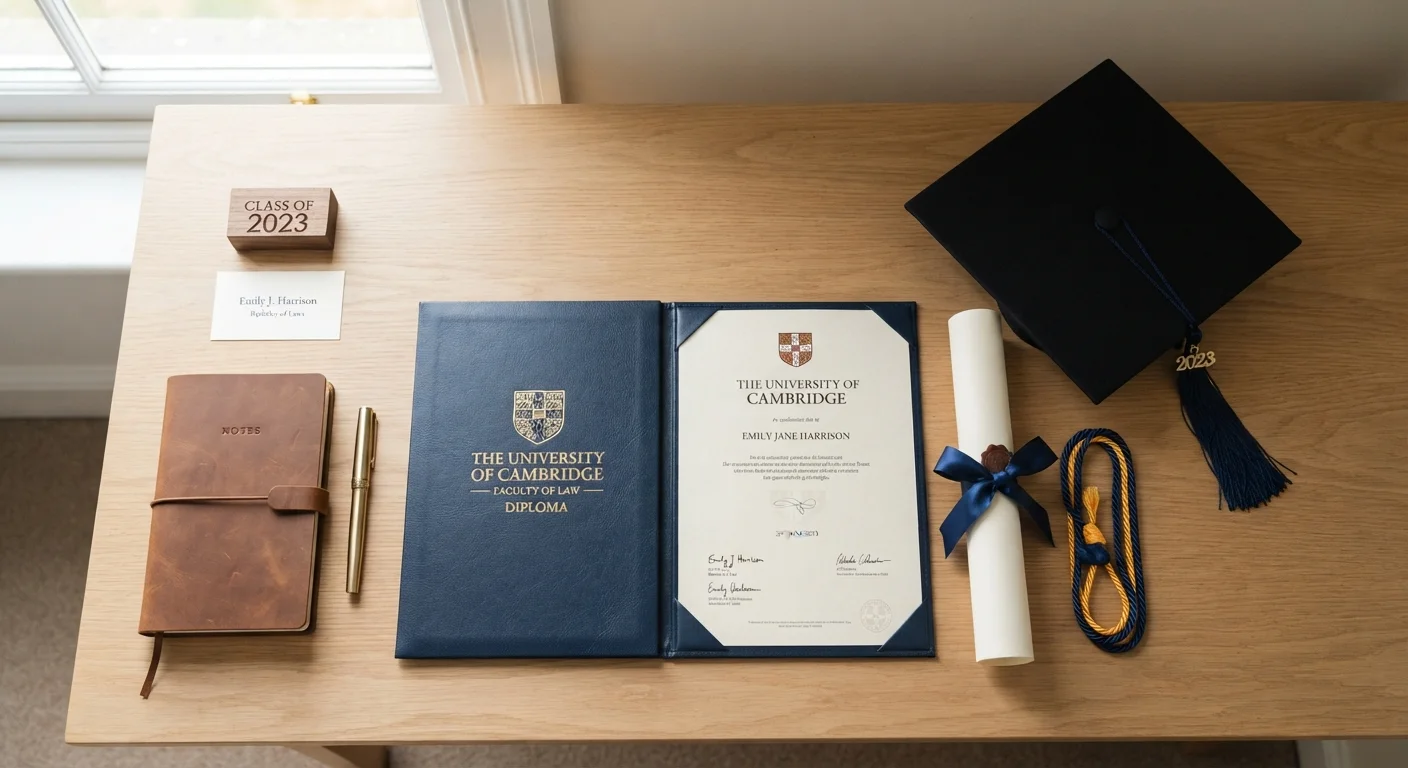
Photo: ResultsExplorer.com | Top Blogs For Everyone editorial
Key Takeaways
- Degrees (associate, bachelor's, master's, doctoral) represent multi-year academic programs with broad and deep subject coverage.
- Diplomas typically signal completed vocational or professional training programs, often shorter than degree programs.
- Certificates confirm competency in a specific, narrowly defined skill area and can often be earned in weeks or months.
- Accreditation - not the credential name alone - largely determines how much weight a credential carries with employers.
- Stacking credentials (earning certificates alongside or after a degree) is an increasingly common strategy for career changers.
Why Credential Terminology Can Be Confusing
Walk through any college website or job listing and you'll encounter a mix of terms - degree, diploma, certificate, certification, credential - sometimes used interchangeably, sometimes with very specific meanings. This inconsistency isn't accidental; it reflects the genuinely fragmented nature of the U.S. educational system, where institutions, states, and industries each apply their own labeling conventions.
The practical consequence: two people with documents that look similar may have completed vastly different programs. Mapping these distinctions clearly is the first step to making confident educational decisions. For a broader orientation to the educational landscape, our complete guide to modern educational pathways is a useful starting point.
65%
U.S. jobs requiring post-secondary education or training
Georgetown University's Center on Education and the Workforce has projected that a majority of U.S. jobs require some form of post-secondary credential - though that credential isn't always a four-year degree.
~1 in 5
Adults holding a sub-baccalaureate credential as highest attainment
National Center for Education Statistics data indicates a significant share of U.S. adults whose highest credential is a certificate or associate degree rather than a bachelor's.
17%
Increase in certificate completions over a recent decade
NCES reporting has documented steady growth in certificate completions at degree-granting institutions, reflecting rising demand for shorter, skills-focused pathways.
Degrees: Broad, Deep, and Time-Intensive
Degrees are awarded by accredited colleges and universities after students complete a structured multi-year curriculum. In the U.S., the four main levels are:
- Associate degree - typically two years at a community college, covering foundational coursework in a field or general education requirements.
- Bachelor's degree - a four-year program combining a major field of study with general education requirements. The most widely requested credential in U.S. job postings requiring formal education.
- Master's degree - one to three years of advanced, specialized study beyond a bachelor's. Often required for senior roles in fields like education, social work, and engineering.
- Doctoral degree - the terminal academic credential, emphasizing original research (Ph.D.) or advanced professional practice (e.g., Ed.D., J.D., M.D.).
Degrees signal not just subject knowledge but the ability to think critically across disciplines - a quality many employers and graduate programs value. However, they require significant time and financial investment, so they aren't the right fit for every goal. Comparing a degree to vocational training can help clarify which path fits your circumstances.
Diplomas: The Vocational and Professional Middle Ground
In the U.S. context, diploma has two common uses. First, it's the physical document you receive after completing any degree program. Second - and more relevant here - it refers to standalone program credentials awarded by vocational schools, community colleges, and professional training institutions for programs that are typically shorter than a full associate degree.
Diploma programs tend to be occupation-specific: medical assisting, HVAC technology, culinary arts, dental hygiene. They emphasize applied skills and are often designed in collaboration with industry to meet workforce needs. Duration can range from a few months to two years.
Always Verify Industry Recognition Before Enrolling
The key question with any diploma program is whether it's recognized by licensing boards or industry associations in your target field. A diploma from an accredited institution generally satisfies entry-level employer requirements, but some regulated professions require a degree-level credential regardless.
Certificates: Fast, Focused, and Increasingly Valued
Certificates are the most narrowly scoped of the three. They confirm that a learner has mastered a specific skill or body of knowledge - often without the broader general education requirements that come with degrees or diplomas. They can be earned at community colleges, universities, professional associations, or through online platforms.
There's an important distinction worth knowing: a certificate (usually from an educational institution) and a certification (usually from an industry or professional body requiring an exam) are related but not identical. A CompTIA Security+ is a certification; a web development certificate from a community college is a certificate. Both can be valuable, but they're awarded through different processes and carry different signals. For more on how newer short-form credentials fit in, see what microcredentials and digital badges actually signal.
Certificates are particularly common in technology, healthcare support, business, and the trades. Their relatively short completion time makes them attractive for career changers and for professionals updating their skills without pausing work.
Accreditation: The Factor That Determines Real Value
Regardless of credential type, accreditation is the single most important quality signal. Accreditation means an independent, recognized body has evaluated the institution and confirmed it meets defined educational standards. In the U.S., regional accreditation (granted by organizations like the Higher Learning Commission) is generally considered the most rigorous and most widely recognized.
A degree from an unaccredited institution may not be accepted by employers, may not transfer to other schools, and may not satisfy licensing requirements - even if the coursework itself was solid. Before committing to any program, verify its accreditation status through the U.S. Department of Education's database or the Council for Higher Education Accreditation (CHEA). Our reference guide to educational terminology explains accreditation and related terms in plain language.
“The value of a credential is not in the paper itself but in what it credibly communicates - to employers, to institutions, and to the learner - about what has actually been learned and demonstrated.”
— Anthony Carnevale, Director, Georgetown University Center on Education and the Workforce
Frequently Asked Questions
The content provided on our blog site traverses numerous categories, offering readers valuable and practical information. Readers can use the editorial team’s research and data to gain more insights into their topics of interest. However, they are requested not to treat the articles as conclusive. The website team cannot be held responsible for differences in data or inaccuracies found across other platforms. Please also note that the site might also miss out on various schemes and offers available that the readers may find more beneficial than the ones we cover.