
Deliberate Practice vs. Repetition: Why Simply Doing More Doesn't Make You Better

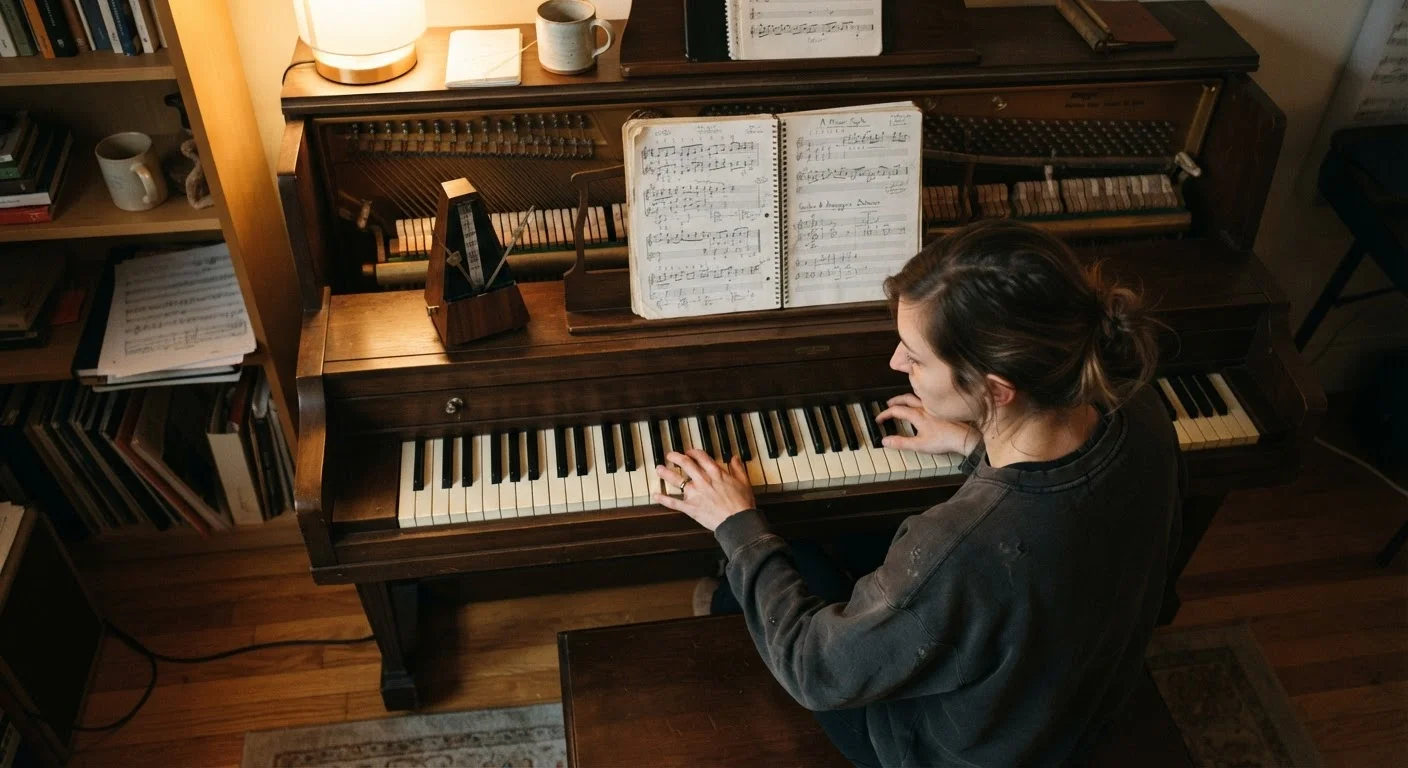
Photo: ResultsExplorer.com | Top Blogs For Everyone editorial
Key Takeaways
- Repetition alone builds habit; deliberate practice builds genuine skill advancement.
- Deliberate practice requires focused attention, clear goals, and immediate feedback on errors.
- Staying in your comfort zone feels productive but typically leads to a performance plateau.
- Quality of practice time consistently matters more than total hours logged.
- Feedback — internal or external — is what separates productive effort from wasted motion.
The Difference That Actually Matters
Most people assume that putting in enough hours guarantees improvement. This belief is understandable — and largely wrong. Cognitive psychologist K. Anders Ericsson spent decades studying expert performers and found that it is the structure of practice, not the raw volume, that separates those who keep improving from those who plateau. His research drew a clear line between ordinary repetition and what he called deliberate practice.
Repetition means doing something over and over in a familiar, comfortable way. It reinforces what you already know. Deliberate practice means working at the edges of your current ability, with specific goals, concentrated attention, and corrective feedback after each attempt. The two feel similar from the outside but produce dramatically different results over time.
This distinction matters for anyone learning a language, developing a professional skill, studying for an exam, or picking up a new craft. Understanding it is the first step to practicing smarter. For a broader foundation on how skills form and compound over time, see the comprehensive skill development guide.
| Criterion | Deliberate Practice | Repetition (Mindless Practice) |
|---|---|---|
| Primary goal | Push skill to the next level | Reinforce existing ability |
| Attention required | Full, active concentration | Minimal; often automatic |
| Feedback loop | Built in and immediate | Absent or delayed |
| Comfort level | Uncomfortable by design | Comfortable and familiar |
| Rate of improvement | Faster, more measurable | Slows or stalls over time |
| Best stage of learning | Intermediate to advanced | Beginner and maintenance |
| Mental demand | High; requires focus and effort | Low; can be done passively |
Why Repetition Creates a Ceiling
Repetition is not useless. In the early stages of learning, volume matters. A beginner typist needs to repeat key positions thousands of times before those movements become automatic. A new driver needs repeated exposure to basic maneuvers. At this stage, repetition does real work.
The problem emerges later. Once a skill becomes automatic — once you can do it without thinking — repetition stops producing improvement. Neuroscientists describe this as the skill moving from explicit processing (conscious, effortful) to implicit processing (automatic, unconscious). Automatic execution is efficient, but it is also largely closed to refinement. You are no longer making decisions; you are running a program.
This is why many adults who have spoken a second language for years still make the same grammatical errors they made in year one. Or why someone can play the same piano piece for a decade without noticeably improving. Comfort and automaticity create a ceiling. Breaking through it requires deliberately moving back into discomfort.
10,000 hrs
Hours often cited for expert-level skill
Ericsson's research found that top performers in music and chess accumulated roughly this many hours of structured practice — but emphasized quality of practice over raw count.
~1 hr
Typical deliberate practice limit per session
Ericsson observed that even elite performers rarely sustained deliberate practice for more than one hour at a stretch before concentration and quality declined.
4–5 hrs
Daily deliberate practice ceiling for top performers
Studies of elite musicians and athletes suggest that most experts peak at around four to five hours of high-quality deliberate practice per day, not unlimited volume.
The Four Pillars of Deliberate Practice
Ericsson's framework identifies several elements that distinguish deliberate practice from ordinary repetition:
- Specific, well-defined goals. Each session has a narrow target — not "practice piano" but "play measures 12–18 at tempo without hesitating on the chord change."
- Full concentration. Deliberate practice cannot be done on autopilot. It demands active attention on what you are doing and why.
- Immediate feedback. You need to know quickly whether an attempt was correct or not. A coach, a recording, a language partner, or even a structured self-assessment can provide this. Without feedback, errors go undetected and get reinforced. See how feedback loops accelerate skill growth for a closer look at building this into your routine.
- Working at the edge of ability. Tasks should be difficult enough to require genuine effort but achievable enough to complete. Researchers sometimes call this the zone of proximal development — the productive space just beyond current competence.
Applying even two or three of these elements transforms a routine session into something significantly more effective.
Putting It Into Practice: A Practical Shift
Switching from repetition to deliberate practice does not require more time — it requires more intention. Here is how to make that shift in almost any skill domain:
- Identify your weakest point. Deliberate practice targets gaps, not strengths. Drill the part you consistently get wrong, not the part that feels good.
- Shrink the task. Instead of running through an entire piece, presentation, or routine, isolate the section that breaks down and work on that alone.
- Build in feedback checkpoints. Record yourself, use a checklist, get a peer review, or work with a coach. The mechanism matters less than the consistency.
- Rest and reflect. Deliberate practice is cognitively demanding. Short, focused sessions with reflection time between them tend to outperform long, exhausting ones.
Consider also how you schedule your practice. Mixing skills in a single session — known as interleaving — can deepen retention even further. The guide to interleaved practice explains how to apply this technique without overwhelming yourself. For a connected perspective on how scheduling affects skill building, the massed vs. spaced practice comparison is worth reviewing alongside this one.
The content provided on our blog site traverses numerous categories, offering readers valuable and practical information. Readers can use the editorial team’s research and data to gain more insights into their topics of interest. However, they are requested not to treat the articles as conclusive. The website team cannot be held responsible for differences in data or inaccuracies found across other platforms. Please also note that the site might also miss out on various schemes and offers available that the readers may find more beneficial than the ones we cover.