
Putting Interleaved Practice to Work in Your Study Routine

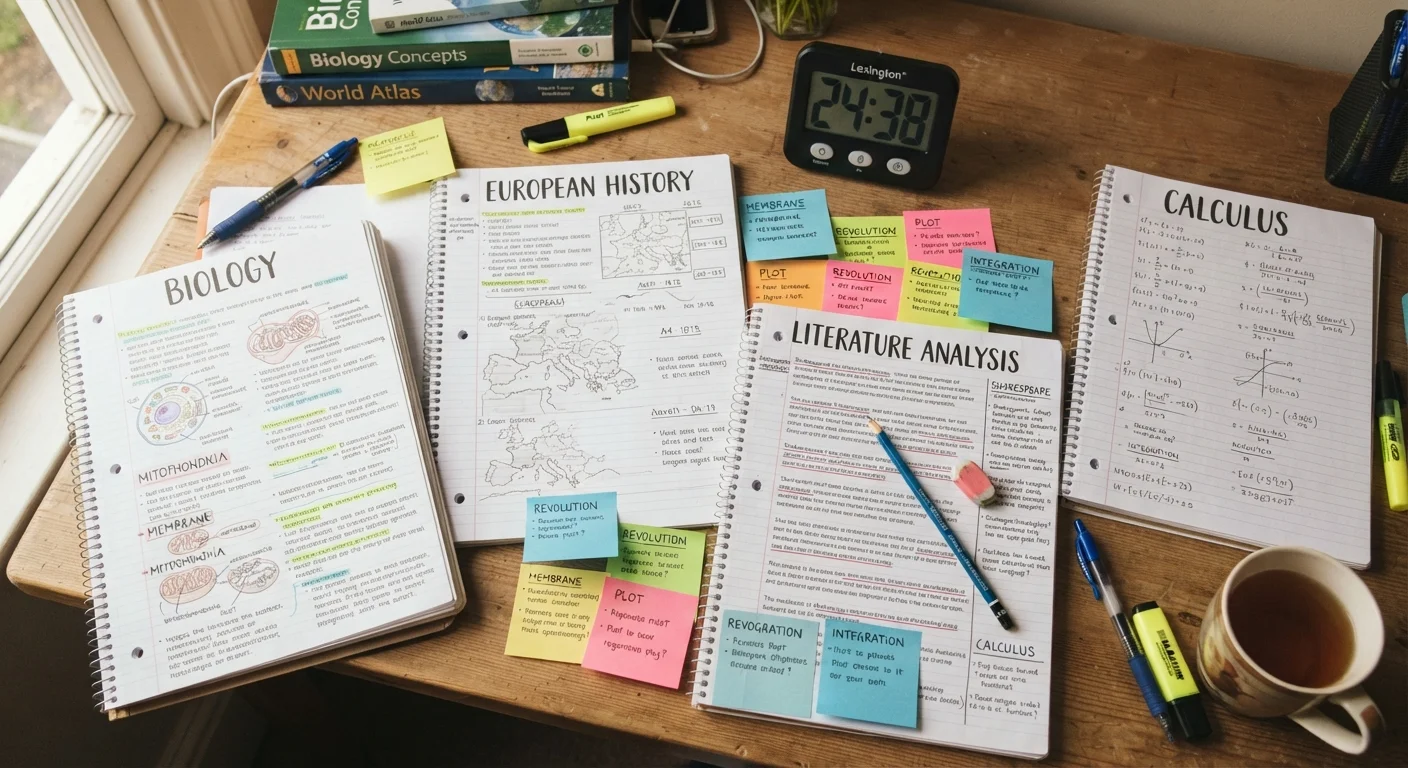
Photo: ResultsExplorer.com | Top Blogs For Everyone editorial
Key Takeaways
- Interleaved practice means switching between topics within a single session, not studying one subject at a time.
- Research consistently shows interleaving improves long-term retention and ability to apply knowledge flexibly.
- The initial difficulty of interleaving is a feature, not a flaw — struggle promotes deeper learning.
- Pairing interleaving with spaced repetition creates a powerful combined study strategy.
- You can apply interleaved practice to almost any subject, from math to languages to professional skills.
Why Interleaving Works — and Why It Feels Wrong
Interleaved practice means studying multiple topics or problem types within a single session by rotating between them, rather than completing all practice on one topic before moving to the next (called blocked practice). Decades of cognitive science research support interleaving as one of the most effective study strategies for building durable, flexible knowledge — yet most people find it uncomfortable precisely because it works differently from what feels natural.
When you block-study, each new problem feels easy because your brain is still warm from the last one. That fluency is deceptive: it reflects short-term accessibility, not long-term learning. Interleaving breaks that warm-up advantage, forcing your brain to retrieve and reconstruct the relevant approach each time you return to a topic. This extra effort — what researchers sometimes call desirable difficulty — strengthens the memory trace and improves your ability to distinguish between problem types, a skill that pays off enormously on tests and in practical application.
If you've relied on highlighting or re-reading, you may already know these habits feel productive but underdeliver. Research-backed alternatives to common study myths consistently point to active, varied practice — and interleaving is one of the clearest examples.
Harder Isn't a Sign You're Doing It Wrong
What You'll Need Before You Start
Getting the most from interleaved practice requires a small amount of upfront organization. You don't need special tools, but having your materials ready before a session eliminates friction that can derail topic-switching.
What you will need
Timer
Keeps topic-switching intervals consistent so you don't drift into extended blocked practice.
Subject-separated notebooks or digital folders
Allows you to quickly move between topics without searching for materials mid-session.
Flashcard app (e.g., any spaced-repetition tool)
Lets you interleave review cards from multiple topics automatically during review sessions.
Weekly study planner
Helps you map interleaved sessions across the week alongside rest and single-subject deep dives.
Interleaving pairs naturally with other evidence-based strategies. For example, combining it with spaced rather than massed practice amplifies retention gains significantly. And because interleaving demands genuine mental effort, it complements deliberate practice principles — the focus on purposeful challenge rather than mindless repetition.
How to Apply Interleaved Practice Step by Step
Follow these steps to restructure your study sessions around interleaving. The method applies to academic subjects, professional certifications, language learning, and most skill-building contexts.
List and group your study topics
Write down every subject or subtopic you are currently working on. Then group them into two or three clusters of conceptually related material. For example, if you are studying algebra, geometry, and trigonometry, those form one natural cluster. If you are also studying Spanish vocabulary and grammar, that is a second cluster. You will interleave within each cluster — not across unrelated ones.
Set fixed time intervals for each topic
Decide how long you will spend on each topic before switching — typically 15 to 25 minutes works well for most learners. Set a timer. When it goes off, stop mid-problem if necessary and move to the next topic. The act of returning to an incomplete problem later is itself a memory-strengthening event, so stopping mid-task is not wasted time.
Rotate through topics within a single session
Work through Topic A, then Topic B, then Topic C, then return to Topic A — and so on. This rotation is the core of interleaved practice. Each return to a topic forces you to reconstruct context rather than continuing from a warm mental state, which strengthens long-term memory encoding. A 60-minute session might look like: Topic A (20 min) → Topic B (20 min) → Topic A (20 min).
Use problems or questions, not passive reading
Interleaving works best when each topic segment involves active retrieval or problem-solving — answering practice questions, working through exercises, or explaining concepts from memory. Passive re-reading during interleaved sessions captures far less benefit. If your material doesn't come with built-in questions, write your own or use the elaborative interrogation method to generate them.
Schedule interleaved sessions within a broader weekly plan
Interleaving works best when embedded in a thoughtful weekly schedule. Alternate interleaved sessions with occasional single-topic deep dives for new or especially challenging concepts. Use a weekly study plan to map out which days you interleave and which days you focus. Spread sessions across the week rather than clustering them — this pairs interleaving with the benefits of spaced practice.
Track your progress and adjust
After two weeks, review your performance on practice tests or quizzes across all interleaved topics. Most learners notice that initial session performance feels lower but quiz scores improve over time — this is the interleaving effect in action. If a topic is still weak after consistent interleaving, add more retrieval practice for that specific area rather than abandoning the method.
Combine Interleaving With Active Recall
Common Pitfalls and How to Avoid Them
The most frequent mistake is abandoning interleaving too soon. Because it feels harder than blocked study, many learners interpret the difficulty as a sign the method isn't working and revert to comfortable habits. Give interleaving at least two to three weeks before evaluating it based on quiz or test performance — not on how smooth sessions feel.
Don't Interleave Unrelated Material Randomly
A second common pitfall is interleaving without sufficient foundational knowledge of any topic. If a subject is completely new, spend one or two initial sessions on it in blocked mode to build a basic foothold before introducing it into rotation. Interleaving works best when you have at least a surface-level understanding of each topic you're mixing.
Finally, consider how interleaving connects to broader skill development. When topics are intentionally related — for example, practicing complementary abilities together — you may also benefit from the effects described in skill stacking, where related competencies reinforce each other over time.
The content provided on our blog site traverses numerous categories, offering readers valuable and practical information. Readers can use the editorial team’s research and data to gain more insights into their topics of interest. However, they are requested not to treat the articles as conclusive. The website team cannot be held responsible for differences in data or inaccuracies found across other platforms. Please also note that the site might also miss out on various schemes and offers available that the readers may find more beneficial than the ones we cover.