
Tracking Every Pound You Spend: Practical Ways to Do It

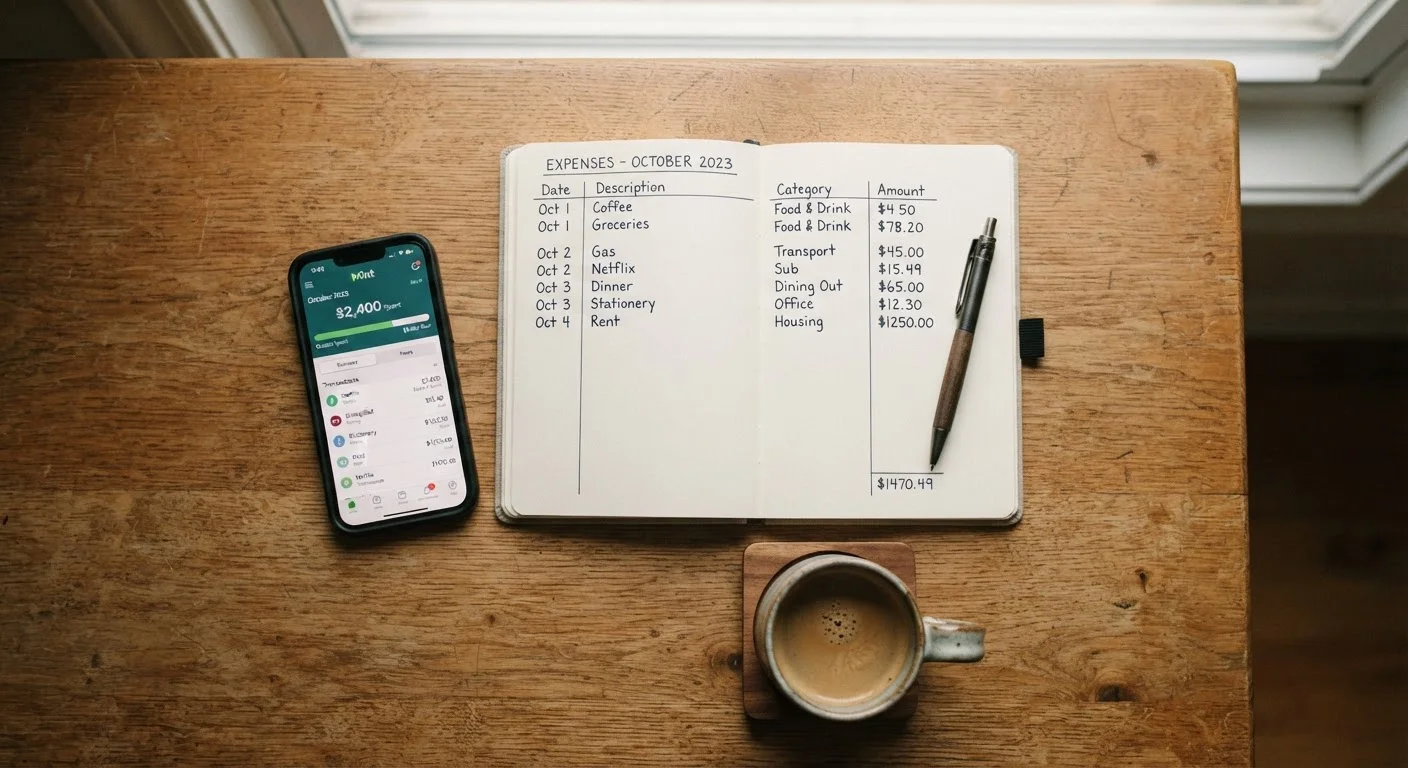
Photo: ResultsExplorer.com | Top Blogs For Everyone editorial
Key Takeaways
- Tracking spending is the essential first step before building any budget or savings plan.
- Multiple methods work — bank apps, spreadsheets, notebooks — and the best one is whichever you'll actually use.
- Even rough tracking reveals patterns that meaningfully shift how you make decisions with money.
- Reviewing records weekly rather than monthly catches problems early and keeps habits on track.
- Irregular expenses like subscriptions and car costs are easy to miss without a deliberate system.
Why Tracking Spending Is the Starting Point
Most people have a rough sense of where their money goes — but a rough sense isn't the same as the full picture. Irregular expenses, small daily purchases, and forgotten subscriptions quietly drain accounts in ways that only become visible once you start recording transactions deliberately.
Tracking spending doesn't require perfection. It requires consistency. When you know exactly what's leaving your account each week, you gain the foundation for every other financial decision — from setting savings targets to deciding whether a recurring expense is worth keeping. Before you can build a workable budget, you need this baseline data. The Monthly Budget Setup Checklist walks through how to use that data once you have it.
This article covers the main tracking methods available, how to set each one up, and how to build a simple weekly review habit that keeps the system running.
What you will need
Choosing Your Tracking Method
No single method suits everyone. The right choice depends on your comfort with technology, how many accounts you manage, and how much detail you want to capture. Below are the three most practical approaches for beginners.
Bank and Card App Categorisation
Many financial institutions now offer built-in spending categorisation in their mobile apps. Transactions are automatically sorted into groups — groceries, transport, dining — giving you a near-real-time view without manual data entry. The limitation is that cash spending won't appear, and automatic categories are sometimes inaccurate.
Spreadsheets
A simple spreadsheet — whether in Google Sheets or a similar tool — gives you full control over categories and layout. You enter transactions manually or paste them from a downloaded bank statement. This method suits people who want to customise their tracking closely. For a deeper look at how spreadsheets compare with dedicated apps, see Spreadsheet vs. Budgeting App: Which Actually Helps You More?.
Pen and Paper
A small notebook carried throughout the day remains one of the most reliable tracking tools available. Writing a purchase down immediately after making it creates a moment of awareness that digital methods can lack. It requires discipline, but for people who find apps distracting or impersonal, it works well.
Bank or credit card mobile app
Automatically categorises transactions and provides a spending overview without manual data entry.
Spreadsheet (e.g. Google Sheets)
Provides a fully customisable ledger for manually recording and categorising transactions.
Small notebook and pen
Allows immediate, on-the-spot recording of purchases, including cash transactions.
Printed or downloaded bank statements
Used to backfill the past two to four weeks of transactions when setting up your tracking system.
Step-by-Step: Setting Up Your Tracking System
Whichever method you choose, the setup process follows a similar logic. Work through these steps to get your system running within a single sitting.
List every account and payment method you use
Write down all the places money flows from: current accounts, savings accounts used for spending, credit cards, and any cash you withdraw regularly. This ensures nothing is invisible from the start. Missing even one account creates a blind spot that distorts your overall picture.
Set up your chosen tracking format
Create your notebook section, open a new spreadsheet, or configure your bank app's categorisation. If using a spreadsheet, create columns for: date, merchant, amount, and category. Keep the category list short to start — aim for six to eight broad groups such as Housing, Food, Transport, Health, Entertainment, and Miscellaneous.
Enter the last two to four weeks of transactions
Download or review your bank statements for the most recent two to four weeks and enter every transaction into your chosen format. This gives you an immediate baseline rather than starting with a blank record. If you use multiple accounts, work through each one in turn.
Identify any recurring or subscription charges
Scan the transactions you've just entered for recurring charges — streaming services, gym memberships, software subscriptions, insurance premiums, and annual fees. List these separately. Recurring costs are easy to overlook because they become background noise, yet they can represent a significant portion of monthly spending.
Record new transactions as they happen
From today forward, log each transaction as close to the time of purchase as possible. For digital methods, a brief note in your phone immediately after paying is usually enough to prompt accurate entry later. For pen and paper, write the amount and merchant in your notebook before you leave the shop or finish the online checkout.
Building a Weekly Review Habit
A tracking system only creates value when you look at the data. Set aside ten to fifteen minutes each week — the same day and time every week works best — to review what you've recorded. Ask yourself three simple questions: Did anything surprise me? Are any categories higher than expected? Is there anything I can cut without noticing?
Weekly reviews also give you a chance to catch tracking gaps early. A missing week of data is much easier to reconstruct from bank statements than a missing month. Over time, these reviews build genuine financial self-awareness rather than just a log of numbers.
Once you're comfortable with your weekly rhythm, you'll naturally start to notice which spending categories consistently catch beginners off guard. The article Spending Categories That Beginners Consistently Underestimate is worth reading alongside your first few reviews.
When your tracking feels stable, the next step is putting those insights toward concrete goals. The Saving & Goals section covers how to move from awareness to action.
This article is for general informational and educational purposes only and does not constitute personalised financial advice. Consider consulting a qualified financial professional for guidance specific to your circumstances.
The content provided on our blog site traverses numerous categories, offering readers valuable and practical information. Readers can use the editorial team’s research and data to gain more insights into their topics of interest. However, they are requested not to treat the articles as conclusive. The website team cannot be held responsible for differences in data or inaccuracies found across other platforms. Please also note that the site might also miss out on various schemes and offers available that the readers may find more beneficial than the ones we cover.