
Credit Score Myths That Keep People Making Poor Borrowing Decisions

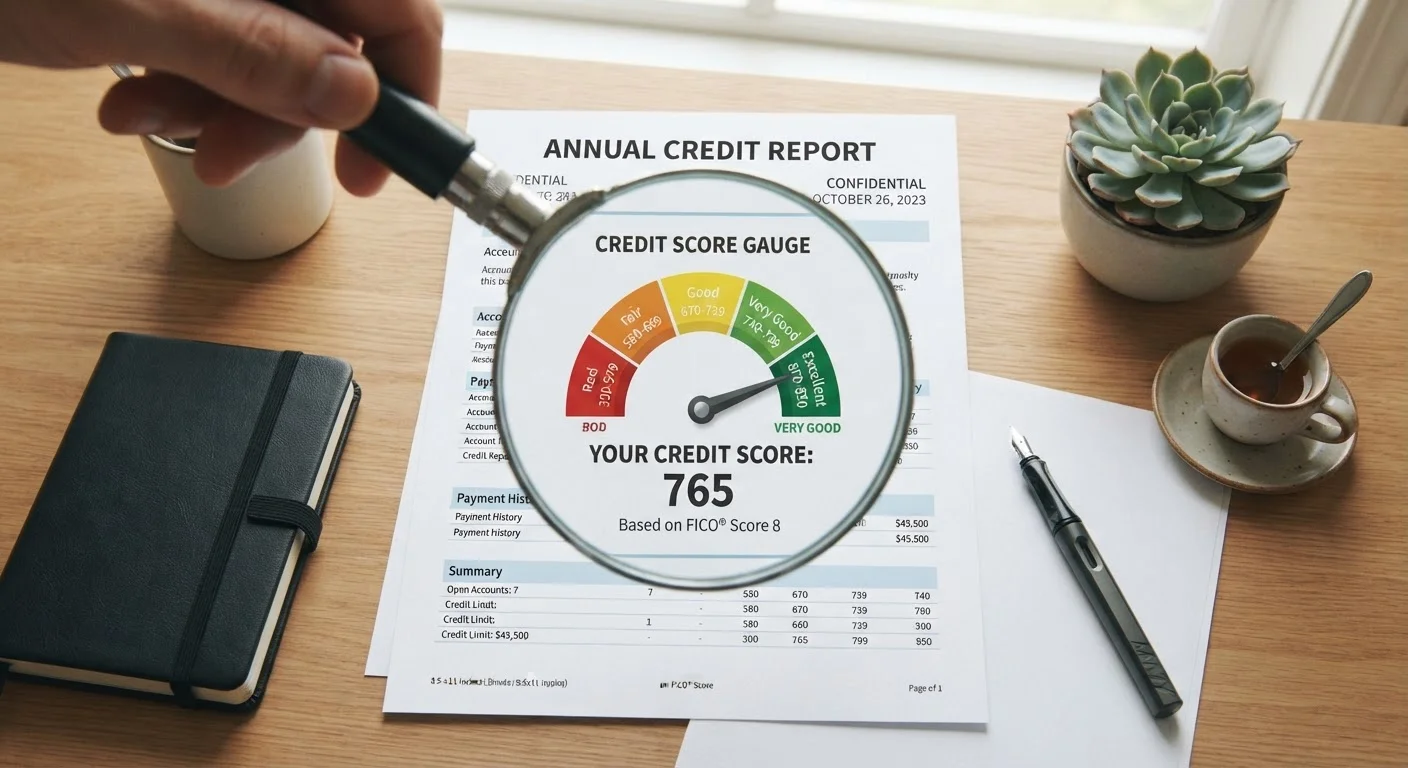
Photo: ResultsExplorer.com | Top Blogs For Everyone editorial
Key Takeaways
- Checking your own credit score is a soft inquiry and never lowers your score.
- Carrying a credit card balance does not build credit and costs you money in interest.
- Closing an old credit card can reduce your score by shrinking your available credit.
- Income is not a factor in credit score calculations — only borrowing behavior matters.
- Multiple hard inquiries for the same loan type are often bundled into one within a short window.
Why Credit Score Myths Are Costly
Misinformation about credit scores doesn't just cause confusion — it leads to real financial decisions that cost money and damage borrowing power over time. Consumers who avoid checking their own scores miss errors that can take months to correct. Those who carry balances to 'build credit' pay unnecessary interest. Those who close old accounts in the name of simplicity inadvertently raise their utilization ratio.
The good news: most credit score mechanics are predictable once you understand the rules. This article corrects the most persistent myths so you can make borrowing decisions based on how credit actually works — not how people assume it does.
This content is for general educational purposes and is not personalized financial advice. For guidance specific to your situation, consult a licensed financial professional.
Myth
Checking your own credit score will lower it.
Fact
Checking your own score is a 'soft inquiry' and has zero effect on your credit score.
This myth stops many people from monitoring their own credit — which is exactly the opposite of what they should do. Credit inquiries come in two types: soft and hard. When you check your own score through a credit bureau or a monitoring service, it registers as a soft inquiry. Soft inquiries are invisible to lenders and have no impact on your score whatsoever.
Hard inquiries — the kind triggered when a lender pulls your file in response to a credit application — can cause a small, temporary dip. Knowing the difference lets you check your score freely and catch errors early.
Myth
You need to carry a balance to build credit.
Fact
Paying your balance in full every month builds credit just as effectively — without the interest costs.
This is one of the most financially damaging myths in circulation. Credit scores are built by demonstrating responsible use of credit over time — not by paying interest to a lender. What matters to scoring models is that you use your card, that the activity is reported to the bureaus, and that you pay on time.
Carrying a balance month to month costs you interest and raises your credit utilization ratio (the percentage of available credit you're using), which can actually hurt your score if it climbs above roughly 30%. See how interest compounds on a carried balance to understand the full cost of this myth.
Myth
Closing a credit card you don't use anymore is always a smart move.
Fact
Closing a card can reduce your available credit and shorten your credit history, potentially lowering your score.
Tidying up by canceling unused cards feels responsible, but it can backfire. When you close an account, you lose that card's credit limit from your total available credit. If you have balances on other cards, your utilization ratio immediately rises — and a higher ratio typically means a lower score.
Additionally, if the closed card was one of your older accounts, losing it can shorten your average account age, another factor in scoring models. Understand what actually happens when a card closes before making that call.
Myth
Your income directly affects your credit score.
Fact
Income is not part of any credit score calculation — only how you manage borrowed money matters.
It's a logical assumption: more income should mean better credit, right? In reality, FICO and VantageScore models — the two most widely used scoring frameworks — do not consider your salary, employment status, or net worth. Your score is built entirely from your borrowing history: payment timeliness, amounts owed, length of credit history, types of credit, and new credit applications.
A high earner who misses payments will have a lower score than a modest earner who pays every bill on time. See exactly how each scoring factor is weighted to understand what lenders actually see.
Myth
Multiple loan inquiries always damage your credit score significantly.
Fact
Most scoring models bundle multiple inquiries for the same loan type within a short window into a single inquiry.
Consumers sometimes avoid shopping around for mortgage or auto loan rates out of fear of tanking their score. This is largely unfounded. Scoring models recognize that rate-shopping is a normal and smart consumer behavior. Multiple hard inquiries for mortgages, auto loans, or student loans made within a 14- to 45-day window (the exact range depends on the model) are typically treated as a single inquiry.
The practical takeaway: comparison shopping for a loan within a focused time period is generally safe. Applying for several different types of credit — a card here, a personal loan there — over a longer stretch is a different matter and can add up.
Making Smarter Credit Decisions Going Forward
Correcting these myths is the first step. The next is building consistent habits that reflect how scoring models actually work: pay on time, keep utilization low, and avoid unnecessary applications. Subtle behaviors that quietly erode a good score are worth reviewing once the major myths are out of the way.
1 in 5
Americans with a credit report error
According to a Federal Trade Commission study, roughly one in five consumers had an error on at least one of their three major credit reports.
30%
Credit utilization threshold commonly cited
Most credit scoring guidance recommends keeping your credit utilization ratio below 30% of your total available credit to avoid score impact.
35%
Share of FICO score from payment history
Payment history is the single largest factor in a standard FICO score calculation, underscoring why on-time payments matter more than almost anything else.
There are also lesser-known scoring factors most guides overlook that can make a difference at the margin. And if you want a comprehensive foundation, a full overview of how debt and credit work together covers the complete picture in one place.
Credit myths rarely exist in isolation — they often travel alongside savings and budgeting misconceptions. If you recognize any of the patterns above, it may be worth checking common savings myths that operate the same way. Accurate information in one area tends to reinforce better decisions across the board. And when you're ready to evaluate taking on new debt deliberately, principles for borrowing without regret provide a practical framework.
The content provided on our blog site traverses numerous categories, offering readers valuable and practical information. Readers can use the editorial team’s research and data to gain more insights into their topics of interest. However, they are requested not to treat the articles as conclusive. The website team cannot be held responsible for differences in data or inaccuracies found across other platforms. Please also note that the site might also miss out on various schemes and offers available that the readers may find more beneficial than the ones we cover.