
Habits That Quietly Erode a Good Credit Score Over Time

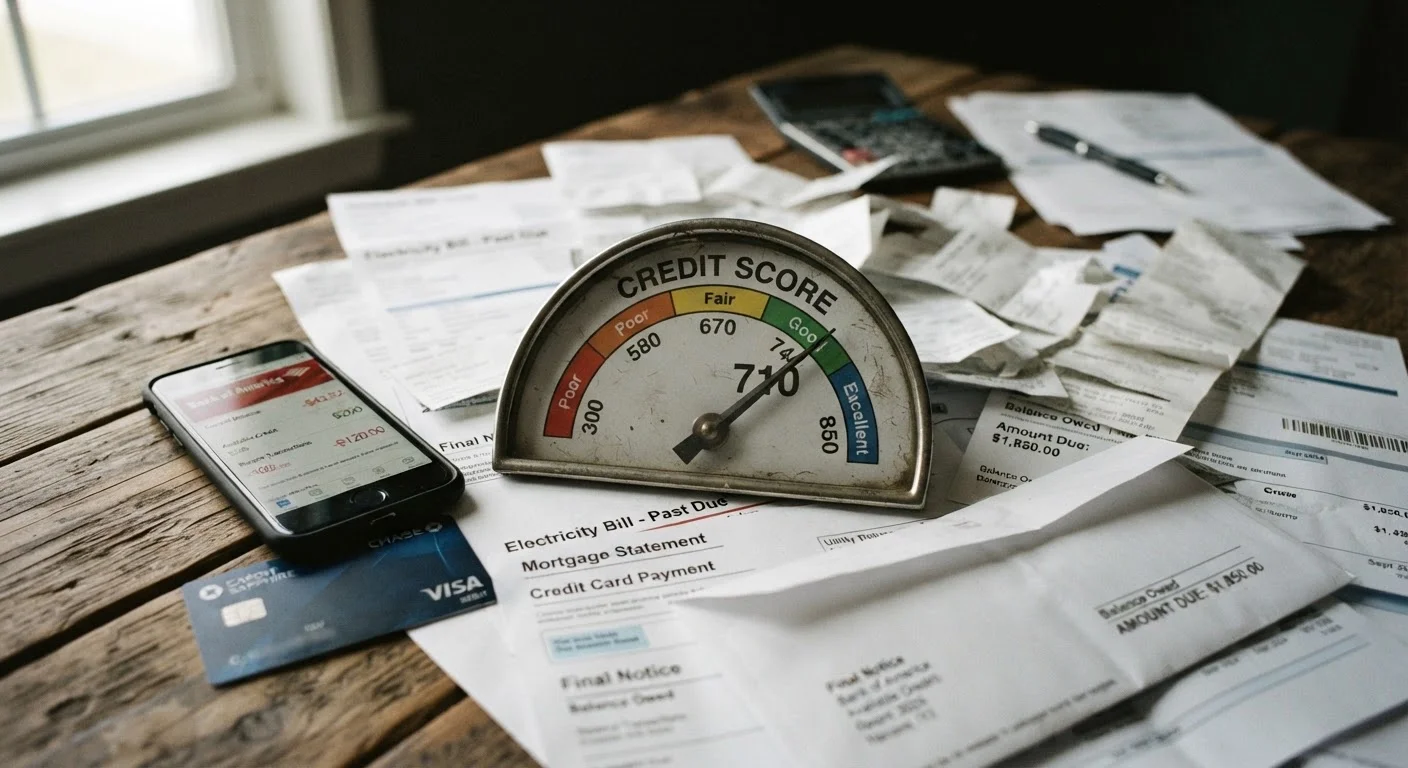
Photo: ResultsExplorer.com | Top Blogs For Everyone editorial
Key Takeaways
- Closing old credit cards can shorten your credit history and raise your utilization ratio.
- Making only minimum payments signals risk to lenders and keeps balances high longer.
- Applying for multiple new credit accounts in a short window triggers several hard inquiries.
- Letting small unpaid bills go to collections can cause significant, lasting score damage.
- Ignoring your credit report means errors can silently lower your score for years.
Why Good Scores Can Quietly Slip
A strong credit score can feel like something you've earned and locked in — but it's more like a garden: neglect it and things start to decline without any single dramatic moment. Many consumers are surprised when a routine financial decision — closing an old card, skipping a small bill — shows up months later as a noticeably lower score.
Credit scores are calculated continuously using five weighted factors: payment history, amounts owed (utilization), length of credit history, new credit, and credit mix. Habits that seem neutral or even responsible can quietly work against one or more of these factors over time. Understanding why these behaviors matter is the first step toward protecting a score you've worked to build.
For a fuller picture of how credit and debt interact, see our end-to-end credit and debt resource.
Closing old or unused credit cards to simplify your finances.
Consistently paying only the minimum amount due each month.
Applying for several new credit accounts within a short time period.
Letting a small overlooked bill — a medical co-pay, a library fine, a forgotten subscription — fall into collections.
Never checking your credit report, leaving errors unchallenged for years.
Co-signing a loan without tracking the primary borrower's payment behavior.
How to Stay Ahead of Score Erosion
The common thread across most of these mistakes is inattention. Credit scores don't send alerts when a habit starts dragging them down — by the time the drop is visible, the damage may already be months old. A few protective practices can make a measurable difference.
35%
Weight of payment history in FICO scores
Payment history is the single largest factor in FICO credit score calculations, according to publicly available FICO scoring methodology.
30%
Credit utilization's share of your FICO score
Amounts owed — primarily your credit utilization ratio — accounts for roughly 30% of a standard FICO score, making high balances a significant risk factor even when payments are on time.
Monitor your credit report regularly. Under federal law, you're entitled to free annual reports from all three major bureaus through AnnualCreditReport.com. Review them for accounts you don't recognize, incorrect late payments, or balances that don't match your records. Disputing errors with the bureau directly is a standard process — and fixing a genuine error can produce a meaningful score improvement.
Automate what you can. Setting minimum-payment autopay on every account eliminates the risk of an accidental missed payment. You can always pay more manually, but the autopay acts as a safety net.
Think twice before opening or closing accounts. If you're considering a new card or thinking about closing one you rarely use, pause to consider the impact on your utilization ratio and average account age. Sometimes doing nothing is the better financial move. There are also lesser-known factors that shape your score that most guides overlook — worth reviewing if you want a complete picture.
Collections Accounts Can Linger for Years
Finally, if you encounter persistent myths about credit — like the idea that carrying a small balance improves your score — our companion piece on credit score myths separates fact from fiction with evidence-backed explanations.
This article is for general informational and educational purposes only and does not constitute personalized financial or credit advice. For guidance specific to your situation, consult a qualified financial professional.
The content provided on our blog site traverses numerous categories, offering readers valuable and practical information. Readers can use the editorial team’s research and data to gain more insights into their topics of interest. However, they are requested not to treat the articles as conclusive. The website team cannot be held responsible for differences in data or inaccuracies found across other platforms. Please also note that the site might also miss out on various schemes and offers available that the readers may find more beneficial than the ones we cover.