
Credit Scores Decoded: What the Number Actually Measures

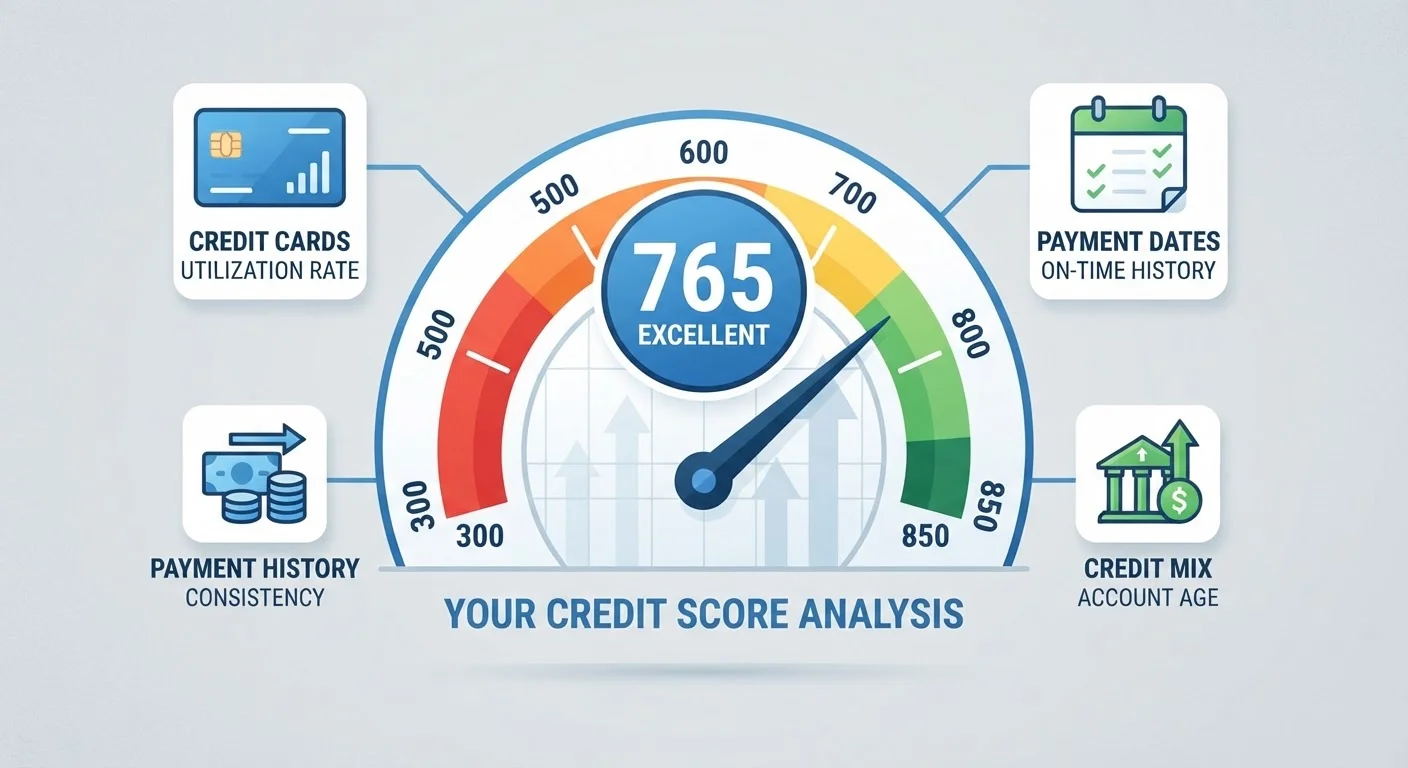
Photo: ResultsExplorer.com | Top Blogs For Everyone editorial
Key Takeaways
- Payment history is the single most influential factor, making up roughly 35% of a FICO Score.
- Credit utilization — how much of your available credit you're using — accounts for about 30% of your score.
- Longer credit histories generally produce higher scores, all else being equal.
- Opening several new accounts in a short period can temporarily lower your score.
- Your score is calculated from credit report data, so errors on your report can drag down your number.
- No single action guarantees a specific score; the model rewards consistent, responsible behavior over time.
Why a Three-Digit Number Carries So Much Weight
When you apply for a mortgage, car loan, or credit card, lenders face a fundamental question: will this person pay back what they borrow? Reviewing every applicant's full financial history in detail is impractical, so the industry has standardized around credit scores — a compressed, data-driven snapshot of your borrowing track record.
Think of it as a financial fingerprint. It doesn't capture your income, your savings, or your character — only how you've handled debt obligations reported to the three major credit bureaus: Equifax, Experian, and TransUnion. That narrow focus is both the score's strength and its limitation.
For a deeper look at the terminology you'll encounter throughout this process, see our plain-English credit glossary covering key terms like APR, utilization, and hard inquiries.
35%
Weight of payment history in FICO Score
According to FICO's published scoring model breakdown, on-time payment behavior is the single largest contributor to your credit score.
300–850
Standard FICO Score range
The FICO Score scale used by most U.S. lenders spans from 300 (highest risk) to 850 (lowest risk), with the national average historically falling in the 'good' range.
7 years
How long most negative items stay on record
Under the Fair Credit Reporting Act, most derogatory marks such as late payments and collections remain on a credit report for up to seven years from the date of the original delinquency.
The Five Factors Inside Your FICO Score
The FICO model — the scoring standard used in the vast majority of U.S. lending decisions — breaks down into five weighted categories:
- Payment History (≈35%): Whether you pay on time is the single largest factor. Even one missed payment, particularly a recent one, can noticeably lower your score.
- Amounts Owed / Credit Utilization (≈30%): This measures how much of your available revolving credit you're using. Using a high percentage of your credit limits — generally above 30% — signals financial strain to lenders.
- Length of Credit History (≈15%): Older accounts and a longer average account age work in your favor, because they give lenders more data to assess your patterns.
- Credit Mix (≈10%): Having a variety of account types — revolving credit like cards plus installment loans like car payments — can modestly boost a score.
- New Credit / Recent Inquiries (≈10%): Applying for multiple new accounts in a short window can suggest financial distress and temporarily ding your score.
These percentages are approximate and can shift based on the specifics of your credit profile. For factors that don't always make the headlines, our article on lesser-known credit score influences fills in the gaps.
Keep Utilization Below 30% — Lower Is Better
How Lenders Actually Use the Number
Lenders don't just use your score as a binary pass/fail switch. They typically slot borrowers into risk tiers that correspond to different interest rates, credit limits, and product eligibility. A borrower with a score of 760 might qualify for a mortgage rate noticeably lower than someone at 680 — even if both are technically approved.
Beyond interest rates, credit scores affect security deposit requirements for apartments, and in some states, employers in certain industries may review credit as part of background screening. This is why understanding what your score measures — and what it doesn't — matters well beyond the lending context.
Your score is only as accurate as the underlying data. Errors in your credit report can drag down a score unfairly. The first-timer's walkthrough of your credit report explains how to read each section and spot mistakes worth disputing.
Building and Maintaining a Strong Score
No shortcut produces a high credit score overnight — the model is designed to reward consistency over time. That said, certain habits have an outsized positive effect:
- Pay every bill on time, every time. Set up autopay for at least the minimum due if you're prone to forgetting.
- Keep revolving balances low. Paying down card balances reduces your utilization ratio, which can improve your score relatively quickly compared to other factors.
- Don't close old accounts unnecessarily. Closing a longtime account shortens your average credit age and reduces your available credit, both of which can hurt your score.
- Apply for new credit selectively. Each hard inquiry leaves a small mark; multiple applications in a short period compound that effect.
Common misconceptions — like the idea that carrying a credit card balance builds credit faster — can lead people to make decisions that actually hurt their scores. Our companion piece on credit score myths addresses the most persistent ones with evidence-based corrections.
For a broader view of how credit scores fit into the larger picture of debt management, the comprehensive debt and credit resource covers repayment strategies and more in one place.
This article is for general informational and educational purposes only and does not constitute personalized financial or legal advice. Consult a qualified financial professional for guidance specific to your situation.
Frequently Asked Questions
The content provided on our blog site traverses numerous categories, offering readers valuable and practical information. Readers can use the editorial team’s research and data to gain more insights into their topics of interest. However, they are requested not to treat the articles as conclusive. The website team cannot be held responsible for differences in data or inaccuracies found across other platforms. Please also note that the site might also miss out on various schemes and offers available that the readers may find more beneficial than the ones we cover.