
Positive Reinforcement in Dog Training: The Evidence Behind the Method

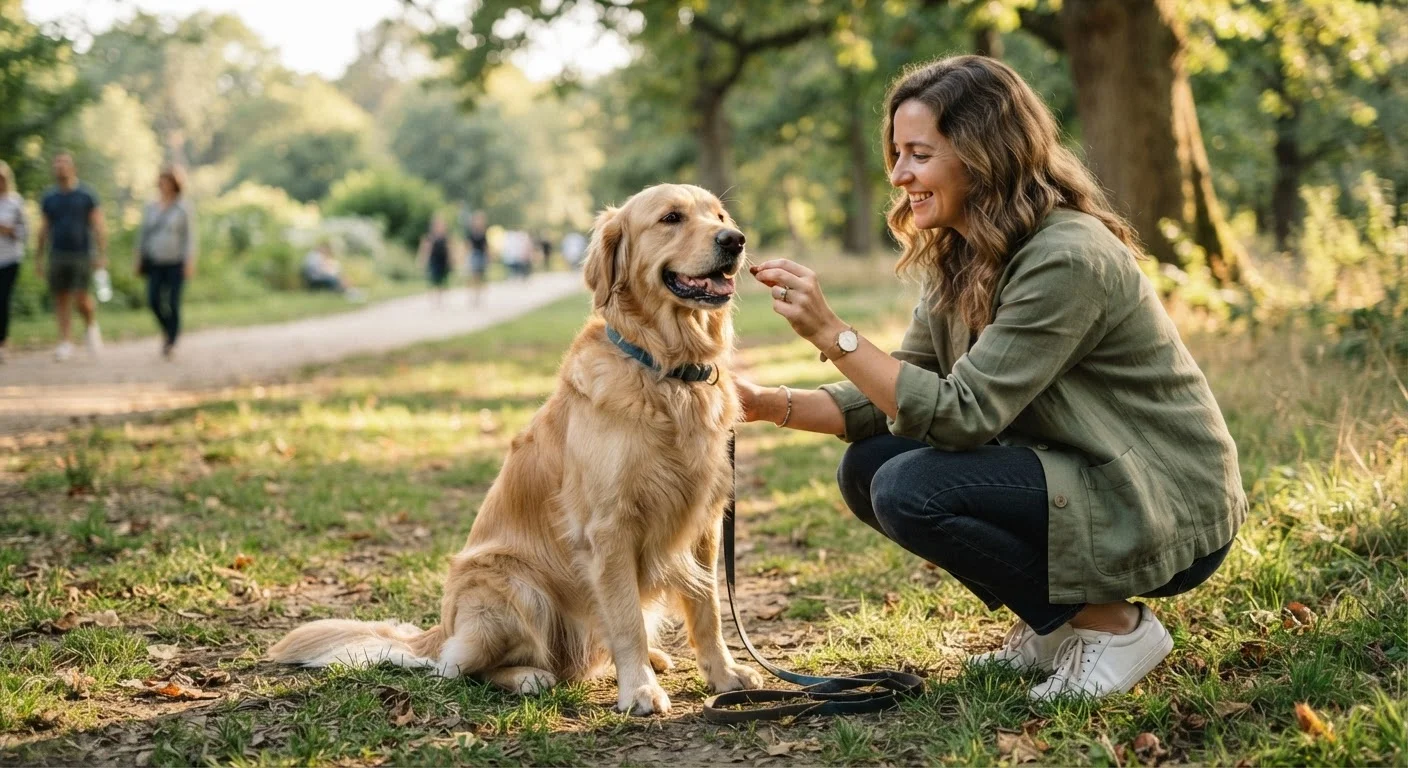
Photo: ResultsExplorer.com | Top Blogs For Everyone editorial
Key Takeaways
- Positive reinforcement is backed by decades of behavioural science and is endorsed by major veterinary and animal behaviour organisations.
- Timing and consistency are critical — rewards must follow the desired behaviour within seconds to be effective.
- Aversive training methods carry documented risks including increased fear, aggression, and damaged trust.
- Short, frequent sessions outperform long infrequent ones at every life stage.
- Reinforcement works best when matched to what individually motivates each dog — treats, play, or praise.
Why Behavioural Science Points to Reward-Based Training
Positive reinforcement is rooted in operant conditioning — the learning principle, established by psychologist B.F. Skinner, which holds that behaviours followed by rewarding outcomes are more likely to be repeated. Applied to dogs, this means that when a sit earns a treat, the dog learns that sitting pays off. The behaviour strengthens because it produces something the animal values.
This is not a training fad. The American Veterinary Society of Animal Behavior, the American Animal Hospital Association, and the International Association of Animal Behavior Consultants all endorse reward-based methods as the professional standard, explicitly cautioning against punishment-based approaches. Peer-reviewed research consistently supports this consensus: a 2020 study published in PLOS ONE found that dogs trained with aversive methods showed higher stress indicators — including increased cortisol, lowered body posture, and more stress-related behaviours — compared to those trained with positive reinforcement.
Understanding the science empowers owners to train with confidence rather than guesswork.
Core Best Practices for Positive Reinforcement
Applying reward-based training effectively requires more than simply handing out treats. The following practices reflect what the evidence consistently supports.
Deliver rewards within two seconds of the desired behaviour
Use high-value rewards for new or difficult behaviours
Keep training sessions short and frequent rather than long and infrequent
Gradually fade lure reliance and shift to random reward schedules
Train behaviours in multiple environments to build true generalisation
Getting Started: Quick Actions That Make an Immediate Difference
You do not need to overhaul your entire approach overnight. Several targeted changes can meaningfully improve your training sessions starting today.
For owners working on a common challenge like leash manners, understanding the underlying drive behind the behaviour is just as important as the reward itself. See our guide to why dogs pull on the lead for a deeper look at the mechanics.
Reinforcement, Stress, and the Bigger Picture
Training does not exist in isolation from a dog's emotional state. A dog that is anxious or fearful will struggle to engage, focus, or retain new behaviours — the brain prioritises threat-response over learning. This makes it important to recognise signs of stress before or during sessions. Our companion article on signs your dog may be anxious outlines the subtle cues owners often miss.
“The single most important thing you can do is make training a pleasant experience for your dog. Animals learn best when they feel safe and the consequences of their choices are clear and predictable.”
— Karen Overall, Veterinary Behaviourist and Applied Animal Behaviour Researcher
Positive reinforcement also builds trust between dog and owner. Consistent, predictable rewards create a training environment where dogs feel safe to experiment and offer behaviours — the foundation of a resilient, adaptable learner. By contrast, unpredictable punishment undermines that safety, making dogs hesitant and less likely to engage willingly.
This article provides general educational information about dog training approaches and is not a substitute for professional advice from a certified animal behaviourist or veterinarian. If your dog displays significant fear, aggression, or other serious behavioural concerns, consult a qualified professional.
The content provided on our blog site traverses numerous categories, offering readers valuable and practical information. Readers can use the editorial team’s research and data to gain more insights into their topics of interest. However, they are requested not to treat the articles as conclusive. The website team cannot be held responsible for differences in data or inaccuracies found across other platforms. Please also note that the site might also miss out on various schemes and offers available that the readers may find more beneficial than the ones we cover.