
Why Dogs Pull on the Lead—and the Science Behind Fixing It

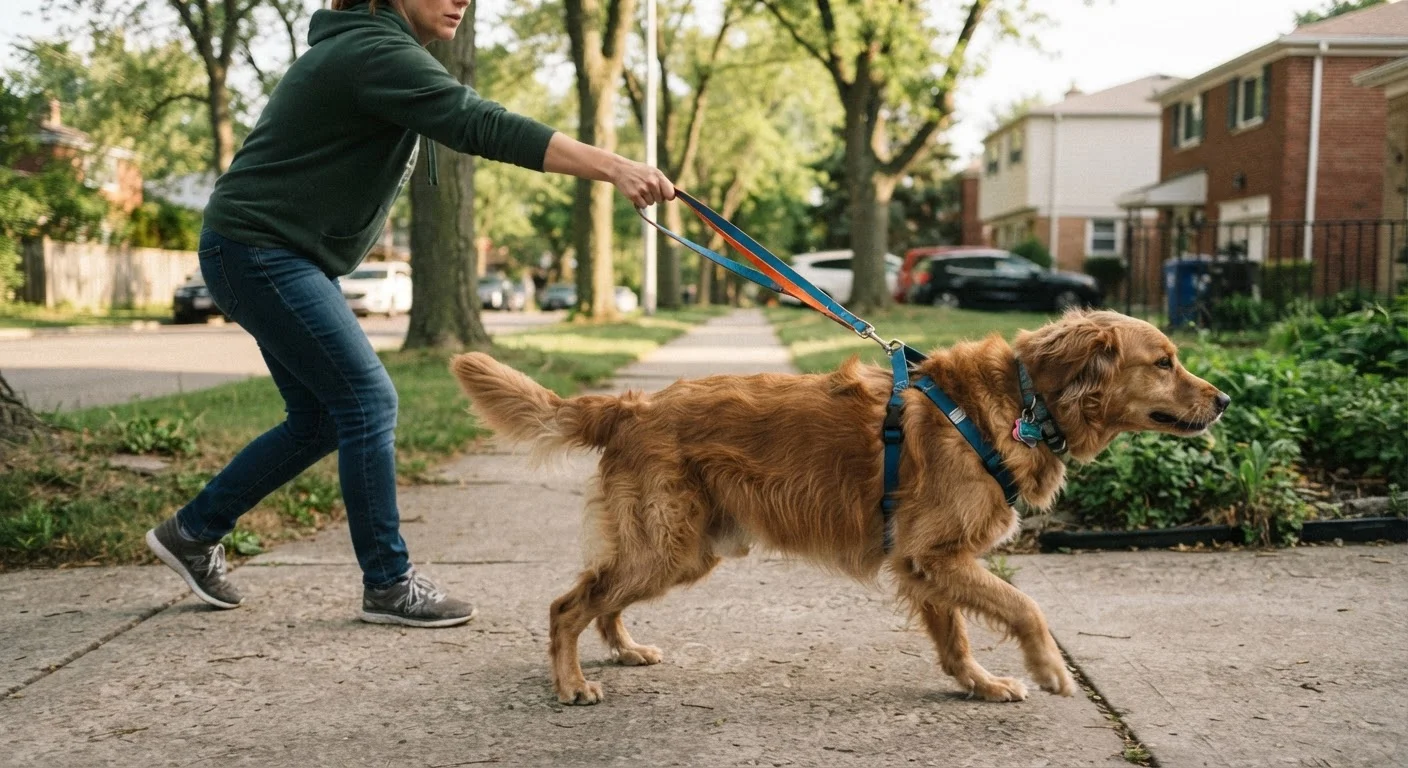
Photo: ResultsExplorer.com | Top Blogs For Everyone editorial
Key Takeaways
- Dogs pull on leashes because forward movement itself rewards the behavior — not out of stubbornness.
- Understanding the reinforcement cycle is the foundation of any effective loose-leash training approach.
- Consistency matters more than any single technique; brief, daily practice outperforms occasional long sessions.
- Aversive tools like choke or prong collars can suppress pulling but often create anxiety or physical harm.
- Harnesses that redirect front-leg movement can help manage pulling while training is underway.
The Real Reason Dogs Pull
Walk out the front door with most dogs and the leash goes taut within seconds. It's easy to interpret this as the dog being poorly mannered or willfully difficult — but that framing misses the actual mechanism at work.
Dogs are naturally faster walkers than humans and arrive at the world through their nose first. When a dog steps outside, it immediately encounters a cascade of olfactory information — scent trails from other animals, food remnants, territorial markings — that compels forward investigation. The dog doesn't know what a leash is for. It knows that moving forward reveals more interesting things.
The critical dynamic is reinforcement. Every time a dog pulls forward and the owner follows — even slightly — the pulling is rewarded. The leash tightens, the owner moves, the dog gets closer to the thing it wants. Repeat this thousands of times across a dog's life and you have a deeply ingrained behavior pattern. This is why well-meaning owners who occasionally let the dog "win" can inadvertently make the problem harder to resolve.
Breed Tendencies Are Real, But Not Destiny
What the Science Says About Training It
Applied behavior analysis gives us a clear picture of why some training approaches work and others don't. The most evidence-supported method for loose-leash walking is differential reinforcement — rewarding the behavior you want (slack leash, attention on owner) while removing the reward for the behavior you don't want (forward movement when tension is applied).
In practice, this usually means stopping the moment the leash tightens and only resuming the walk when the dog returns to a neutral position or offers eye contact. The dog learns that pulling stops forward progress rather than enabling it — a direct inversion of the old reinforcement pattern.
“The dog is not trying to be dominant or disrespectful. The dog is doing what has been reinforced. Change the consequence, and you change the behavior.”
— Dr. Karen Overall, Veterinary behaviorist and author of clinical behavioral medicine texts for small animals
Marker training — using a clicker or a consistent verbal cue the instant the correct behavior occurs, followed immediately by a treat — helps bridge the gap between the behavior and the reward. Timing matters enormously; a reward delivered two seconds late may reinforce whatever the dog happened to be doing in those two seconds, not the loose-leash walking you intended to mark.
It's also worth noting that anxiety can contribute to reactive pulling — dogs that lunge or strain toward other dogs or strangers may be operating from a fear response rather than excitement. Identifying which is at play changes the training approach. For more on reading stress signals, see our guide on recognizing anxiety in dogs.
Common Mistakes That Stall Progress
Even owners committed to training often hit plateaus. Several common errors undercut progress:
- Inconsistency across handlers: If one household member allows pulling while another enforces the training protocol, the dog receives conflicting information. Every walk must follow the same rules.
- Training only in low-distraction environments: A dog that walks beautifully in the backyard may fall apart on a busy street. Generalization requires gradual exposure to increasing levels of distraction.
- Asking for too much too soon: Expecting a pulling dog to walk calmly for 30 minutes in week one is unrealistic. Short training windows — five to ten minutes — with high reward rates build the foundation before duration is extended.
- Relying on equipment as a permanent fix: Front-clip harnesses and head collars can reduce pulling without teaching the dog anything. They are useful management tools but should be paired with active training.
Train Before the Walk, Not During It
If you're also navigating other aspects of your dog's health and behavior, it's worth separating fact from fiction early — some popular beliefs about canine care can lead owners in the wrong direction. Our article on common dog health myths is a good companion read.
Frequently Asked Questions
The content provided on our blog site traverses numerous categories, offering readers valuable and practical information. Readers can use the editorial team’s research and data to gain more insights into their topics of interest. However, they are requested not to treat the articles as conclusive. The website team cannot be held responsible for differences in data or inaccuracies found across other platforms. Please also note that the site might also miss out on various schemes and offers available that the readers may find more beneficial than the ones we cover.