
Where Dog Owners Go Wrong with Portion Sizes

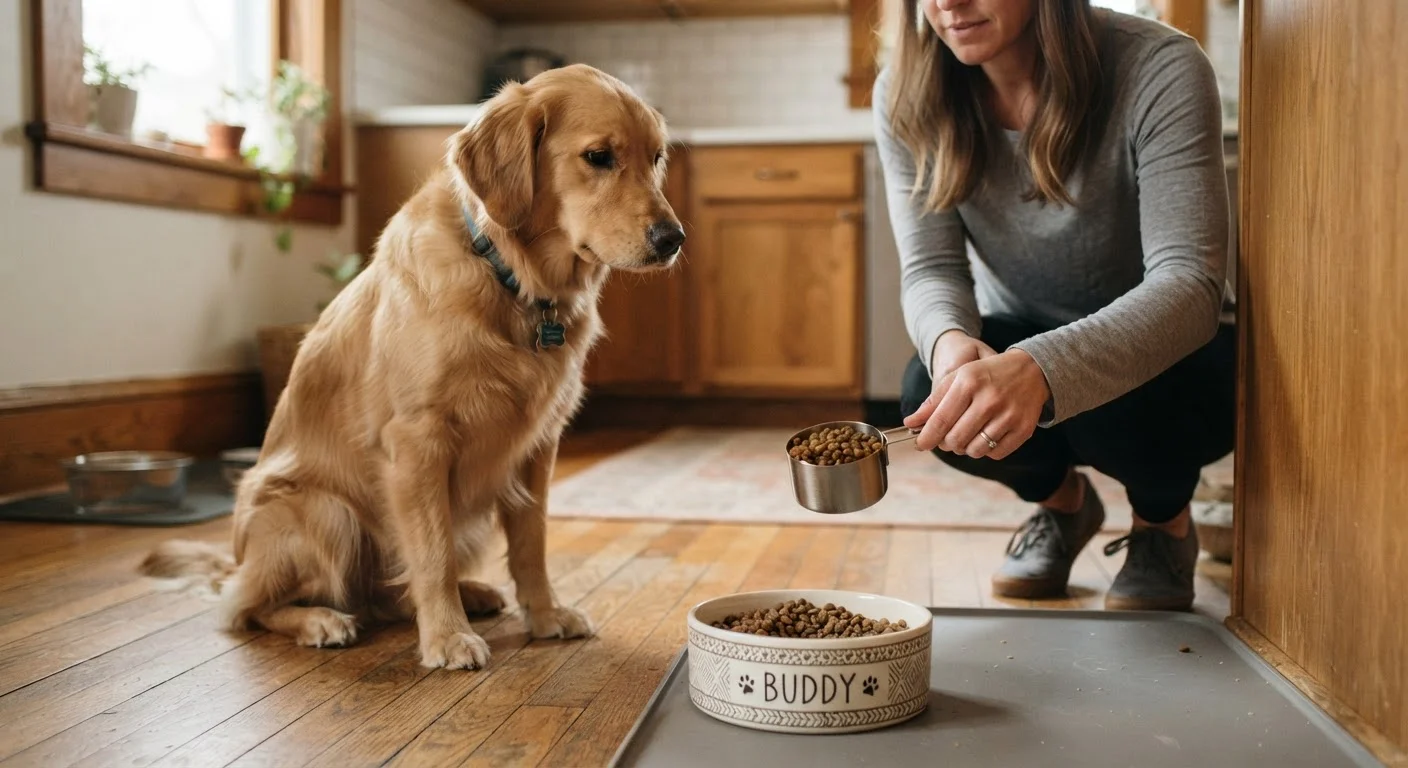
Photo: ResultsExplorer.com | Top Blogs For Everyone editorial
Key Takeaways
- Overfeeding is one of the leading causes of preventable obesity in pet dogs across the US.
- Bag feeding guidelines are general estimates — your dog's actual needs depend on age, weight, and activity level.
- Treats count as calories; most owners significantly underestimate how much treats add to daily intake.
- A veterinarian or veterinary nutritionist can calculate a precise caloric target for your individual dog.
- Switching foods without recalculating portions is a common source of unintended weight gain.
Why Portion Mistakes Are So Easy to Make
Dog owners overwhelmingly want to do right by their pets, yet overfeeding remains one of the most widespread and preventable health problems in companion dogs. Studies by veterinary nutrition researchers have consistently found that more than half of dogs seen in US clinics are overweight or obese — a condition associated with joint disease, diabetes, reduced lifespan, and lower quality of life.
The problem rarely stems from carelessness. It stems from misinformation, optimistic label reading, and habits that feel affectionate but work against a dog's wellbeing. Understanding exactly where owners go wrong is the first step toward correcting course — without guilt and without guesswork.
If you're also navigating a new pet's routine, our guide on bringing a dog home for the first time covers the broader picture of setting healthy habits from day one.
Trusting bag feeding guidelines as a precise prescription.
Eyeballing portions instead of measuring consistently.
Not counting treats and table scraps as part of daily calorie intake.
Keeping the same portion when switching to a new food.
Feeding the same amount throughout a dog's life regardless of age or activity changes.
How to Calibrate Portions That Actually Fit Your Dog
Getting portions right requires treating feeding as a measurable activity, not an intuitive one. Start by asking your veterinarian to assess your dog's body condition score (BCS) — a standardized 9-point scale that evaluates fat coverage over the ribs, waist definition, and abdominal tuck. A BCS of 4–5 is generally considered ideal. From there, your vet can calculate a daily caloric target based on your dog's resting energy requirement (RER) and a multiplier for their life stage and activity level.
Once you have a caloric target, check the kilocalorie (kcal) per cup figure on your food's packaging — not just the feeding chart. This number varies considerably between formulas, and it's the only figure that lets you translate a calorie target into an actual volume of food. A kitchen scale measuring in grams is more reliable than a standard measuring cup, which can vary by up to 20% depending on how densely food is scooped.
56%
US dogs classified as overweight or obese
According to the Association for Pet Obesity Prevention's clinical survey data, more than half of dogs assessed by veterinarians in the US were found to be above ideal body weight.
Up to 20%
Measurement error using a standard cup
Veterinary nutrition research has demonstrated that volume-based measuring cups can under- or over-deliver kibble by up to 20%, depending on scoop technique and kibble size.
Treats need to be factored in as part of total daily intake, not treated as extras. A common veterinary recommendation is that treats should account for no more than 10% of daily calories. For a small or sedentary dog, that can be as few as 20–30 kcal — roughly one or two average commercial treats.
Finally, recheck portions every time you change foods. Caloric density varies significantly between brands and formulas, and a direct swap in cup volume can mean a meaningful caloric difference. For a deeper look at reading food packaging accurately, see our article on reading a nutrition label without getting lost. And if you suspect your dog's weight or appetite is being influenced by beliefs that may not hold up, it's worth reviewing common dog health myths vets wish would disappear for context.
This article is for general informational purposes only and does not constitute veterinary or nutritional advice. Always consult a licensed veterinarian for guidance specific to your dog's health, weight, and dietary needs.
The content provided on our blog site traverses numerous categories, offering readers valuable and practical information. Readers can use the editorial team’s research and data to gain more insights into their topics of interest. However, they are requested not to treat the articles as conclusive. The website team cannot be held responsible for differences in data or inaccuracies found across other platforms. Please also note that the site might also miss out on various schemes and offers available that the readers may find more beneficial than the ones we cover.