
Bird Enrichment: Keeping a Parrot Mentally Stimulated at Home

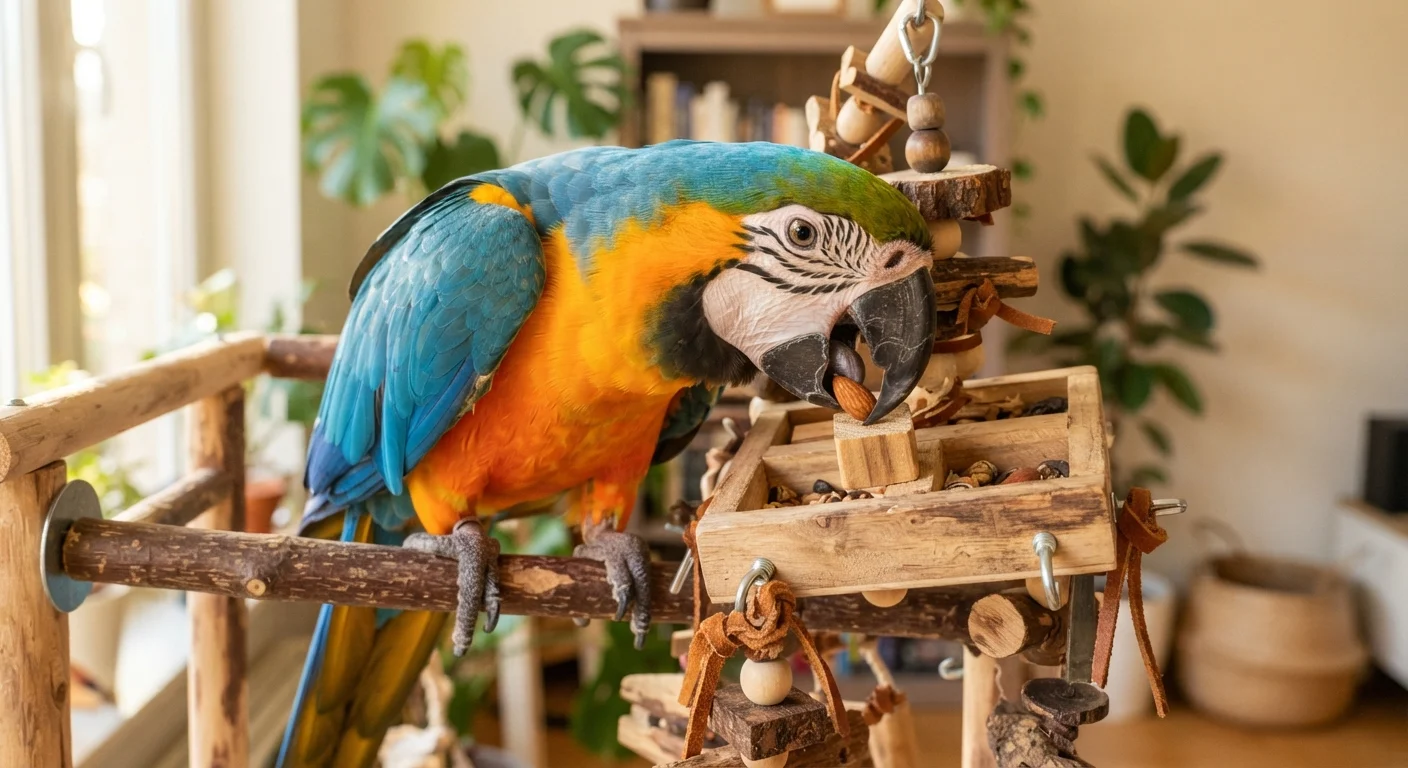
Photo: ResultsExplorer.com | Top Blogs For Everyone editorial
Key Takeaways
- Parrots are highly intelligent animals that require active mental stimulation to prevent stress and destructive behaviors.
- Foraging activities that mimic wild food-finding behavior are among the most effective enrichment strategies.
- Social interaction, training sessions, and environmental variety all contribute to a parrot's cognitive health.
- Rotating toys and activities prevents boredom and maintains a parrot's curiosity over time.
- Signs of under-stimulation include feather destructive behavior, repetitive movements, and excessive vocalization.
Why Mental Stimulation Matters for Parrots
Parrots are among the most cognitively complex animals kept as pets. Species such as African greys, Amazon parrots, cockatoos, and macaws have demonstrated problem-solving abilities, tool use, and emotional responsiveness comparable in some respects to young children. In the wild, these birds spend the majority of their waking hours foraging, navigating social groups, and exploring their environment. A home setting, however enriched, naturally limits these opportunities.
When mental stimulation is inadequate, parrots can develop stress-related behaviors including feather-destructive behavior (sometimes called feather plucking), repetitive pacing or head-bobbing, excessive screaming, and aggression. Avian veterinarians widely recognize that behavioral problems in captive parrots are frequently rooted in under-stimulation rather than disease alone. Enrichment is not an optional luxury — it is a core component of responsible parrot care, on par with diet and veterinary checkups.
For those interested in how enrichment principles apply across species, feline enrichment strategies for indoor cats offer a useful comparison point.
Core Enrichment Practices for Parrots at Home
The following practices form a solid foundation for a mentally healthy parrot. Implement them consistently rather than sporadically for the most meaningful effect.
Incorporate daily foraging activities that require your parrot to work for food.
Schedule short, positive reinforcement-based training sessions every day.
Rotate toys weekly to sustain novelty without overwhelming your bird.
Provide meaningful social interaction every day, not just proximity.
Offer species-appropriate sensory variety including safe sounds and visual stimulation.
Getting Started: Quick Wins for Today
If your parrot's routine has been relatively static, even small changes can produce noticeable improvements in alertness and mood. The actions below require minimal preparation and can be introduced immediately.
“The single most important thing you can do for a captive parrot's welfare is to treat it as the intelligent, socially complex animal it actually is — not as a decorative pet that simply needs feeding.”
— Dr. Irene Pepperberg, Comparative psychologist and pioneering researcher in avian cognition
Building a Sustainable Enrichment Routine
Consistency is what transforms good intentions into genuine behavioral benefit. Structure enrichment into your parrot's daily schedule rather than offering it on impulse. Morning and late afternoon — the times parrots are naturally most active — are ideal for foraging activities and training. Midday can include quieter enrichment such as audio stimulation (nature sounds, calm speech) or window-watching from a safe, supervised perch.
Rotate toys on a weekly basis rather than leaving the same items in the cage indefinitely. Even a toy a parrot previously ignored may become engaging after a period of absence. Keep a small inventory of three to four toy categories — puzzle feeders, shredding toys, foot toys, and foraging wraps — cycling them through.
~60%
Of wild parrot waking hours spent foraging
Behavioral ecology studies of wild parrot populations estimate that food-seeking and processing occupies the majority of active daylight hours across many species.
5–7 years
Typical cognitive development window in large parrots
Avian researchers note that large parrot species such as African greys and macaws continue developing complex cognitive abilities well into their first decade of life.
Diet also intersects with enrichment in important ways. Offering species-appropriate foods in varied presentations — skewered on a stainless steel skewer, wrapped in palm leaves, or hidden in foraging cups — turns mealtime into mental activity. For a detailed breakdown of nutritional needs across small and specialty pets, see our species-by-species nutrition overview.
Finally, track behavioral changes over time. Reduced screaming, improved feather condition, and willingness to engage with new items are positive indicators. Persistent or worsening behavioral concerns — particularly feather-destructive behavior — should always be evaluated by an avian veterinarian to rule out underlying medical causes.
This article is for general informational and educational purposes only. It is not a substitute for professional veterinary advice. Always consult a qualified avian veterinarian for guidance specific to your bird's health and behavior.
The content provided on our blog site traverses numerous categories, offering readers valuable and practical information. Readers can use the editorial team’s research and data to gain more insights into their topics of interest. However, they are requested not to treat the articles as conclusive. The website team cannot be held responsible for differences in data or inaccuracies found across other platforms. Please also note that the site might also miss out on various schemes and offers available that the readers may find more beneficial than the ones we cover.