
Canary vs Budgerigar: How These Popular Pet Birds Differ Day to Day

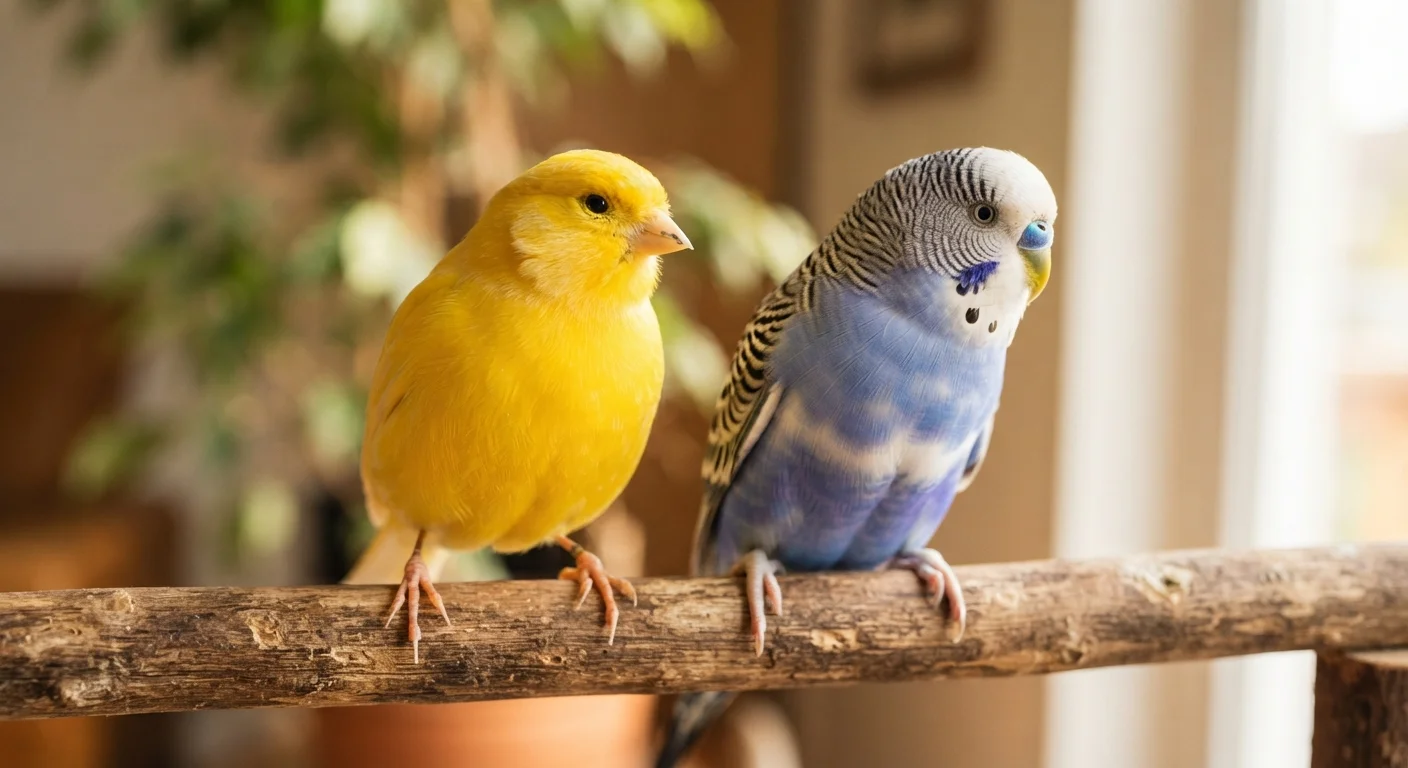
Photo: ResultsExplorer.com | Top Blogs For Everyone editorial
Key Takeaways
- Canaries are largely independent birds that thrive without constant human interaction.
- Budgerigars are highly social and require daily engagement to stay mentally healthy.
- Canaries are known for melodious song; budgerigars are chattier and more vocal throughout the day.
- Both species need species-appropriate diets, spacious cages, and regular veterinary checkups.
- Budgerigars can learn to mimic speech; canaries typically cannot.
Personality and Social Needs
The most fundamental difference between canaries and budgerigars lies in how they relate to their owners and to other birds. Canaries (Serinus canaria domestica) are largely self-sufficient. They do not require hands-on interaction and are content to observe household activity from a safe, elevated perch. Most canaries are kept singly and bond primarily to their environment rather than to a person.
Budgerigars (Melopsittacus undulatus), commonly called budgies, are flock birds by nature. In the wild, they travel in large groups, and that sociability carries directly into domestic life. A budgie kept alone needs significant daily interaction from its owner — at minimum, out-of-cage time and active conversation. Without regular engagement, budgies can develop stress-related behaviors such as feather plucking or excessive screaming. For enrichment strategies applicable to sociable pet birds, see bird enrichment techniques that translate well to budgies, too.
Noise Levels and Vocalizations
Both birds are vocal, but in very different ways. Male canaries produce a rich, continuous, melodic song that many owners find soothing. Song quality and repertoire vary by breed — the Roller canary, for example, is bred specifically for a soft, rolling tone. Female canaries vocalize far less. Canary song tends to be periodic rather than constant, often peaking in morning light.
Budgerigars chatter, chirp, and babble throughout the day. Their vocalizations are higher-pitched and less musical than canary song, though many budgies develop an impressive vocabulary of mimicked words and phrases. Budgies are generally louder in an active household sense — they respond to sounds, call for attention, and interact with ambient noise. Neither species is excessively loud by parrot standards, but budgies require more tolerance for continuous background chatter.
| Canary | Budgerigar | |
|---|---|---|
| Social needs | Independent; thrives with minimal handling | High; needs daily interaction |
| Vocalization style | Melodic song (mainly males) | Constant chattering; can mimic speech |
| Noise level | Moderate, periodic | Moderate, continuous throughout day |
| Trainability | Low; rarely hand-tames | High; finger-tames and learns words |
| Diet complexity | Seeds plus greens; moderate variety | Pellets, seeds, and vegetables; high variety |
| Ideal household | Busy or quieter homes | Active homes with daily engagement |
| Typical lifespan | 7–10 years | 5–10 years |
Diet and Daily Care
Nutritional needs differ meaningfully between the two species. Canaries do well on a high-quality seed mix supplemented with fresh leafy greens, soft foods, and egg food during breeding season. They are less inclined to experiment with new foods than budgies.
Budgerigars benefit from a broader diet: a base of pellets or seeds balanced with vegetables, leafy greens, and small amounts of fruit. Variety is important for budgie health — a diet of seed alone is widely considered nutritionally incomplete by avian veterinarians. For a broader look at how bird dietary needs compare to other small pets, the small pet nutrition overview provides useful context.
Both species need fresh water changed daily, clean cage environments, and access to mineral blocks or cuttlebone for beak health and calcium. Cage size matters for both: canaries need horizontal space to fly, while budgies benefit from both horizontal and vertical space to climb.
Introduce New Foods Gradually
Handling and Training Potential
Canaries generally do not enjoy being handled. Most will tolerate minimal contact but do not seek it out, and attempts to hand-tame adult canaries are often unsuccessful. This is not a welfare concern — canaries simply express affection through song and proximity rather than touch.
Budgerigars, by contrast, can become highly hand-tame with consistent, gentle training from a young age. Many budgies will step onto a finger reliably, enjoy head scratches, and learn to fly to their owner on cue. Speech training is also feasible — budgies are among the best small bird mimics, with some individuals building vocabularies of dozens of words. This trainability makes them particularly engaging for owners who invest daily time in interaction.
Whichever species you choose, annual wellness visits with an avian-experienced veterinarian are an important part of responsible ownership for both canaries and budgies.
The content provided on our blog site traverses numerous categories, offering readers valuable and practical information. Readers can use the editorial team’s research and data to gain more insights into their topics of interest. However, they are requested not to treat the articles as conclusive. The website team cannot be held responsible for differences in data or inaccuracies found across other platforms. Please also note that the site might also miss out on various schemes and offers available that the readers may find more beneficial than the ones we cover.