
Southeast Asia in Depth: Geography, Customs, and Regional Differences

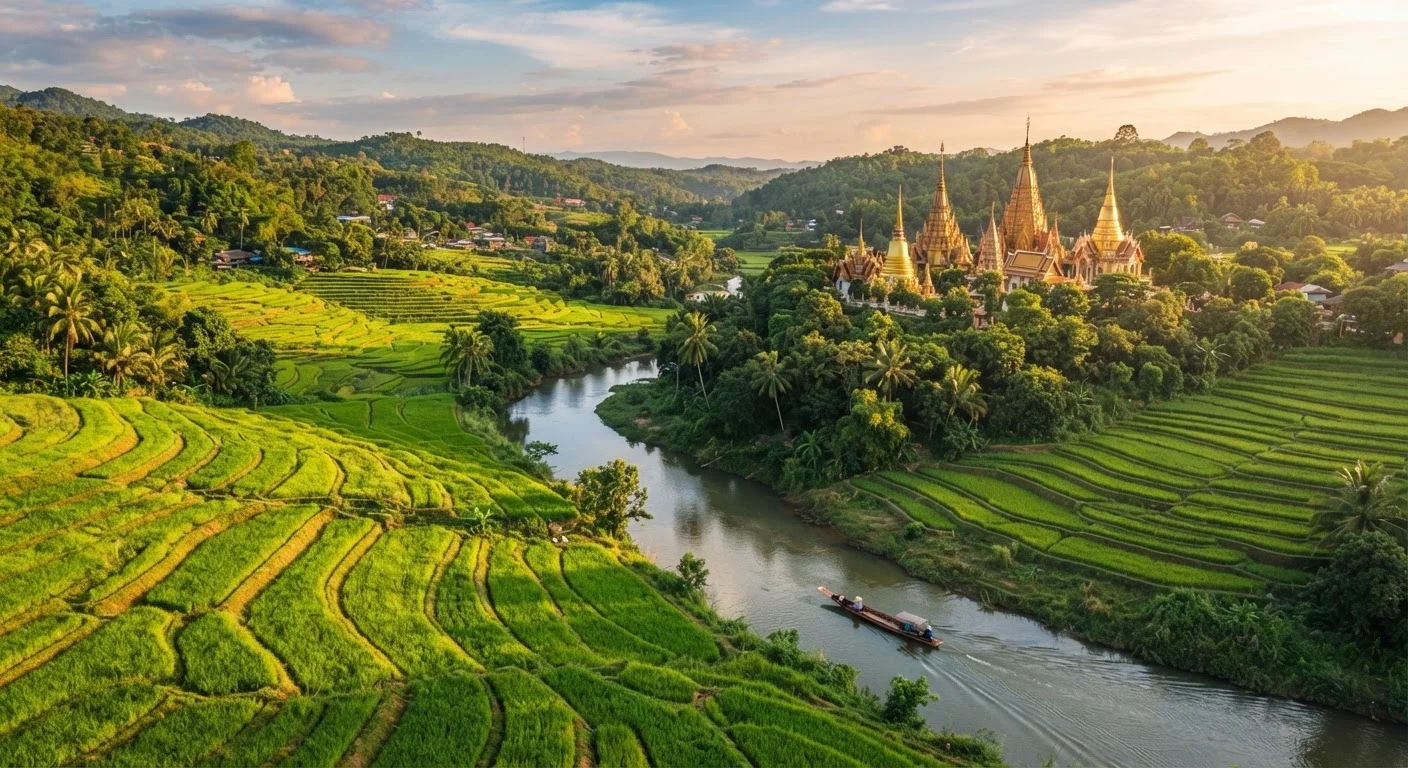
Photo: ResultsExplorer.com | Top Blogs For Everyone editorial
Key Takeaways
- Southeast Asia comprises eleven countries with sharply distinct geography, languages, and customs.
- Buddhist, Hindu, Islamic, and animist traditions all shape local etiquette in different sub-regions.
- Island and mainland geography create very different climates, travel logistics, and cultural norms.
- Greeting styles, temple dress codes, and attitudes toward hierarchy vary significantly by country.
- Researching each destination separately — not the region as a whole — yields better cultural preparation.
The Region at a Glance
Southeast Asia is not a single destination — it is eleven countries (Brunei, Cambodia, Indonesia, Laos, Malaysia, Myanmar, the Philippines, Singapore, Thailand, Timor-Leste, and Vietnam) with fundamentally different histories, religions, governance systems, and cultural codes. What they share is geographic proximity and membership in ASEAN (the Association of Southeast Asian Nations). What separates them is significant.
For travelers accustomed to treating the region as one interchangeable experience, this distinction matters. A traveler moving from Buddhist-majority Thailand into Muslim-majority Malaysia crosses not just a border but a different set of social expectations, public norms, and historical influences. Reading a destination before you go — its history, political backdrop, and social fabric — is the foundation of culturally aware travel.
11
Countries in Southeast Asia
ASEAN recognizes eleven member states, each with distinct governance, culture, and travel conditions.
~1,300
Languages spoken across the region
Ethnologue estimates roughly 1,300 languages are spoken across Southeast Asia's mainland and island nations.
700M+
Total regional population
The region is one of the most populous in the world, with dense urban centers and vast rural communities.
Geographic Diversity and What It Means for Travelers
Southeast Asia divides broadly into mainland and maritime zones. The mainland — Thailand, Vietnam, Cambodia, Laos, Myanmar, and peninsular Malaysia — is shaped by major river systems like the Mekong and Irrawaddy, mountain ranges, and dense tropical forests. The maritime zone — Indonesia, the Philippines, Singapore, Brunei, and parts of Malaysia — spans over 25,000 islands and is defined by ocean connectivity, volcanic geology, and coastal living.
These geographic realities translate directly into travel logistics. Overland travel is viable across much of the mainland; inter-island transport in Indonesia or the Philippines relies on domestic flights and ferries with variable schedules. Climate also splits: the mainland experiences a pronounced dry and wet monsoon cycle; equatorial islands see more consistent rainfall year-round. Timing a trip incorrectly relative to monsoon season affects accessibility to rural sites, road conditions, and outdoor experiences significantly.
Core Cultural Concepts Across the Region
While no single cultural rule applies uniformly, several frameworks recur across the region and are worth understanding before you arrive.
- Hierarchy and deference: Age, social rank, and religious status carry significant weight in most Southeast Asian societies. Elders are addressed respectfully, monks receive deference in Buddhist-majority nations, and titles matter in formal contexts.
- Indirect communication: Open confrontation or direct refusal is often avoided. A soft "maybe" or a smile may indicate reluctance rather than agreement. Patience and reading context carefully matters more than pressing for a direct answer.
- Religious observance in public life: Religious practice is not confined to places of worship. Monks walk morning alms routes, the call to prayer marks daily rhythms in Muslim communities, and spirit offerings appear on sidewalks and storefronts. Visitors are expected to be aware of and respectful toward these practices.
The Concept of 'Face' Is Not Uniform
A pre-departure cultural checklist can help you convert these general frameworks into specific preparation for each country on your itinerary.
Country-by-Country Cultural Highlights
A broad-brush overview of key cultural distinctions by destination:
- Thailand
- The monarchy and Buddhism are central to national identity. The wai greeting — palms pressed together with a slight bow — is ubiquitous. Criticizing the royal family is illegal and taken seriously. Temple visits require covered shoulders and knees.
- Vietnam
- Confucian values shape family structure and social relationships. Regional identity is pronounced: northern, central, and southern Vietnamese culture differ in dialect, food, and temperament. Water puppetry in the north is a distinct art form with roots in the Red River Delta farming communities.
- Indonesia
- The world's largest Muslim-majority country, yet also home to Hindu Bali and hundreds of distinct ethnic groups with animist traditions. Dress modestly outside of resort areas; remove shoes before entering homes and many businesses.
- Cambodia
- The sampeah greeting mirrors Thailand's wai. The legacy of the Khmer Rouge is present and sensitive — approach history carefully and respectfully at memorial sites like Tuol Sleng and Choeung Ek.
- Myanmar
- Deeply Buddhist; removing shoes at pagodas is mandatory. The political situation has been highly volatile — travelers should check current government advisories carefully before planning any visit.
- Philippines
- The only predominantly Christian nation in the region, with significant Spanish colonial influence. Strong English proficiency makes communication easier for US travelers. Hospitality (malasakit) is a defining cultural value.
- Singapore and Malaysia
- Both are ethnically plural — Chinese, Malay, Indian, and other communities coexist. Singapore's strict public ordinances (no gum, fines for littering) are enforced. Malaysia's cultural norms shift by region, with conservative Islamic customs in the north and cosmopolitan diversity in Kuala Lumpur.
Religion Shapes Daily Public Life
Practical Customs Every Visitor Should Know
Across the region, a handful of behavioral norms apply broadly enough to be worth internalizing before arrival:
- Shoes off: Remove footwear before entering temples, many private homes, and some guesthouses. Look for a shoe rack at the entrance as your cue.
- Right hand preference: In Muslim communities, the left hand is considered unclean — use your right hand to give and receive items, eat, and gesture.
- Head and feet: The head is spiritually elevated; the feet are the lowest point. Never touch someone's head, and avoid pointing the soles of your feet at people or religious imagery.
- Photography: Always ask before photographing people, particularly monks, market workers, and in rural communities. At religious sites, signage often indicates photography restrictions — follow them.
- Bargaining: Expected in markets; not appropriate in fixed-price shops, restaurants, or formal retail. Declining after agreeing on a price is considered rude.
Before any temple visit, check the specific dress code online — requirements vary from covering shoulders to wrapping a sarong over shorts, and some sites offer loaners at the gate.
Learn the local greeting gesture for each country you visit rather than defaulting to a handshake — in Thailand the wai, in Cambodia the sampeah, and in Muslim-majority areas, placing a hand on your heart after a handshake with someone of the same gender signals genuine respect.
Research Each Country Separately
Planning Your Visit With Context in Mind
Practical logistics — visas, currency, transport — intersect with cultural preparation more than most travelers expect. Lesser-known logistics that catch first-time international travelers off guard covers the procedural side: visa-on-arrival eligibility, transit rules, and currency timing vary by country and change frequently.
Visa and Entry Rules Change Frequently
For context on how Southeast Asia's cultural depth compares to other complex regions, an introductory guide to traveling in the Middle East offers a useful parallel — another richly varied region where treating multiple countries as one cultural block leads to avoidable missteps.
“Every society is not just a place but a set of relationships — and understanding those relationships is the beginning of genuine travel.”
— Pico Iyer, Travel writer and author on culture and place
The travelers who leave Southeast Asia with the deepest experience are almost always those who did the reading beforehand — not to predict what they'd encounter, but to be genuinely open to it when they did.
This article is for general informational purposes only. Entry requirements, travel advisories, and local laws are subject to change. Always verify current conditions with official government sources and the relevant country's embassy or consulate before traveling.
The content provided on our blog site traverses numerous categories, offering readers valuable and practical information. Readers can use the editorial team’s research and data to gain more insights into their topics of interest. However, they are requested not to treat the articles as conclusive. The website team cannot be held responsible for differences in data or inaccuracies found across other platforms. Please also note that the site might also miss out on various schemes and offers available that the readers may find more beneficial than the ones we cover.