
Tire Rotation, Alignment, and Wear: What Sound Tire Upkeep Actually Looks Like

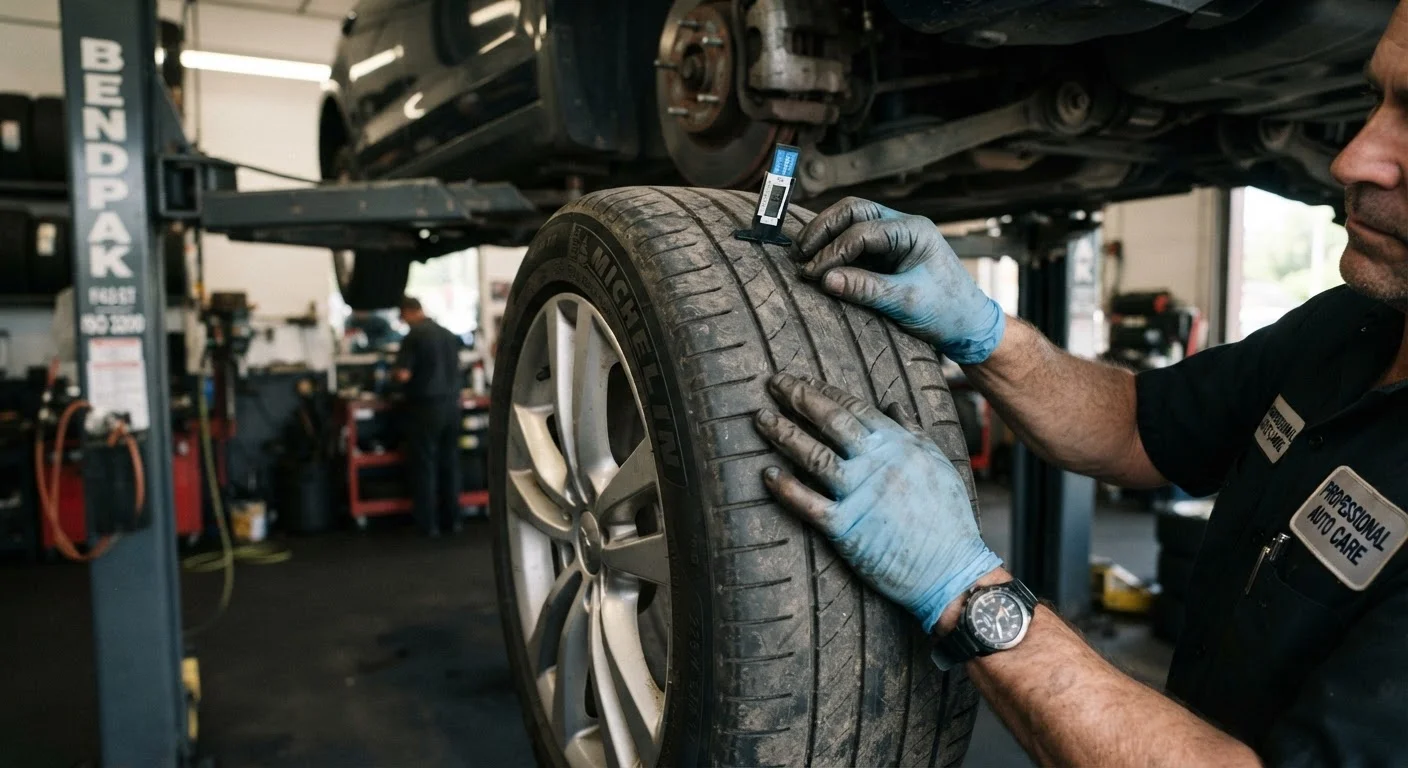
Photo: ResultsExplorer.com | Top Blogs For Everyone editorial
Key Takeaways
- Rotating tires every 5,000-7,500 miles helps distribute wear evenly across all four tires.
- Wheel alignment should be checked at least once a year or after any significant road impact.
- Uneven tread wear is often the first visible sign that rotation or alignment has been neglected.
- The penny test and tread wear indicators are simple tools any driver can use to gauge tire health.
- Keeping tires properly inflated works hand-in-hand with rotation and alignment to extend tire life.
Why Tire Maintenance Is More Than Just Pressure
Most drivers know to check tire pressure occasionally, but pressure is only one piece of the puzzle. Rotation, alignment, and monitoring tread wear are equally critical - and when any one of them is skipped, the others can't fully compensate. Together, these three practices form a maintenance triangle that keeps tires performing safely and lasting as long as they should.
Tires wear down over time no matter what, but how they wear tells you a great deal about whether your maintenance routine is working. Uneven or accelerated wear is one of the clearest signals that something in the system needs attention. Understanding what to look for - and when to act - gives everyday drivers real control over one of their vehicle's most important safety systems.
For a broader view of how tire care fits into your overall vehicle schedule, see the full car maintenance timeline.
Best Practices for Tire Rotation, Alignment, and Wear Monitoring
The following practices reflect widely accepted guidance from automotive professionals and vehicle manufacturers. Following them consistently is one of the most effective ways to get the full expected lifespan from a set of tires.
Rotate your tires every 5,000 to 7,500 miles, or as specified in your owner's manual.
Have your wheel alignment checked at least once a year and after any hard impact with a pothole or curb.
Inspect your tires visually once a month for signs of uneven wear, cracks, bulges, or embedded objects.
Check and maintain proper tire inflation as part of the same routine as rotation and alignment.
Replace tires in pairs or full sets rather than individually when possible.
Reading Tread Wear: What the Patterns Mean
Tread wear doesn't just tell you when a tire is due for replacement - it also reveals underlying maintenance problems. Center wear (where the middle of the tread is more worn than the edges) often points to chronic overinflation. Edge wear on both sides typically suggests underinflation. One-sided wear - where only the inner or outer edge is worn - is a classic sign of an alignment problem.
Tread Depth and State Law
The simplest way to check remaining tread depth is the penny test: insert a penny into a tread groove with Lincoln's head facing down. If you can see the top of his head, the tread is worn to approximately 2/32 of an inch - the legal minimum in most U.S. states and a signal that replacement is needed. Many tires also have built-in tread wear indicators, which are small raised bars between the tread grooves that become flush with the surface when the tire reaches its wear limit.
Neglecting these signals can compound into larger problems. For more on how small maintenance gaps escalate, see minor car problems that quietly grow into major repairs.
Quick Wins You Can Act on Today
Tire upkeep doesn't require specialized knowledge to get started. Several high-impact actions take only a few minutes and require no tools beyond what most drivers already have.
If you're unsure which tasks are safe to handle yourself versus which require a shop visit, handling car maintenance yourself offers a practical breakdown. And since proper inflation works alongside rotation and alignment, checking and correcting your tire pressure is a natural complement to this routine.
The content provided on our blog site traverses numerous categories, offering readers valuable and practical information. Readers can use the editorial team’s research and data to gain more insights into their topics of interest. However, they are requested not to treat the articles as conclusive. The website team cannot be held responsible for differences in data or inaccuracies found across other platforms. Please also note that the site might also miss out on various schemes and offers available that the readers may find more beneficial than the ones we cover.