
Driving in a School Zone: Rules, Fines, and Common Oversights

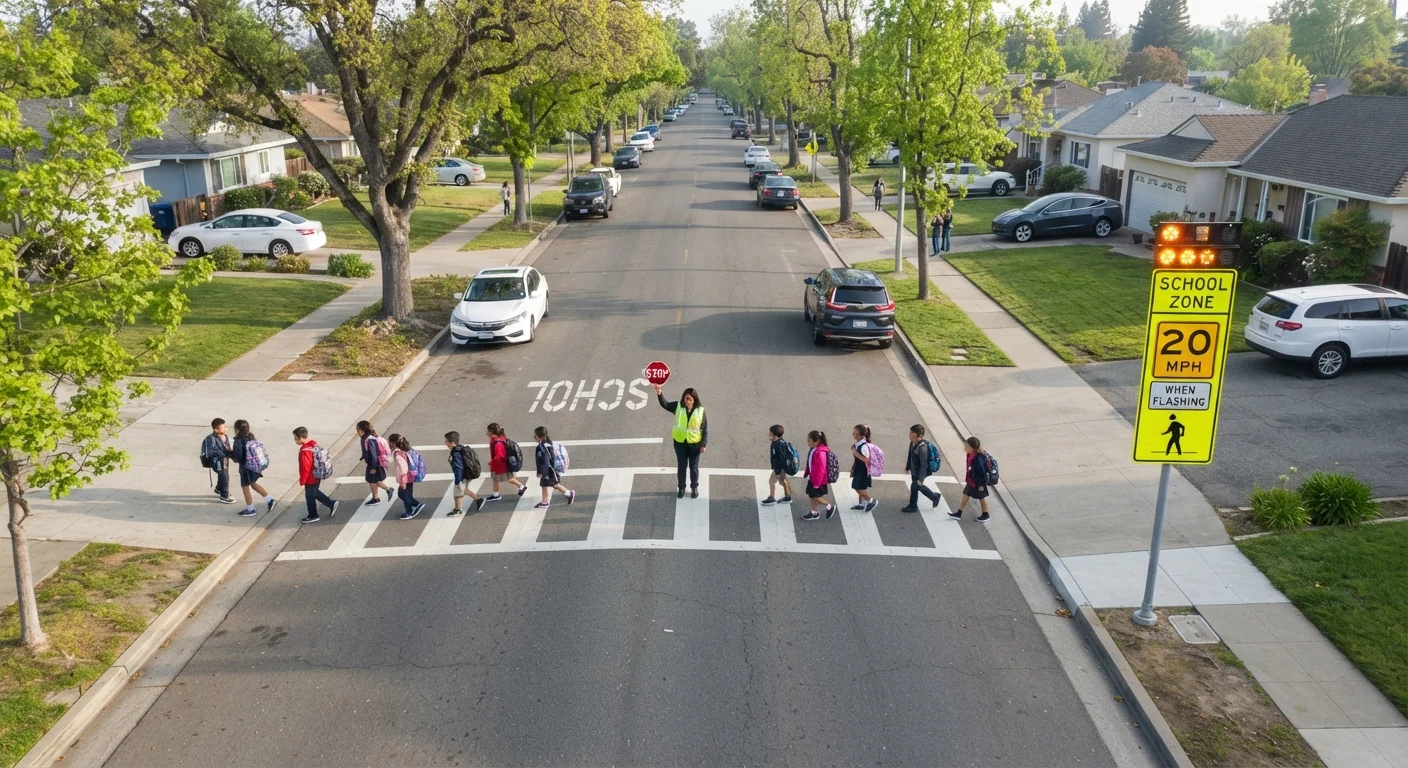
Photo: ResultsExplorer.com | Top Blogs For Everyone editorial
Key Takeaways
- School zone speed limits are typically 15-25 mph, but the exact limit depends on state and local law.
- Many zones are only active during specific hours - but some states enforce limits whenever children are present.
- Fines in school zones are commonly doubled or tripled compared to standard speeding tickets.
- Passing a stopped school bus with extended stop arm is illegal in all 50 states.
- Distracted driving violations in school zones carry elevated penalties in many jurisdictions.
- Enforcement hours vary by district, so drivers should never assume a zone is inactive.
How School Zone Speed Limits Actually Work
School zone speed limits in the US typically fall between 15 and 25 mph, but that range masks significant variation. States set their own defaults, and local jurisdictions can adjust limits further based on road conditions or pedestrian traffic patterns. The posted sign within the zone is the controlling authority - not the surrounding road's limit.
Speed limits in many zones are time-activated, meaning they apply only during defined windows such as 7-8 a.m. and 2:30-3:30 p.m. on school days. Static signs without time restrictions are enforceable at all hours. Flashing yellow beacons, increasingly common in newer installations, signal when a reduced limit is in effect, removing any ambiguity for drivers.
Understanding how limits are structured more broadly can help. Speed limit signs carry different legal weights depending on type, and the same logic applies inside school zones - posted limits there are mandatory, not advisory.
Slow Down Before You See the Sign
Fines, Penalties, and License Consequences
The financial cost of a school zone violation is deliberately steep. Most states impose doubled or tripled fines compared to a standard speeding ticket for the same excess speed. In high-penalty states, a first offense for exceeding the school zone limit by even a few miles per hour can result in a fine of $150-$500 or more, depending on how far over the limit a driver was traveling.
Beyond the fine itself, school zone violations typically add points to a driver's license. Accumulating points can lead to license suspension and will almost certainly raise auto insurance premiums. Some insurers treat school zone violations as a separate aggravating factor, similar to reckless driving notations.
2-3×
Fine multiplier for school zone violations
Most US states impose fines that are double or triple standard speeding ticket amounts inside designated school zones.
15-25 mph
Typical school zone speed limit range
Exact limits are set by state statute and local ordinance; always follow the posted sign, which is the legal authority.
All 50
States with school bus stop-arm laws
Every US state prohibits passing a stopped school bus with an extended stop arm and flashing red lights, though penalties vary.
Distracted driving in school zones is treated with particular severity. Many states have enacted laws that specifically elevate penalties for handheld device use near schools. Drivers should also be aware that certain aggressive behaviors behind the wheel carry legal consequences that compound quickly in sensitive areas like school zones.
Common Oversights Drivers Make in School Zones
Even well-intentioned drivers frequently make avoidable mistakes in school zones. Here are the most common:
- Assuming the zone is inactive: If flashing lights are off or school is not in session by the driver's assumption, many skip slowing down. But some state laws tie enforcement to the presence of children, not posted times - meaning a child walking home at an unusual hour triggers legal obligations.
- Failing to yield to crossing guards: Crossing guards have legal authority to stop traffic. Disregarding their signals is a violation in every state and poses direct danger to children in the crosswalk. For a broader look at yielding obligations, see right-of-way rules that drivers frequently misread.
- Ignoring school bus stop-arm laws: A stopped school bus with its red lights flashing and stop arm extended creates a legally protected zone on both sides of the road in most states. Passing it - even on a divided highway in some jurisdictions - is a serious traffic offense.
- Following too closely near crosswalks: Children are unpredictable pedestrians. Adequate following distance is especially critical in school zones, where sudden stops are common. Tailgating dramatically reduces reaction time in exactly the situations where it matters most.
School Zone Boundaries Vary by State
What to Do When Conditions Are Unclear
Not every school zone is clearly marked or logically placed from a driver's perspective. Some zones extend around curves or past visual obstructions where a driver may not realize they've entered restricted territory. When signage is ambiguous, the safest approach is to treat any road adjacent to a school as an active zone and drive accordingly.
If you receive a citation you believe is in error - for example, if signage was missing or the active hours were not clearly posted - document the location and time as soon as possible. Photographs, GPS records, and witness statements can support a challenge in traffic court. However, simply not noticing a sign is not a legal defense in most jurisdictions.
Drivers who receive a school zone ticket should review how it will affect their record. Many states offer defensive driving courses that can offset points, though eligibility rules vary. Consulting with a licensed traffic attorney is advisable for violations that risk license suspension or significant insurance impact.
Frequently Asked Questions
The content provided on our blog site traverses numerous categories, offering readers valuable and practical information. Readers can use the editorial team’s research and data to gain more insights into their topics of interest. However, they are requested not to treat the articles as conclusive. The website team cannot be held responsible for differences in data or inaccuracies found across other platforms. Please also note that the site might also miss out on various schemes and offers available that the readers may find more beneficial than the ones we cover.