
Speed Limit Signs Decoded: Advisory, Posted, and Statutory Limits

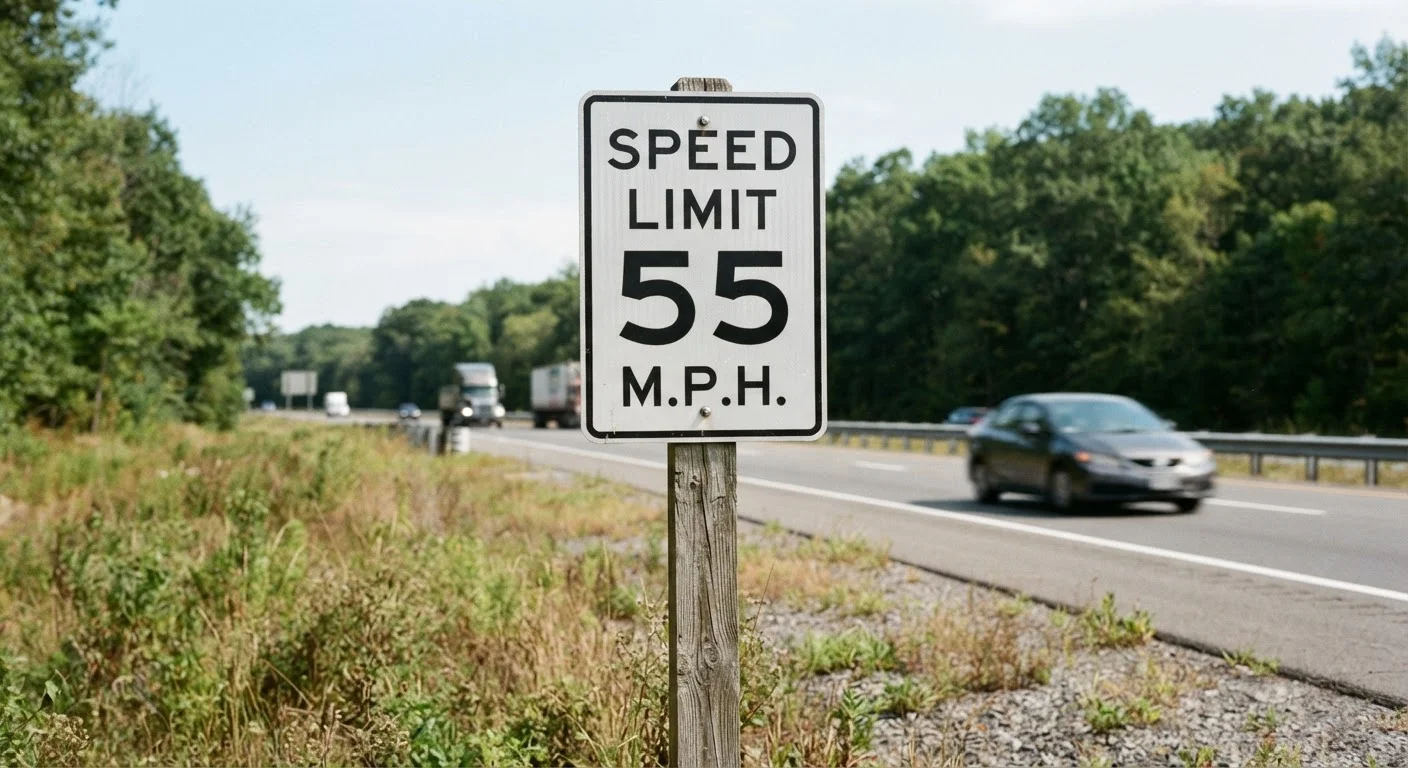
Photo: ResultsExplorer.com | Top Blogs For Everyone editorial
Three Types of Speed Limits - and Why the Difference Matters
When you see a speed limit sign, you may assume it's a straightforward legal maximum. Sometimes it is - but not always. US roads use three distinct categories of speed limits, each with different legal force. Knowing which type you're looking at helps you stay both legal and safe.
| Number of speed limit types | 3 primary types: posted, advisory, statutory (Federal Highway Administration (FHWA)) |
| Color of regulatory speed limit signs | White background, black text (Manual on Uniform Traffic Control Devices (MUTCD)) |
| Color of advisory speed signs | Yellow background, black text (MUTCD) |
| States with prima facie speed laws | Several, including California (State traffic codes vary) |
| Federal Interstate maximum (general) | Varies by state; ranges from 65-85 mph (After repeal of the National Maximum Speed Law in 1995) |
| Typical statutory limit in urban areas | 25-30 mph (if no sign posted) (State-by-state statutory codes) |
Posted speed limits are the most familiar. Displayed on white rectangular signs with black numerals, they set a legally enforceable maximum for that stretch of road. Exceeding them is a traffic violation - full stop.
Advisory speed limits appear on yellow warning signs, often paired with a curve or merge warning. They are recommendations, not hard legal maximums. However, if you're involved in a crash while exceeding an advisory speed, that number can be used as evidence that your speed was unreasonable for conditions.
Statutory (or prima facie) speed limits are defaults written into state law. They apply on roads where no sign has been posted. Common examples include 25 mph in residential zones or 55 mph on undivided highways. These exist so drivers always have a legal reference point, even on unmarked rural roads.
For a broader look at how road markings and signs work together, see our guide on what yellow road lines actually mean.
How Speed Limits Are Set and Enforced
Speed limits in the US are set at the state level - there is no current federal maximum. Since Congress repealed the National Maximum Speed Law in 1995, each state determines limits for its own roads through a combination of engineering studies, statutory defaults, and local ordinances.
Posted Speed Limit
The maximum legal speed displayed on a regulatory sign (white with black text). Exceeding it is a traffic violation regardless of conditions.
Advisory Speed Limit
A recommended - not legally mandatory - speed for a specific road feature such as a curve or ramp. Shown on yellow warning signs, typically below the posted limit.
Statutory Speed Limit
A default speed limit set by state law that applies when no sign is posted. Also called a 'prima facie' limit in some states.
Prima Facie Limit
A legal presumption that a given speed is reasonable under normal conditions. A driver may challenge a citation by proving conditions made the speed safe, though this is difficult in practice.
Absolute Speed Limit
A hard maximum set by law where exceeding the number is a violation with no exception, regardless of actual driving conditions.
Basic Speed Law
A rule adopted in most US states requiring drivers to travel at a speed that is reasonable and prudent for existing conditions, even if that means driving below the posted limit.
Traffic engineers typically use what's called the 85th percentile speed method: they measure the speed at or below which 85% of vehicles naturally travel under free-flow conditions and use that as a baseline for setting the posted limit. The idea is that the limit reflects how most drivers reasonably behave, though this methodology is not universal and is actively debated among transportation researchers.
Enforcement of posted limits is absolute in most states - this is known as an absolute speed law. Some states, however, operate under a basic speed law, which means a driver can technically be cited even for traveling at or below the posted limit if conditions (weather, traffic, visibility) made that speed unsafe. Driving in bad weather is the clearest example: a 55 mph posted limit does not make 55 mph safe on an icy road.
Speed Limits Vary Significantly by State
Certain zones carry special limits that override standard posted signs. School zones are a prime example - reduced speeds apply during specific hours, and penalties for violations are often elevated. Learn more in our article on driving in a school zone.
This article provides general educational information about US traffic laws. Speed limit rules vary by state and locality. Always consult your state's official driver handbook or a qualified legal professional for guidance specific to your situation.
The content provided on our blog site traverses numerous categories, offering readers valuable and practical information. Readers can use the editorial team’s research and data to gain more insights into their topics of interest. However, they are requested not to treat the articles as conclusive. The website team cannot be held responsible for differences in data or inaccuracies found across other platforms. Please also note that the site might also miss out on various schemes and offers available that the readers may find more beneficial than the ones we cover.