
Right-of-Way Rules Most Drivers Misread Every Day

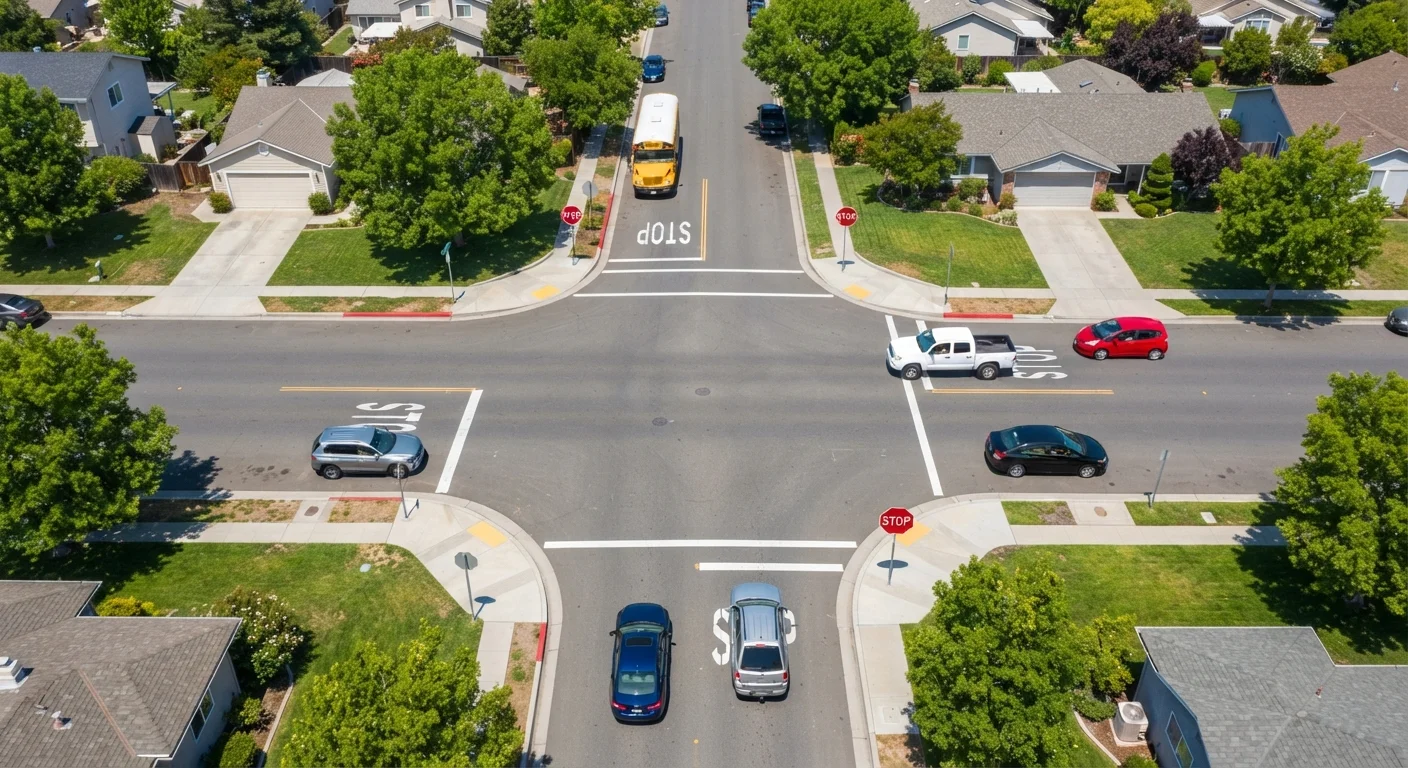
Photo: ResultsExplorer.com | Top Blogs For Everyone editorial
Key Takeaways
- Right-of-way is yielded, not taken - no driver is ever legally 'given' the road unconditionally.
- At uncontrolled four-way stops, the driver who arrived first proceeds first; ties go to the vehicle on the right.
- Pedestrians in a marked or unmarked crosswalk have right-of-way over turning vehicles in most US states.
- Roundabout traffic already inside the circle always has priority over entering vehicles.
- On-ramp drivers must yield to highway traffic - not the other way around.
Why Right-of-Way Rules Confuse So Many Drivers
Right-of-way rules are among the most frequently misapplied laws on US roads - not because drivers ignore them, but because many genuinely misunderstand them. The core legal principle is straightforward: the right-of-way is yielded by one driver to another; it is never an absolute entitlement. Even when law or signage indicates you may proceed, a driver who causes a collision by failing to account for another vehicle can still bear legal responsibility.
Misreading these rules doesn't just risk a traffic citation - it contributes to thousands of intersection crashes each year. Understanding exactly what the law requires, rather than what habit suggests, is one of the most practical steps any driver can take toward safer, more confident driving.
Myth
At a four-way stop, the driver on the larger or busier road goes first.
Fact
At a four-way stop, arrival order determines priority - the first vehicle to stop proceeds first, regardless of road size.
Stop sign placement, not road width or traffic volume, governs the sequence. When two vehicles arrive simultaneously, the driver on the left yields to the driver on the right. If three or four vehicles arrive together, drivers work through the right-of-way sequence vehicle by vehicle. Road size only matters at uncontrolled intersections - where there are no signs at all - where drivers on minor roads generally yield to those on the major road. Once stop signs are present, that rule no longer applies.
Myth
If you're already in a turn, you automatically have the right-of-way over pedestrians.
Fact
Turning vehicles must yield to pedestrians in a crosswalk - marked or unmarked - even on a green light.
A green light authorizes a driver to proceed through an intersection but does not override pedestrian right-of-way in a crosswalk. In most US states, the law requires drivers to yield to any pedestrian crossing the roadway at an intersection, even where no painted crosswalk exists. An unmarked crosswalk is legally defined as the extension of a sidewalk across the intersection. Failing to yield to a pedestrian in this zone is a moving violation in virtually every state and can expose a driver to significant civil liability if a collision occurs.
Myth
Vehicles entering a roundabout have the right-of-way because they're coming from a public road.
Fact
Vehicles already circulating inside a roundabout always have priority over those entering from the approach lane.
Roundabouts are designed with yield signs at every entry point precisely because the circulating flow must remain uninterrupted to function safely. Entering drivers must wait for a clear gap before merging - the same logic as entering a highway from an on-ramp. Attempting to enter without yielding is both illegal and the primary cause of roundabout collisions. Speed inside a roundabout is typically low (15-25 mph), so gaps appear quickly. The key habit is to look left toward oncoming circulating traffic and only enter when the path is clear.
Myth
Highway drivers must slow down and make room for vehicles merging from an on-ramp.
Fact
On-ramp drivers are legally required to yield to highway traffic and adjust their speed to find a safe gap.
While courtesy and safe driving practice may lead highway drivers to shift lanes when space allows, there is no legal obligation requiring them to do so. The merging driver bears the legal responsibility to match highway speed, signal, and enter only when a sufficient gap exists. Forcing a merge - cutting in front of highway traffic without a clear gap - constitutes an improper lane change and can result in a citation. That said, aggressive behavior by highway drivers who close gaps intentionally can also carry legal consequences under reckless or aggressive driving statutes.
Myth
A flashing yellow light means the intersection is safe to proceed through at normal speed.
Fact
A flashing yellow light requires drivers to slow, proceed with caution, and yield where necessary - it does not clear the way.
Flashing yellow signals are common at intersections where full signal control isn't warranted but caution is needed. Drivers approaching a flashing yellow must reduce speed and be prepared to yield to crossing traffic or pedestrians. The signal does not eliminate right-of-way obligations - a driver who enters a flashing-yellow intersection and strikes a vehicle or pedestrian with legal priority can still be found at fault. Flashing red, by contrast, functions as a full stop sign: drivers must come to a complete stop before proceeding when their turn arrives.
Intersections, Merges, and Pedestrians: Where the Rules Get Blurry
Several specific scenarios trip up even experienced drivers. Merging onto a highway is a prime example: the common assumption that highway traffic must accommodate entering vehicles is legally backward. Drivers on an on-ramp must adjust their speed and find a gap - they do not have priority. For a structured approach to this maneuver, see our step-by-step merging checklist.
Pedestrian right-of-way is another area of frequent misreading. Most state laws extend the protection to unmarked crosswalks - any intersection where two roadways meet - not just painted zebra crossings. Turning vehicles must yield to pedestrians crossing in the direction of travel, even when the driver has a green light.
~40%
Of US crashes occur at intersections
The Federal Highway Administration has estimated that roughly 40 percent of all US traffic crashes involve intersections, many tied to right-of-way errors.
50
States with move over laws
Every US state has enacted a move over law requiring drivers to yield for stopped emergency or roadside service vehicles, though the specific requirements vary by state.
Roundabouts present a separate challenge for drivers who learned on four-way stops. The fundamental rule - vehicles already circulating inside the roundabout always have right-of-way - is often reversed by drivers who attempt to enter without yielding. For a full breakdown of roundabout navigation, consult our roundabout rules guide.
Emergency vehicles also change right-of-way dynamics immediately. When a police car, ambulance, or fire truck approaches with lights and sirens active, all drivers must pull to the right and stop - regardless of who technically had the right-of-way. Related obligations extend even to stationary emergency vehicles on the shoulder; all 50 states have move over laws governing this. Learn more in our move over laws overview.
Staying Legal and Safe at Every Intersection
Traffic signals add another layer of nuance beyond the basic red-yellow-green cycle. Flashing red lights function as stop signs, requiring a full stop and the same four-way stop yielding sequence. Flashing yellow signals permit passage but require caution - they do not eliminate the obligation to yield to pedestrians or oncoming traffic with a green. Our guide to traffic signals beyond red, yellow, and green covers every standard US signal type in detail.
Assuming Right-of-Way Guarantees Safety Is Dangerous
Road markings also communicate right-of-way information - yield lines, shark's teeth, and edge markings all carry specific legal meaning that complements posted signage. For more on what road markings legally require, see what yellow road lines actually mean.
The safest practice is to separate what you are entitled to from what is actually happening around you. Even with clear right-of-way, pausing for a driver who appears confused or distracted is not weakness - it is the legally sound and physically safer choice. Right-of-way is a traffic management tool, not a guarantee of safe passage.
The content provided on our blog site traverses numerous categories, offering readers valuable and practical information. Readers can use the editorial team’s research and data to gain more insights into their topics of interest. However, they are requested not to treat the articles as conclusive. The website team cannot be held responsible for differences in data or inaccuracies found across other platforms. Please also note that the site might also miss out on various schemes and offers available that the readers may find more beneficial than the ones we cover.