
Move Over Laws: What Every US Driver Needs to Know

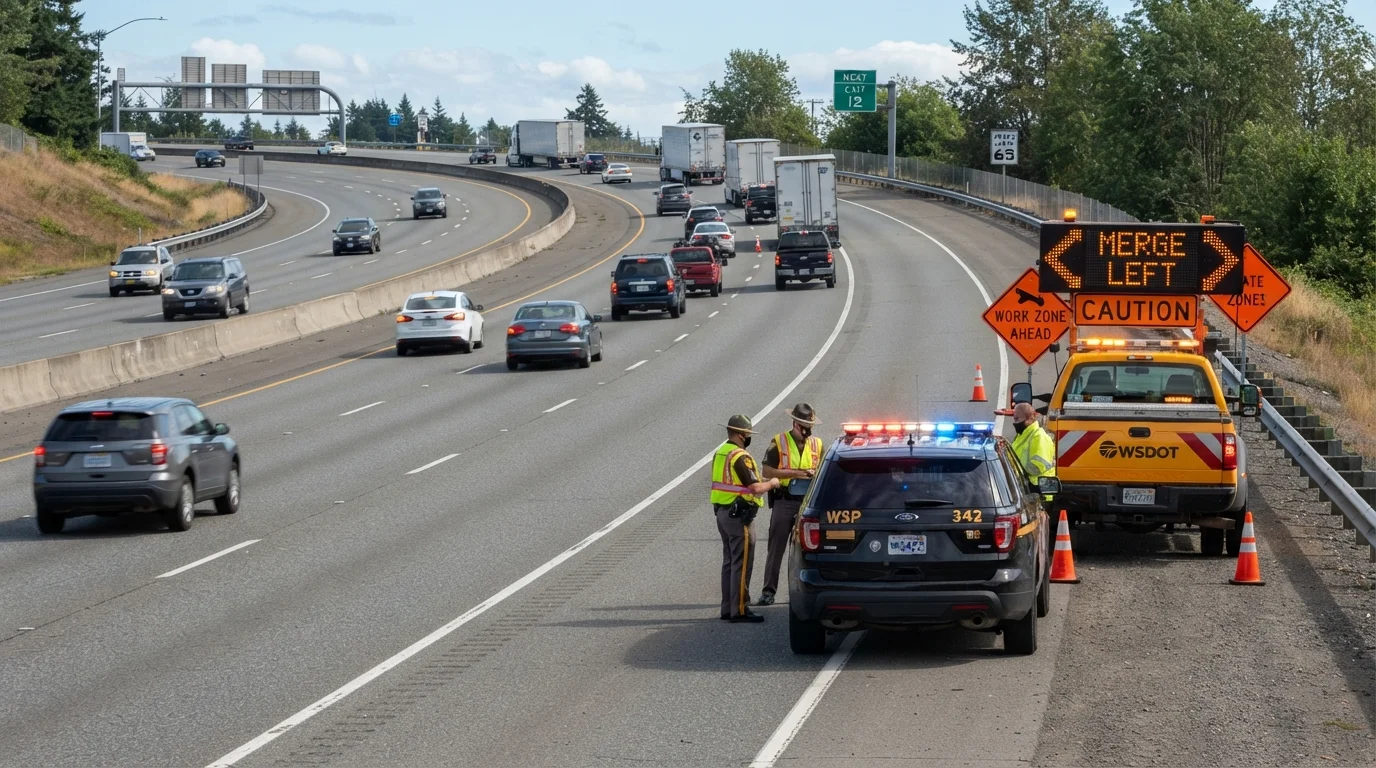
Photo: ResultsExplorer.com | Top Blogs For Everyone editorial
Key Takeaways
- All 50 US states have move over laws, but coverage of vehicle types and penalties varies by state.
- Most laws require changing lanes away from stopped vehicles; if that is not possible, you must slow down significantly.
- Covered vehicles now extend beyond police and fire in most states to include tow trucks, utility crews, and road maintenance workers.
- Violations can carry fines, license points, and in cases involving injury, criminal charges.
- When approaching a stopped vehicle on a multi-lane road, check mirrors and signal before changing lanes - do not brake suddenly.
What Move Over Laws Are
Move over laws are state traffic statutes that require drivers approaching a stopped emergency, law enforcement, or service vehicle - one displaying flashing lights on the roadside - to either change lanes away from that vehicle or reduce speed if a lane change is not safely possible. The first such law in the United States was enacted in South Carolina in 1996. By 2012, all 50 states had passed some version of the requirement.
The core idea is straightforward: workers standing alongside busy roads face serious risk from passing traffic. A driver who drifts slightly or is distracted for a moment can strike someone on the shoulder at highway speed. Move over laws create a legal buffer zone intended to reduce that risk. They are not advisory suggestions - they carry enforceable penalties in every state.
These laws sit alongside other roadway safety rules. For instance, understanding right-of-way rules is equally important to navigating complex traffic situations legally and safely.
Start Slowing Down Earlier Than You Think
Which Vehicles Are Covered
Originally, move over laws focused exclusively on law enforcement vehicles. Today, most states have broadened coverage significantly. While specific language varies, the following categories of stopped vehicles are covered in the majority of states:
- Law enforcement: police, sheriff, highway patrol, and similar marked or emergency-equipped vehicles
- Fire and rescue: fire trucks, ambulances, and emergency medical service vehicles
- Tow trucks: now covered in most but not all states
- Highway maintenance and construction: state or county road crews with flashing amber lights
- Utility workers: electric, gas, and other utility service vehicles displaying warning lights in several states
The inclusion of tow trucks and maintenance workers is a relatively recent expansion that many drivers are not aware of. If you assumed only police cars triggered the requirement, check your own state's current statute - the coverage may be broader than you expect.
Tow Truck Coverage Is Easy to Overlook
How the Law Works in Practice
The mechanics of the law follow a consistent two-step structure across most states:
- Move over first: If you are on a multi-lane road, change lanes so that at least one lane separates your vehicle from the stopped vehicle. Check your mirrors, signal your intention, and complete the lane change smoothly before you reach the stopped vehicle - not alongside it. See our merging checklist for safe lane-change fundamentals that apply here too.
- Slow down if you cannot move over: When a lane change is not safely possible - because traffic in the adjacent lane is heavy or the road has only one lane - the law requires you to reduce speed to a defined threshold. Many states set this at a specific number of miles per hour below the posted speed limit (commonly 20 mph below), while others require a speed that is simply "reasonable and prudent" given conditions.
These requirements apply regardless of the time of day or weather conditions. A stopped vehicle with flashing lights on a clear Sunday afternoon triggers the same obligation as one encountered in rain during rush hour.
Also note: move over obligations are distinct from the rules that apply when an emergency vehicle is actively approaching you with lights and sirens. That scenario - pulling to the right and stopping - is covered separately. Our companion article on what the law requires when an emergency vehicle approaches explains that distinction in detail.
50 / 50
US states with a move over law
South Carolina enacted the first such law in 1996; the final state reached compliance by 2012.
~$500
Typical maximum first-offense fine
Fines vary widely by state and can increase substantially when property damage or injury is involved.
1996
Year the first US move over law took effect
South Carolina's statute became the model that all other states eventually followed over the next 16 years.
Penalties for Violations
Fines for move over violations vary considerably from state to state, but they are universally treated as more than a minor infraction. Common consequences include:
- Fines: Typically range from around $100 to $500 for a first offense, with higher amounts in states that have strengthened their statutes in recent years. Fines escalate substantially if the violation results in property damage.
- License points: Many states add demerit points to a driver's record, which can affect insurance premiums over time.
- Criminal charges: If a driver strikes a worker or causes injury, the charge can be elevated to a misdemeanor or even a felony, depending on the state and circumstances.
Enforcement has increased as states have invested in roadside signage and public awareness campaigns. Treat the posted fine figures as minimums - court costs and fees can raise the total significantly.
State-by-State Differences to Know
Because move over laws are state statutes, details differ. Key areas of variation include:
- Vehicle types covered
- Some states still limit the law to emergency and law enforcement vehicles. Others include tow trucks, sanitation vehicles, and utility crews. Check your state's department of transportation or motor vehicles website for the current list.
- Speed reduction requirement
- States use different formulas: a fixed mph reduction, a percentage of the posted limit, or a "reasonable" standard. Knowing the specific number in your state matters if you face enforcement on a road where a lane change is not possible.
- Two-lane roads
- Some states explicitly extend move over requirements to two-lane undivided roads, while others limit them to divided highways or roads with two or more lanes in each direction.
- Signage
- Many states now post move over reminder signs on interstates, particularly near high-incident zones. These signs do not modify the law - they simply remind drivers of an existing obligation.
If you drive regularly in multiple states, it is worth familiarizing yourself with differences. Just as phone laws vary by state, move over requirements are not uniform - and ignorance of a local rule is not a legal defense.
When approaching flashing lights on the shoulder of a multi-lane highway, signal your lane change at least four seconds before you reach the stopped vehicle - not when you are already alongside it.
If you are unsure which vehicles trigger move over protections in your state, look up your state's official DMV or DOT website - the statute is usually posted in plain language under traffic laws or driver's manual supplements.
Staying Safe When You Can't Move Over
In heavy traffic, moving over is not always immediately possible. Here is how to handle that situation correctly:
- Begin slowing early. As soon as you see flashing lights ahead on the shoulder, ease off the accelerator. Give yourself ample room to reach a reduced speed well before you pass the vehicle.
- Stay alert in the lane. Do not allow your eyes to drift toward the activity on the shoulder. Looking away from the road ahead - even for a second - increases your own risk of drifting.
- Maintain a steady speed. Erratic braking in traffic while other drivers are also reacting to a shoulder incident creates rear-end collision risk. Smooth, predictable deceleration is safer for everyone.
- Do not re-enter the right lane until well clear. Once you have passed the stopped vehicle, check that you are fully past it before moving back to the right.
Understanding how to manage your vehicle's position in challenging highway situations is a skill set that matters beyond move over scenarios. Our guide to safe highway merging covers the mirror-check and speed-matching habits that underpin all confident lane management.
Move over laws exist because roadside strikes are a documented and preventable hazard. Following them is both a legal requirement and a straightforward way to protect the workers who keep roads functioning.
The content provided on our blog site traverses numerous categories, offering readers valuable and practical information. Readers can use the editorial team’s research and data to gain more insights into their topics of interest. However, they are requested not to treat the articles as conclusive. The website team cannot be held responsible for differences in data or inaccuracies found across other platforms. Please also note that the site might also miss out on various schemes and offers available that the readers may find more beneficial than the ones we cover.